
How To
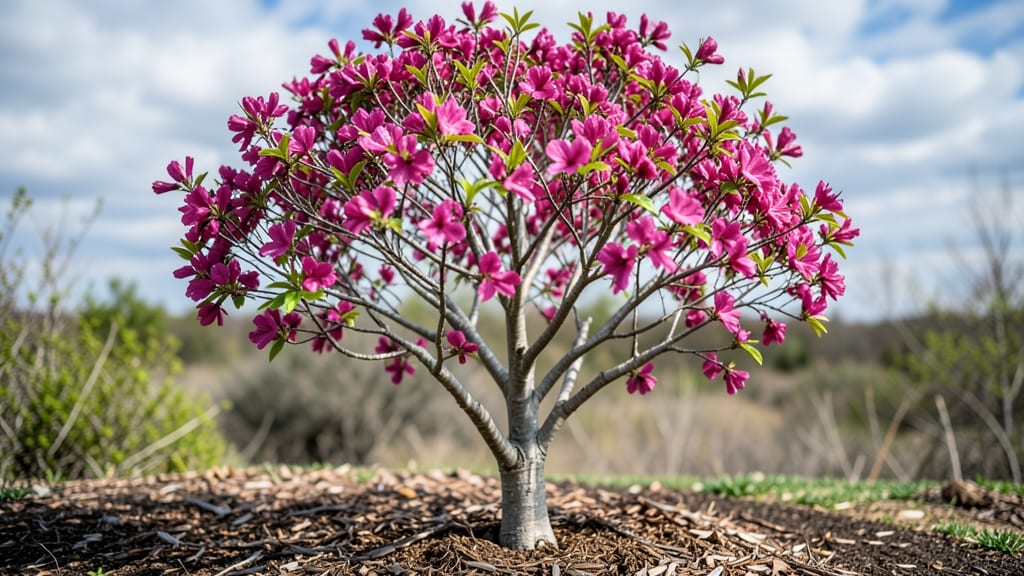
Wondering how tall does a redbud tree grow before it steals your backyard? This stunning 🌳 can range from a compact 10 feet to a towering 30 feet, depending on the variety and growing conditions.
If you're dreaming of a tree that bursts with springtime color but limited space, you'll want to know the difference between standard and dwarf varieties. The wrong choice could mean sacrificing your vision for that perfect pink canopy.
Standard Eastern redbuds often reach their mature height of 20-30 feet within 10-15 years, while dwarf cultivars stay between 8-12 feet—ideal for smaller gardens. The key to controlling height lies in proper planting and occasional pruning.
Whether you're planning a statement tree or a space-saving accent, understanding these growth patterns will help you make the best choice for your landscape. Let's explore the options that fit your space perfectly.

Redbud tree height guide: standard varieties and their mature sizes
When planning your garden or landscape, knowing how tall a redbud tree grows is crucial for creating a harmonious space. The Eastern redbud (Cercis canadensis), the most common variety, typically reaches a mature height of 20 to 30 feet with a spread of 25 to 35 feet.
This makes it a medium-sized tree perfect for medium to large gardens, where it can become a stunning focal point with its vibrant spring blooms.
If you're wondering how quickly it grows, the Eastern redbud grows at a moderate rate of 1 to 2 feet per year.
This means it will take about 10 to 15 years to reach its full height, giving you plenty of time to enjoy its early spring flowers and heart-shaped leaves.
The Western redbud (Cercis occidentalis) is slightly smaller, usually maturing between 10 to 15 feet tall, making it a great choice for smaller yards or urban landscapes.
For those with limited space, the Mexican redbud (Cercis canadensis var. mexicanus) is another option, typically growing to 15 to 20 feet tall. This variety is also more drought-tolerant, making it ideal for arid climates.
Understanding these height differences helps you select the perfect redbud for your space while ensuring it thrives for decades.
| Variety | Mature Height | Spread | Growth Rate | Best For |
|---|---|---|---|---|
| Eastern Redbud (Cercis canadensis) | 20-30 ft | 25-35 ft | 1-2 ft/year | Large gardens, focal points |
| Western Redbud (Cercis occidentalis) | 10-15 ft | 10-15 ft | 1 ft/year | Small yards, urban areas |
| Mexican Redbud (Cercis canadensis var. mexicanus) | 15-20 ft | 15-20 ft | 1-1.5 ft/year | Arid climates, drought-prone areas |
The Eastern redbud is the most popular choice for many gardeners because of its vibrant pink spring blooms and adaptability to various soil types. It thrives in USDA zones 4 to 9, making it suitable for a wide range of climates.
When planting, ensure it has enough space to spread its branches without crowding other plants or structures.
If you're planting near a patio or driveway, consider the Western redbud, which stays compact enough to avoid obstructing views or pathways. Its smaller size also makes it easier to maintain with regular pruning.
For those in dry or desert-like regions, the Mexican redbud is an excellent choice due to its drought tolerance and ability to thrive with minimal water once established.
When selecting a redbud tree, also consider its canopy shape and foliage color. Some varieties, like the 'Forest Pansy' redbud, feature stunning purple foliage that adds year-round interest to your landscape.
This variety typically grows to 15 to 20 feet tall, making it versatile for both small and medium-sized gardens.
Another factor to consider is the tree's growth habit. Redbuds tend to have a rounded or vase-shaped canopy, which means they spread wider than they grow tall. This makes them ideal for creating a natural canopy over seating areas or as a privacy screen in larger yards.
Always measure your space carefully before planting to ensure the tree has room to grow without becoming a nuisance.
For best results, plant your redbud tree in well-draining soil with full sun to partial shade. Avoid planting in low-lying areas where water may pool, as redbuds are susceptible to root rot if their roots remain waterlogged.
Mulching around the base of the tree helps retain moisture and regulate soil temperature, promoting healthier growth over time.
If you're unsure which variety to choose, start with the Eastern redbud for its reliability and stunning spring display. For smaller spaces, consider the Western redbud or a dwarf variety like 'Royal Purple', which typically grows to 8 to 12 feet tall.
With the right variety and proper care, your redbud tree will provide beauty and shade for years to come.
Remember, the height of your redbud tree can also be influenced by pruning and maintenance. Regular pruning helps control its size and shape, ensuring it fits perfectly in your garden while maintaining its health and vigor.
We’ll cover pruning tips in more detail in the next section, so stay tuned!
Dwarf redbud trees: compact options for small gardens and containers
If you love the vibrant pink blooms of redbud trees but have limited space, dwarf varieties are your perfect solution. These compact trees grow just 8 to 12 feet tall at maturity, making them ideal for urban gardens, patios, or even large containers.
Their slower growth rate also means less maintenance over time—ideal for busy gardeners who still want that stunning spring display.
Dwarf redbuds retain all the beauty of their larger cousins, including heart-shaped leaves and clusters of delicate flowers. The key difference is their height, which allows you to plant them closer to walkways, driveways, or even near windows where you can enjoy their seasonal show up close.
Plus, their smaller size means they adapt well to container gardening, perfect for balconies or small yards.
Dwarf Redbud Varieties: Pros and Cons
'Royal Purple'
Pros: Deep purple foliage, 8-10 ft tall, excellent for containers
Cons: Slower growth, may need pruning to maintain shape
'Forest Pansy'
Pros: Rich burgundy leaves, 8-12 ft tall, great for small spaces
Cons: Needs well-drained soil, sensitive to waterlogging
'Merlot'
Pros: Dark red foliage, 8-10 ft tall, cold-hardy
Cons: Requires regular pruning for best form
When choosing a dwarf redbud, consider your garden layout and sunlight conditions. These varieties thrive in full sun to partial shade, so place them where they'll receive at least 6 hours of sunlight daily.
For container growing, select a pot with drainage holes and use a high-quality potting mix to prevent root rot—a common issue with compact trees.
One of my favorite dwarf varieties is the 'Royal Purple', which boasts stunning dark purple leaves that contrast beautifully with its pink spring blooms. I planted mine in a large container near my patio, and it’s become the focal point of my small garden.
The key to keeping it healthy is regular watering during the first year and occasional pruning to encourage bushier growth.
For those with very tight spaces, consider multi-stemmed dwarf redbuds, which grow in clusters rather than a single trunk. These create a natural, shrub-like appearance while still reaching the same 8 to 12-foot height. They’re perfect for hedges or as accent plants in mixed borders. Just
If you're unsure which dwarf variety to choose, start with 'Forest Pansy'—it's one of the most adaptable and visually striking options. Its burgundy foliage adds year-round interest, while the spring flowers bring a burst of color that’s hard to match. With proper care, your dwarf redbud will thrive for decades, offering beauty with minimal space requirements.