
Trees
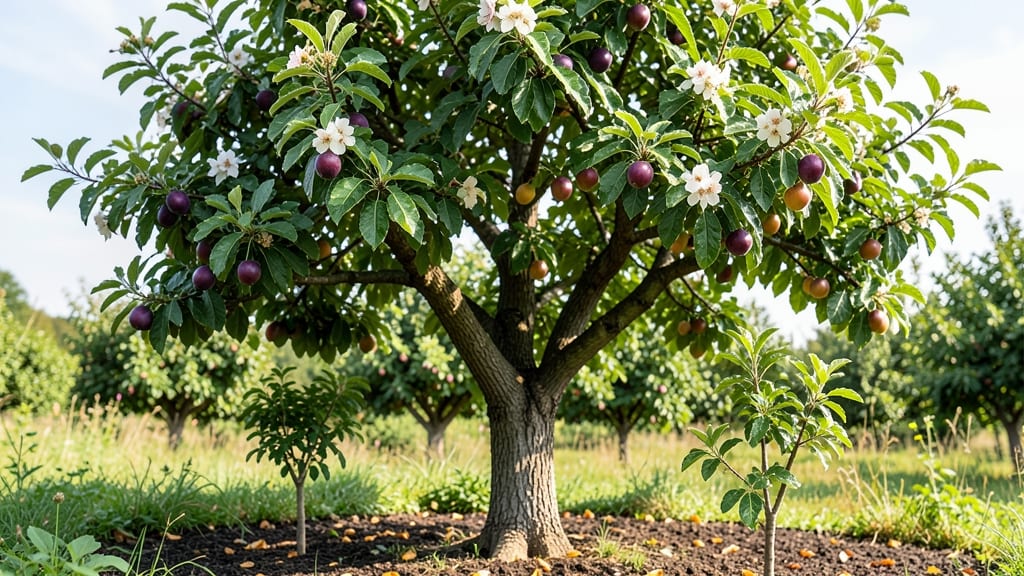
Plum tree height by variety: fastest-growing types and their mature sizes
Plum trees come in a stunning range of heights, from dwarf varieties perfect for small gardens to standard trees that can reach towering heights.
The variety you choose will determine not just how tall your plum tree grows, but also its fruit production, maintenance needs, and even how quickly it matures.
For example, some Japanese plums grow 3 feet per year in ideal conditions, while European plums may take 5-7 years to reach half their mature height.
If you're working with limited space, dwarf plum trees are an excellent choice, typically reaching 8-12 feet at maturity. These varieties are often grafted onto semi-dwarf rootstocks, which naturally restrict their growth.
On the other end of the spectrum, standard plum trees can soar to 20-30 feet, making them better suited for large properties or orchards where height isn't a concern.
Here’s a quick look at how plum tree heights compare across popular varieties, including their growth rates and mature sizes:
| Variety | Type | Mature Height | Growth Rate | Best For |
|---|---|---|---|---|
| Santa Rosa Plum | Standard | 20-25 ft | 1-2 ft/year | Large gardens, orchards |
| Methley Plum | Semi-Dwarf | 12-18 ft | 2 ft/year | Medium yards, containers |
| Dwarf Japanese Plum | Dwarf | 8-12 ft | 3 ft/year | Small spaces, urban gardens |
| Stanley Plum | Standard | 20-30 ft | 1.5 ft/year | Orchards, rural areas |
| Black Diamond Plum | Semi-Dwarf | 15-20 ft | 2.5 ft/year | Backyards, patio planting |
Japanese plums, like the Santa Rosa variety, often grow faster than European plums because they thrive in warmer climates. If you're in USDA zones 6-9, Japanese plums can reach mature height in 5-7 years, while European plums may take 8-10 years to fully develop.
This difference is crucial if you're planning to harvest fruit quickly or need a tree that fits your space sooner rather than later.
For fastest growth, focus on varieties like Methley Plum or Black Diamond Plum, which combine semi-dwarf size with rapid height increases. These are ideal if you want a balance between manageable height and quick fruiting.
If you're in a cooler climate, like USDA zone 5, opt for hardier varieties like Stanley Plum, which can tolerate colder winters and still grow at a steady pace.
One common misconception is that all plum trees grow at the same rate. In reality, pruning habits and rootstock type play a huge role.
For instance, a dwarf plum tree grafted onto St. Julian A rootstock will stay compact, while the same variety on Myrobalan rootstock could grow twice as tall. Always check the rootstock when purchasing to avoid surprises in your garden’s future skyline.
If you're planting near a fence or structure, consider espalier training for taller varieties. This technique spreads the tree horizontally along a wall or trellis, keeping its vertical growth in check while maximizing fruit production.
It’s a great way to enjoy plum tree fruit even in small urban spaces where height is limited.
Factors that affect plum tree height: soil, climate, and care
Your plum tree’s height isn’t set in stone—it’s heavily influenced by soil quality, climate conditions, and your care routine. Even the same variety can grow taller or shorter based on these factors.
For example, a Japanese plum might reach 20 feet in ideal conditions but stay under 15 feet in poor soil or with limited sunlight.
One of the biggest influences is soil drainage. Plum trees hate soggy roots, which can stunt growth or even kill the tree. Amending clay soil with compost or sand ensures proper drainage, encouraging healthier, faster growth.
Meanwhile, nutrient-rich soil with a pH of 6.0–7.0 gives your tree the energy it needs to reach its full potential.
Compacted or nutrient-poor soil can reduce plum tree height by 30–50%. Test your soil before planting—amend with organic matter if needed.
Climate plays a critical role too. Plum trees thrive in USDA Zones 5–9, but their height varies by region. In warmer climates, like Zone 9, plum trees grow faster and taller due to longer growing seasons.
Conversely, in cooler zones, like Zone 5, growth slows, and trees may mature at 10–15 feet instead of their full potential.
Your watering habits also impact height. Deep, consistent watering during the first 2 years of growth promotes stronger root development, leading to a taller, sturdier tree. Overwatering, however, can cause root rot and weaken the tree, while underwatering stresses it, both of which slow height growth.
Finally, pruning practices (which we’ll cover in the next section) and fertilization can push your plum tree to grow taller or keep it compact. For instance, applying a balanced fertilizer in early spring boosts growth, while light pruning encourages upward expansion.
Skip fertilization in late summer, though—this helps the tree focus on fruit production rather than excessive height.
By optimizing these factors, you can guide your plum tree’s growth—whether you want a towering shade tree or a manageable backyard fruit producer. Start with the right soil, adapt to your climate, and maintain consistent care for the best results.