
How To
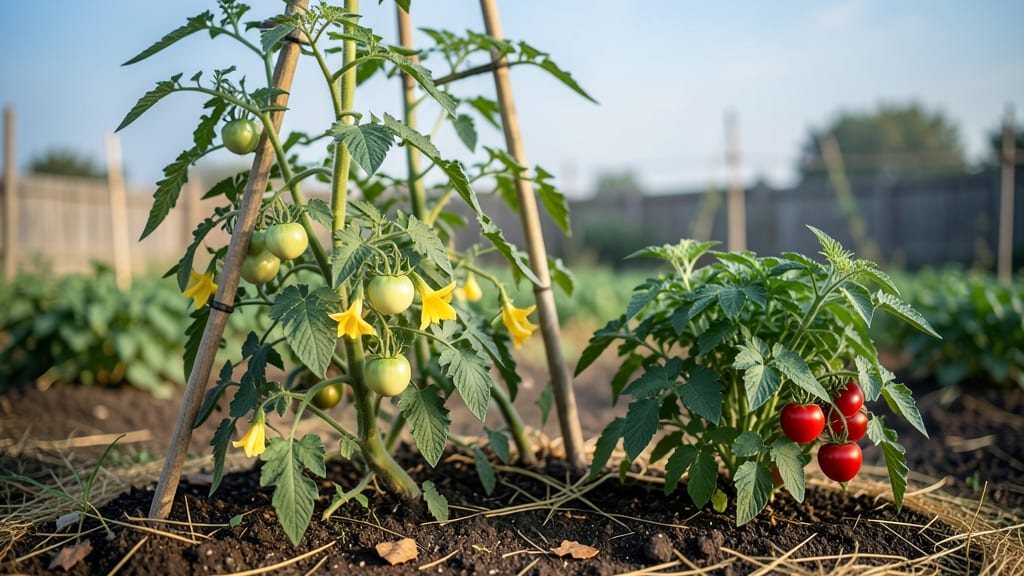
Tomato height by variety: dwarf to vining giants (with pruning needs)
Tomatoes aren’t one-size-fits-all when it comes to height. Some varieties stay compact enough for container gardens, while others climb like jungle vines—reaching heights of 10+ feet if left unchecked.
Understanding these differences helps you plan your garden layout, choose the right support structures, and even predict yield potential. Let’s break down the height ranges of popular varieties and what they need to thrive.
The two main growth habits—determinate and indeterminate—dictate how tall your tomatoes will grow. Determinate varieties stop growing once they flower, making them ideal for bush-style gardens or small spaces. Indeterminate varieties, on the other hand, keep growing and producing fruit until frost, often requiring trellises or cages to manage their height.
Your choice depends on your garden’s space and your goals for fruit production.
Dwarf varieties like Tiny Tim or Patio Princess max out at 1-3 feet, perfect for balconies or windowsills. These are great for beginners or those with limited space. Meanwhile, semi-dwarf varieties such as Roma or Celebrity grow 3-4 feet, offering a middle ground for small gardens. At the other end of the spectrum, indeterminate giants like Brandywine or Cherokee Purple can soar to 6-10 feet without pruning.
Here’s a quick comparison to help you visualize the differences:
| Variety | Type | Height Range | Pruning Needs | Best Support |
|---|---|---|---|---|
| Tiny Tim | Determinate | 1-2 ft | Minimal | Small cage |
| Patio Princess | Determinate | 2-3 ft | None | Pot or stake |
| Roma | Determinate | 3-4 ft | Light | Cage or stake |
| Brandywine | Indeterminate | 6-10 ft | Heavy | Trellis |
| Sungold | Indeterminate | 4-6 ft | Moderate | Stake or cage |
| Cherokee Purple | td style="padding: 8px; border-bottom: 1px solid #ddd;">Indeterminate6-8 ft | Heavy | Trellis |
Height isn’t just about aesthetics—it directly impacts fruit production. Taller indeterminate varieties produce fruit over a longer season, while shorter determinate types yield all at once. However, taller plants are more susceptible to disease pressure and need better air circulation.
That’s why pruning and support structures are non-negotiable for varieties like Brandywine or Cherokee Purple. Without proper care, their vines can become unruly and prone to blight or rot.
For container gardening, stick to dwarf or semi-dwarf varieties. They’re easier to manage and less likely to outgrow their space. If you’re growing in the ground, indeterminate varieties can be a productivity powerhouse, but they’ll need regular pruning and support to keep them from sprawling everywhere.
Think of it like training a vine—guide it upward to maximize sunlight exposure and fruit yield.
One common misconception is that taller tomatoes always produce more fruit. While they do yield over a longer season, their individual fruit size can vary. For example,
Pruning techniques to control height & boost fruit production
Pruning your tomato plants isn’t just about keeping them tidy—it’s a game-changer for height control and fruit production. Indeterminate varieties (like 'Sungold' or 'Brandywine') can grow 10+ feet without pruning, but strategic cuts redirect energy from vertical growth to bigger, juicier tomatoes.
Even determinate varieties (like 'Roma' or 'Celebrity') benefit from light pruning to improve airflow and reduce disease.
Start by understanding your tomato’s growth habit. Indeterminate tomatoes grow continuously, needing regular pruning to manage height and focus energy on fruit production. Determinate tomatoes, on the other hand, grow to a fixed size and require minimal pruning—just enough to remove diseased leaves or overcrowded branches.
The key is balance: prune too much, and you stunt growth; prune too little, and your plants become unruly and prone to pests.
The first technique to master is suckering. These are the small shoots that grow in the leaf axils (where leaves meet the stem). Pinch them off early to redirect energy to fruit production.
For indeterminate tomatoes, aim to leave 2-3 main stems and remove all suckers below the first flower cluster. This keeps your plant 3-5 feet shorter than it would grow naturally while boosting yield by up to 30%.
Next, consider topping, which involves cutting off the top few inches of the main stem once your plant reaches your desired height (typically 5-6 feet for indeterminate varieties). This signals the plant to stop growing taller and focus on ripening existing fruit.
Pair topping with leaf trimming—removing lower leaves to improve airflow and reduce disease risk. Focus on leaves below the first fruit cluster; these often touch the soil and can harbor pests.
For determinate tomatoes, pruning is less critical, but a light open-center approach works wonders. Remove suckers and diseased leaves while leaving the plant’s natural shape intact. This keeps height manageable (typically 3-4 feet) and ensures better air circulation.
Avoid heavy pruning, as determinate varieties rely on their bushy structure for support and fruit production.
Timing is everything. Prune in the morning when plants are hydrated, and avoid cutting during hot afternoons or rainy days, as this can stress the plant. Use sharp, clean pruners or your fingers for suckering to prevent tearing.
After pruning, apply a balanced fertilizer (like 5-10-10) to help the plant recover and redirect energy to fruit production.
Remember, every cut is an investment in your harvest. With the right pruning techniques, you’ll not only control your tomato’s height but also double your yield and keep your plants healthy all season long. Happy pruning—your future tomato feast depends on it! 🌱