
Plants
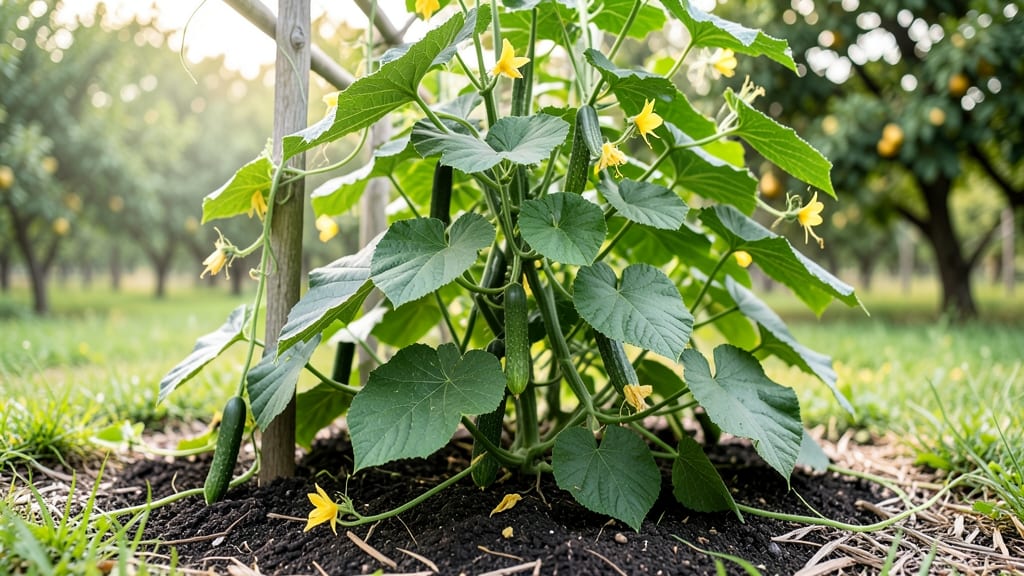
If you're planning your garden this season, knowing how tall will cucumber plants grow could save you from a tangled mess of vines or wasted space.
These 🥒 plants come in two dramatic extremes—some stay compact like a neat little bush, while others climb like a jungle gym straight to your rooftop.
The difference often comes down to variety: bush types max out around 3 feet, perfect for small gardens or containers, while traditional vining varieties can stretch up to 20 feet if given the freedom.
That's why choosing the right type matters so much for your growing space and harvest potential.
But here's the good news—you don't have to let vines take over. With the right support and care, even tall varieties can be managed neatly. I'll show you how to pick the perfect variety for your space and keep those cucumbers growing where you want them.
Whether you're working with limited balcony space or dreaming of a backyard jungle, understanding these growth habits means you'll know exactly what to expect—and how to make it work for you.

Cucumber plant heights by variety: bush vs. vining types explained
When planning your garden, knowing how tall cucumber plants grow helps you choose the perfect variety for your space. Cucumbers fall into two main categories: bush types (compact) and vining types (long-runners).
Bush varieties stay short—ideal for small gardens or containers—while vining types can sprawl up to 20 feet if left unchecked. The right choice depends on your space, sunlight, and whether you prefer trellising or sprawling vines.
For example, bush cucumbers like 'Bush Champion' or 'Spacemaster' max out at 1-3 feet tall, making them perfect for patios or raised beds. Meanwhile, classic vining varieties such as 'Straight Eight' or 'Marketmore' can reach 10-20 feet if given vertical support.
Without trellises, their vines sprawl horizontally, taking up precious garden real estate.
Here’s how to match your garden’s layout to the right cucumber type:
If you’re short on space, bush cucumbers are your best bet—they produce fruit without sprawling. However, they often yield fewer cucumbers than vining types. For maximum harvests, vining cucumbers are unbeatable, but you’ll need a trellis or fence to keep them contained.
Without support, their vines can spread 10-15 feet wide, crowding out other plants.
Popular bush varieties like 'Bush Crystal' or 'Diva' thrive in containers, while vining types such as 'Armenian' or 'Lemon' cucumbers need vertical space to shine. Always check seed packets for height estimates—some "bush" types can still climb if given a chance!
For example, 'Bush Champion' stays under 2 feet, but 'Straight Eight' can tower over your fence if unchecked.
Another factor to consider is fruit production. Vining cucumbers often produce more fruit but require more maintenance (pruning, trellising). Bush types are low-maintenance but may not satisfy if you love fresh cucumbers daily. For a balance, try semi-dwarf varieties like 'Salad Bush' (4-5 feet tall) or 'Spacemaker' (5-6 feet).
Pro tip: If you love vining cucumbers but lack space, opt for a small trellis or cage. Even a 4-foot vertical support can train vines upward, saving floor space while keeping harvests abundant. Just ensure the trellis is sturdy—20-foot vines can weigh down flimsy structures! 🌱
Cucumber plant heights by variety: bush vs. vining types explained
Cucumber plants can range from compact bush varieties that stay under 3 feet to aggressive vining types that reach 20 feet or more. The difference isn't just about space—it impacts your harvest, trellising needs, and even how you plan your garden layout.
Let’s break down the two main growth habits so you can choose what works best for your space.
First, bush cucumbers are the space-saving superstars. These varieties grow in a compact, rounded shape and typically max out at 1-3 feet tall. They’re ideal for containers, small gardens, or areas where vertical space is limited.
Popular examples include 'Bush Champion' and 'Spacemaster', both of which produce high yields in tight spaces without needing trellises.
| Variety Type | Height Range | Trellis Needed? | Best For |
|---|---|---|---|
| Bush Varieties | 1–3 ft | No (or minimal) | Containers, small gardens, urban balconies |
| Semi-Dwarf Vining | 3–6 ft | Yes (short trellis) | Small yards, raised beds, patio gardens |
| Traditional Vining | 10–20 ft | Yes (tall trellis or fence) | Large gardens, fences, or open spaces |
On the other end of the spectrum, traditional vining cucumbers are the heavyweights of the garden. Varieties like 'Straight Eight' or 'Marketmore' can send vines soaring to 10–20 feet tall, often requiring sturdy trellises, fences, or even arbors.
These plants thrive when given vertical support, as it improves air circulation and reduces disease risk. Without support, their sprawling habit can crowd out other plants and create a tangled mess.
For gardeners with limited space but still wanting a high yield, semi-dwarf vining varieties strike a balance. These grow 3–6 feet tall and can work well with short trellises or cages.
Examples include 'Sweet Success' or 'Diva', which are perfect for raised beds or small backyards. They offer the best of both worlds: compact growth with decent vining for better fruit production.
Choosing the right variety isn’t just about height—it’s also about your harvest goals. Bush types often produce smaller fruits but in larger quantities, while vining varieties may yield fewer but larger cucumbers.
If you’re growing for pickling, bush types are ideal. For slicing or market sales, vining varieties often win. Always check seed packets for mature height estimates and growth habits to avoid surprises.
Pro tip: If you love the idea of vining cucumbers but lack space, consider training them vertically early. Even traditional vining types can be pruned to stay within bounds if you’re willing to put in a little extra effort.
Just remember—the more you prune, the more you’ll need to support the remaining vines to prevent breakage.
🌱