
How To
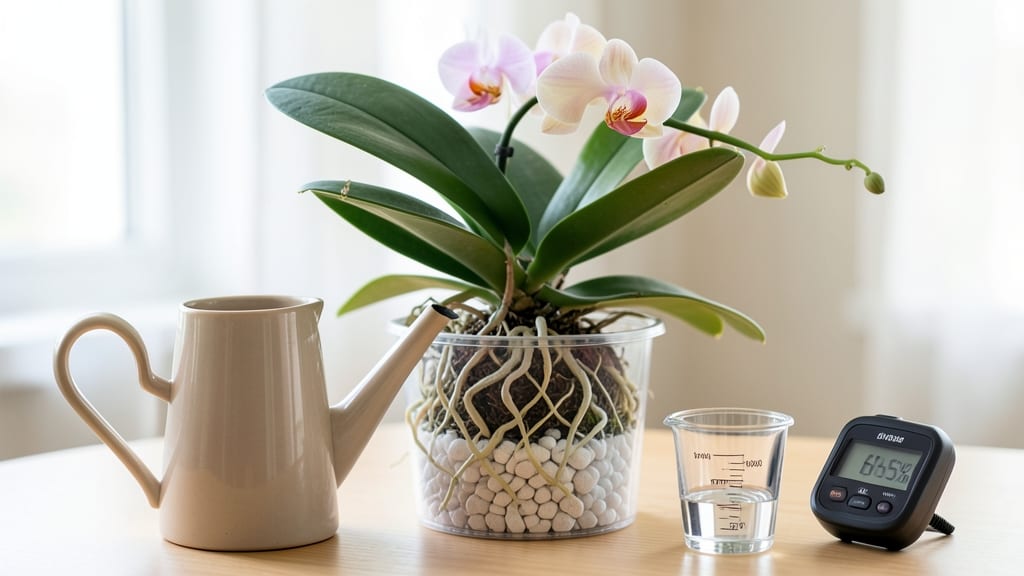
Mastering orchids in Hydroton—how often to water them—can feel like walking a tightrope. One wrong move, and your roots either drown or dry out.
But here’s the secret: Hydroton’s unique properties change the game entirely, and getting the watering rhythm right is the key to keeping your 🌸 orchid thriving without the guesswork.
Unlike traditional orchid mixes, Hydroton drains faster and holds moisture differently, which means your watering schedule needs a total overhaul. What works for a pot of bark won’t cut it here—and skipping this step could mean root rot or stunted growth in just a few weeks.
I’ll break down exactly how often to water your orchid in Hydroton, from the 5–7 day rule in summer to adjusting for humidity, pot size, and even your home’s climate. No more dead roots or wilting leaves—just a foolproof system that keeps your plant happy year-round.
Ready to transform your orchid care? Let’s dive into the schedule that’ll have your 🌸 orchid blooming like never before—without the stress of over- or underwatering.
The ideal Hydroton watering schedule for orchids by season and climate
Switching to Hydroton (expanded clay pebbles) for your orchids can feel like a gamble—especially when it comes to watering frequency. Unlike traditional bark mixes, Hydroton holds moisture differently, requiring a precise balance to avoid root rot or dehydration.
The key lies in understanding how temperature, humidity, and orchid type influence your schedule. For example, a Phalaenopsis in 75°F humidity needs water every 5–7 days, while a Cattleya in dry air might stretch to 10 days between waterings.
Hydroton’s porous structure drains quickly but also evaporates moisture faster than bark. This means less frequent watering overall, but deeper soaks when you do water. Think of it like a desert cactus—short, intense drinks instead of sipping all day.
The goal? Keep the roots hydrated but never soggy. Overwatering in Hydroton is a silent killer, often showing up as mushy, black roots before you even notice wilting leaves.
Your climate zone plays a huge role. In humid Southern states (like Florida), Hydroton stays damp longer, so you might water every 7–10 days. But in dry Western regions (like Arizona), the medium dries out faster—every 3–5 days in summer.
Even indoor conditions matter: a bathroom with high humidity? Water less often. A sunny living room with dry air? Increase frequency.
Seasonal shifts demand adjustments too. Spring and summer are high-growth periods for orchids, so water every 3–5 days (or when the top ½ inch of Hydroton feels dry). Fall and winter, growth slows, and you can stretch waterings to 10–14 days.
Pro tip: Group your orchids by type and location—this way, you can water them all at once without overcomplicating your routine.
Now, let’s talk orchid species. Phalaenopsis (moth orchids) are the most forgiving—water every 5–7 days year-round. Dendrobiums and Cattleyas, however, prefer drier conditions and can go 7–10 days between waterings. Oncidiums (dancing lady orchids) thrive with more frequent moisture—every 4–6 days—especially in warmth.
Always check the root color: silver/green means happy; black/brown means rot risk.
Here’s where Hydroton’s transparency becomes your best friend. Unlike bark, you can see the moisture level at a glance. If the pebbles look dark and damp at the top, wait. If they’re bone-dry and light-colored, it’s time to water.
This visual cue eliminates guesswork. Pair it with the "finger test"—stick your finger ½ inch into the Hydroton. If it feels dry, water; if it’s cool and moist, hold off.
| Season | Climate Zone | Orchid Type | Watering Frequency | Key Cues |
|---|---|---|---|---|
| Spring | Humid (e.g., Florida) | Phalaenopsis | Every 7–10 days | Top Hydroton dry to touch |
| Summer | Dry (e.g., Arizona) | Cattleya | Every 3–5 days | Leaves slightly wrinkled |
| Fall | Moderate (e.g., California) | Dendrobium | Every 7–10 days | New roots forming |
| Winter | Indoor (e.g., Heated Home) | Oncidium | Every 10–14 days | No new growth |
💧 Note: Adjust for pot size—smaller pots dry faster.
Pot size matters too. A 4-inch pot will dry out faster than a 6-inch pot, so scale your schedule accordingly. For example, a small Phalaenopsis in a 4-inch pot might need water every 5 days in summer, while the same orchid in an 8-inch pot could go 7–10 days. Group plants by pot size to streamline care. If you’re unsure, err on the side of less water—Hydroton’s aeration helps roots breathe, reducing rot risk
The ideal Hydroton watering schedule for orchids by season and climate
Watering orchids in Hydroton requires a delicate balance—too much water drowns the roots, while too little starves them. Unlike traditional bark mixes, Hydroton (clay pebbles) dries out faster and retains less moisture. This means your watering frequency must adapt to your climate, season, and even the pot size you’re using.
For most Phalaenopsis orchids (the most common type grown indoors), aim to water when the top 1-2 inches of Hydroton feel dry to the touch. But this changes dramatically between summer vs. winter.
In high humidity or cooler months, you might stretch watering to every 10-14 days, while scorching summer heat could demand watering every 3-5 days.
Hydroton’s unique properties—like its high porosity and neutral pH—make it ideal for orchids, but its speedy drying means you can’t rely on guesswork. Here’s how to tailor your schedule to your environment:
| Season | Climate Conditions | Watering Frequency | Hydroton Moisture Check |
|---|---|---|---|
| Spring | 60-75°F, moderate humidity | Every 5-7 days | Top 1-2 inches dry |
| Summer | 75-90°F, low humidity | Every 3-5 days | Top ½ inch dry |
| Fall | 50-65°F, increasing humidity | Every 7-10 days | Top 2 inches dry |
| Winter | 45-60°F, high humidity | Every 10-14 days | Top 2-3 inches dry |
💡 Pro Tip: Always water in the morning to allow excess moisture to evaporate during the day.
Your orchid’s growth stage also dictates watering needs.
During active blooming, maintain slightly more moisture (water every 5-7 days), but reduce frequency to every 10-14 days when the plant is dormant in late fall/winter. Phalaenopsis orchids in bloom need consistent hydration to support their heavy flower spikes, while Cattleya orchids (which prefer drier conditions) can handle longer stretches between waterings.
Pot size plays a critical role too. A 6-inch pot will dry out faster than a 10-inch pot, so adjust your schedule accordingly. For example, a smaller pot might need watering every 4-5 days in summer, while a larger pot could go 7-10 days.
Always check the weight of the pot: a dry Hydroton pot feels noticeably lighter than a damp one.
Finally, monitor your orchid’s roots for color changes. Healthy roots in Hydroton should appear greenish-gray when hydrated and silver-gray when dry. If you see black or mushy roots, you’re overwatering—stop immediately and let the Hydroton dry out completely.
Conversely, wrinkled leaves signal underwatering, so adjust your schedule to keep the medium evenly moist but never soggy.