
Companion Plants
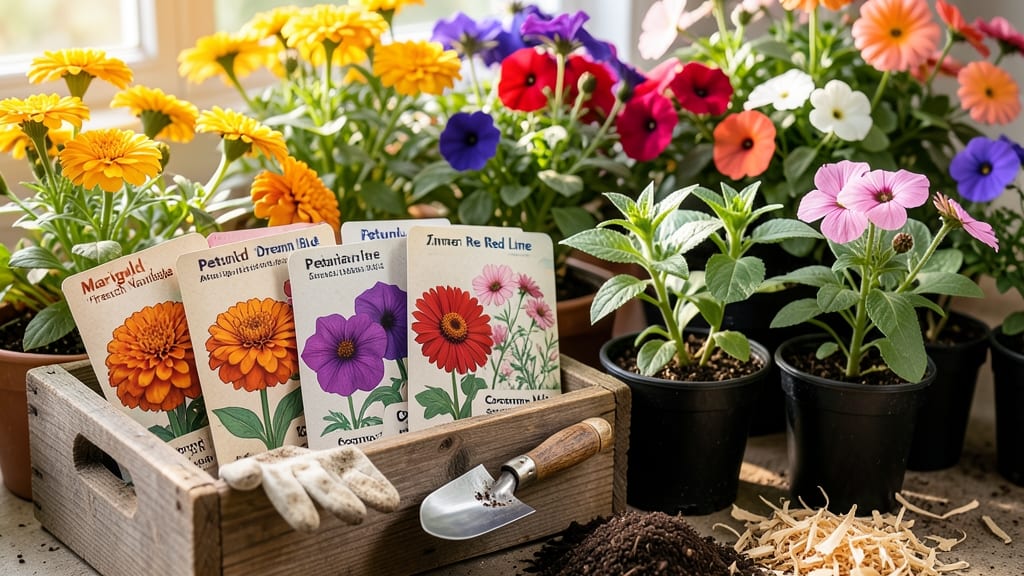
If you're asking "when can I plant annuals in Zone 5", timing is the difference between a thriving garden and a sad, frost-nipped disappointment. Zone 5 gardeners know the stakes—get it wrong, and your hard work melts away overnight.
But with the right strategy, you can beat the clock and enjoy a garden bursting with color and life from spring through fall.
The key is understanding your last frost date, which varies across Zone 5's diverse regions. Whether you're in Chicago, Denver, or Boston, knowing these exact windows lets you start seeds indoors or plant directly outside at the perfect moment.
I'll break down the science behind these dates and show you how to adjust for early bloomers versus heat-lovers.
You'll also discover which annuals are your best bets for early planting—think pansies and snapdragons—and which ones can wait until summer's heat arrives. Plus, I'll share pro tips to extend your season with row covers and other tricks that work like magic in cooler climates.
Let's dive into the exact timeline you need to make this your most successful planting season yet. Your garden's future starts with these simple but powerful steps.

Zone 5 frost dates: exact last frost timelines by region
Understanding your Zone 5 frost dates is the first step to planting annuals successfully. In this zone, the average last frost date typically falls between April 15 and May 15, but this varies significantly by location.
For example, cities like Chicago (Zone 5b) often see their last frost around May 1, while Denver (Zone 5a) may wait until May 15. Always check local weather forecasts for the most accurate predictions.
Zone 5 spans USDA Zones 5a and 5b, with Zone 5a experiencing colder winters (average annual minimum temperatures of -20°F to -15°F) and Zone 5b slightly warmer (-15°F to -10°F).
These temperature differences can shift your frost dates by 1-2 weeks, so knowing your specific sub-zone matters. For instance, Boston (Zone 5b) tends to warm up faster than Minneapolis (Zone 4b), even though both are in Zone 5 territory.
Microclimates add another layer of complexity. Urban areas like Chicago’s downtown may experience heat islands, delaying frost by a week or more, while rural areas or higher elevations (like Denver’s foothills) can have earlier frosts.
Always observe your garden’s unique conditions—low-lying spots or northern exposures are the last to warm up.
To plan effectively, use the 10-day rule: Wait until the average last frost date has passed, then add 10 days of buffer time for safety. This accounts for unpredictable late frosts, which can still occur in late May or early June in Zone 5.
For cold-hardy annuals like pansies or snapdragons, you can plant 2-4 weeks before your last frost date, but tender varieties like marigolds or zinnias need to wait until all danger of frost has passed.
Another critical factor is soil temperature. Most annuals thrive when soil reaches 50°F to 60°F. Use a soil thermometer to check—if your soil is still cold, delay planting.
In Zone 5, soil may not warm enough for heat-loving plants like tomatoes or peppers until late May or early June, even if air temperatures feel spring-like.
🌱 Zone 5 Last Frost Timelines by Region
| Region | Zone 5a Last Frost | Zone 5b Last Frost | Notes |
|---|---|---|---|
| Chicago, IL | May 10 | April 25 | Urban heat islands delay frost |
| Denver, CO | May 15 | May 5 | High elevation = later warming |
| Boston, MA | April 30 | April 20 | Coastal areas warm faster |
| Minneapolis, MN | May 12 | May 2 | Continental climate = slower warming |
For a more precise timeline, track your local first frost dates in fall (typically October 15 to November 1 in Zone 5) and count backward. This helps you estimate your frost-free growing season, which in Zone 5 usually spans 120 to 150 days.
If you’re eager to start planting earlier, consider cold frames or row covers, which can protect tender plants from late frosts. Just remember: never risk it with frost-sensitive annuals like petunias or geraniums until temperatures are consistently above 50°F.
Pro tip: Use frost-sensitive plants as indicators. If your tomato seedlings or peppers show signs of stress (yellowing leaves, stunted growth), it’s a sign to wait. Meanwhile, cold-hardy annuals like alyssum or lobelia can handle light frosts down to 25°F, making them ideal for early planting.
Finally, always have a backup plan for late frosts. Keep row covers or frost cloth on hand, and monitor the National Weather Service or local agricultural extensions for updates. With these tools and timelines, you’ll be ready to plant annuals in Zone 5 with confidence—no more guessing games!
Best annuals to plant early vs. late in Zone 5
Knowing when to plant annuals in Zone 5 isn't just about dates—it's about matching plants to your garden's risk periods. Early spring brings cold-hardy annuals that can handle light frosts, while late summer calls for heat-loving varieties that thrive in Zone 5's warmest months.
Let's break down the best annuals for each planting window and how to time them perfectly.
For early spring planting (after your last frost date), focus on cold-tolerant annuals like pansies, snapdragons, and lobelia. These plants can handle temperatures down to 25°F and often bloom within 6-8 weeks of planting.
I always start these in late April or early May, depending on my region's frost-free date.
Your visual guide below compares early vs. late planting annuals, including their ideal planting windows and key care notes. This will help you visualize which plants belong where in your garden calendar.
| Plant Type | Planting Window | Key Notes |
|---|---|---|
| Pansies | Early Spring (4-6 weeks before last frost) | Cold-hardy, blooms in cool weather |
| Snapdragons | Early Spring (4-6 weeks before last frost) | Tolerates light frost, great for containers |
| Marigolds | Late Spring (after last frost) | Heat-tolerant, pest-repellent |
| Zinnias | Late Spring (after last frost) | Loves full sun, blooms all summer |
| Cosmos | Late Spring (after last frost) | Drought-tolerant, self-seeds easily |
| Sunflowers | Late Spring (after last frost) | Fast-growing, great for pollinators |
For late summer planting, I recommend heat-loving annuals like marigolds, zinnias, and cosmos. These varieties can handle Zone 5's summer heat and often continue blooming until the first frost.
Plant these after your last frost date, typically in late May or early June, for continuous color through fall.
Don't forget about succession planting—this is my secret weapon for extending my garden's productivity. By planting fast-maturing annuals like bush beans or radishes every 2-3 weeks, I ensure a steady harvest all season long. This works especially well in Zone 5 where the growing season is shorter.
Remember, late May and early June are still risk periods for unexpected frosts in Zone 5. Always keep an eye on your local weather forecast and have row covers ready to protect tender seedlings if needed.
With this strategy, you'll have a garden that's bursting with color from spring through fall.