
Plants
Planting blackberries in Georgia isn’t just about dropping a cane in the ground—it’s a timing game that determines whether your vines thrive or struggle. With the state’s 7b-8b climate zones and unpredictable frost patterns, getting the window right means the difference between a bountiful harvest and years of disappointment.
Most Georgia gardeners assume spring is the only time to plant, but the truth is more nuanced. The ideal window spans from late winter through early spring, when soil temperatures rise but frost risks still linger.
This period—roughly February to March—gives your 🫐 blackberry canes the best shot at establishing strong roots before summer heat arrives.
Why does this matter? Because planting too early exposes young vines to late frosts, while waiting too long delays their growth cycle.
I’ll break down the exact months, soil prep tips, and variety choices that work best in Georgia’s chill-hour zones, so you can avoid common mistakes and set your blackberries up for success.
Ready to transform your backyard into a berry-producing powerhouse? Let’s dive into the science—and the simple strategies—that will have your blackberries fruiting like a pro by next summer.
Georgia’s blackberry planting zones: chill-hours & best regions for success
Georgia’s diverse climate creates unique challenges and opportunities for blackberry growers. The state spans USDA Zones 7b-8b, but chill-hour requirements—400-1,000 hours below 45°F—dictate which varieties thrive where. North Georgia’s cooler microclimates favor high-chill varieties, while South Georgia’s warmer zones demand low-chill types to prevent winter dieback.
Understanding your chill-hour zone is critical. For example, Chester (900+ chill hours) flourishes in North Georgia’s Zone 7b, while Natchez (300-400 chill hours) thrives in South Georgia’s Zone 8a. Planting the wrong variety can mean poor fruiting or no harvest at all.
Here’s how Georgia’s regions break down for blackberry success:
| Region | Chill-Hour Zone | Best Varieties | Planting Window |
|---|---|---|---|
| North Georgia (Zone 7b) | 900-1,000 hours | Chester, Triple Crown, Ouachita | Late February - Early March |
| Central Georgia (Zone 8a) | 600-800 hours | Arapaho, Navaho, Prime-Ark Freedom | Mid-March - Early April |
| South Georgia (Zone 8b) | 300-500 hours | Natchez, Ouachita, Prime-Ark Freedom | Late March - April |
In North Georgia’s cooler zones, aim for late February to early March planting to avoid late frosts that can kill young canes. The Chester variety, for example, needs those extra chill hours to set buds for a heavy summer harvest.
Meanwhile, South Georgia’s warmer microclimates shift the window to late March or April, when soil temperatures consistently stay above 50°F.
For thornless varieties like Prime-Ark Freedom, which work well in Central and South Georgia, focus on early April planting. These varieties are low-maintenance and high-yielding, perfect for home gardeners who want easier harvesting without sacrificing productivity.
One common mistake? Assuming all blackberries need the same chill hours. High-chill varieties planted in South Georgia’s heat may leaf out early but fail to fruit because they didn’t get enough winter chill. Always match your variety to your zone—it’s the #1 rule for Georgia blackberry success.
Pro tip: If you’re in a transition zone (like Central Georgia), consider interplanting varieties with different chill requirements. For example, pair Arapaho (600 hours) with Navaho (400 hours) to stagger your harvest from late spring to early fall.
Finally, soil preparation varies by region. North Georgia’s clay-heavy soils need amendments like compost or sand, while South Georgia’s sandy soils benefit from orgainc mulch to retain moisture. Always test your soil pH (5.5-6.5) before planting—acidic soil stunts root growth and reduces yields.
With the right variety and timing, your Georgia blackberries can produce bountiful harvests for years. Next, we’ll dive into the exact planting months and how to time it for maximum yield.
Exact planting months in Georgia: when to set blackberry roots for maximum yield
Timing your blackberry planting in Georgia isn’t just about seasons—it’s about avoiding late frosts while ensuring soil warmth for root establishment. The ideal window spans from mid-February to early April, but exact dates depend on whether you’re planting bare-root canes (fall/winter) or potted plants (spring).
For bare-root blackberries, the best time is late winter (February), when dormancy ends but frost risk remains low. This gives roots 6-8 weeks to establish before Georgia’s last average frost (mid-March).
Potted blackberries, however, thrive when planted in early spring (March-April), once soil temperatures hit 55°F+.
North Georgia’s cooler microclimates (e.g., Zone 7b) favor earlier planting (Feb-March), while South Georgia’s warmer zones (8a-8b) allow March-April flexibility. Always check your local frost dates—Georgia’s first frost can arrive as early as mid-November in mountainous areas.
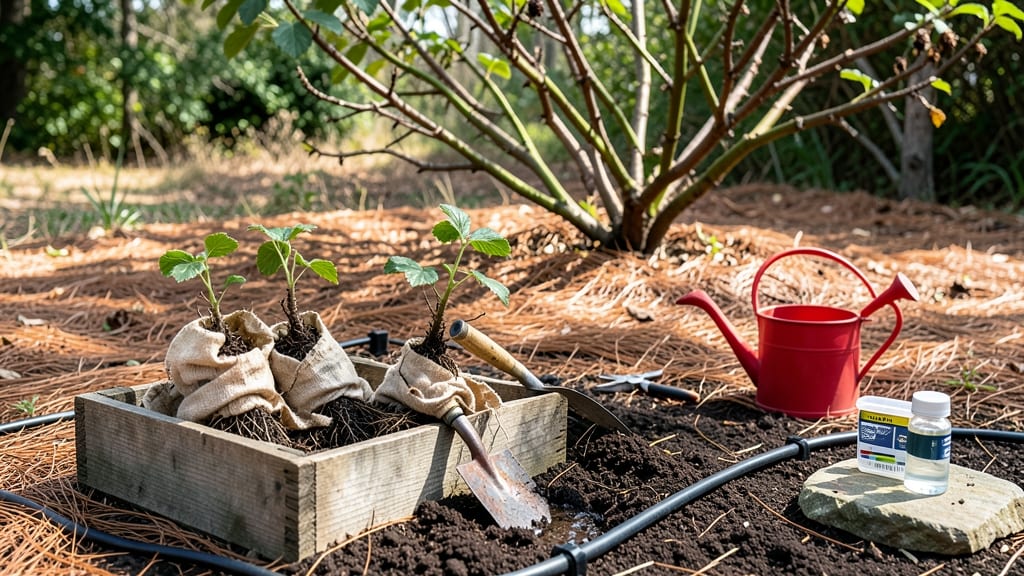
Pro tip: Plant on a cloudy day to reduce transplant shock. Water deeply immediately after planting and maintain consistent moisture for the first 30 days to encourage root growth. Mulch with straw or pine needles to retain soil moisture and suppress weeds.
If you miss the spring window, don’t panic—fall planting (October) is possible in Zone 8+ using established potted plants. However, avoid planting bare-root canes in fall, as they struggle to establish before winter dormancy.
For container gardening, plant anytime soil isn’t frozen, but prioritize spring for best yields.
Remember: Rushing planting to beat frost can backfire—cool soil slows root growth. Patience pays off with healthier vines and bigger harvests next season. 🌱