
Plants
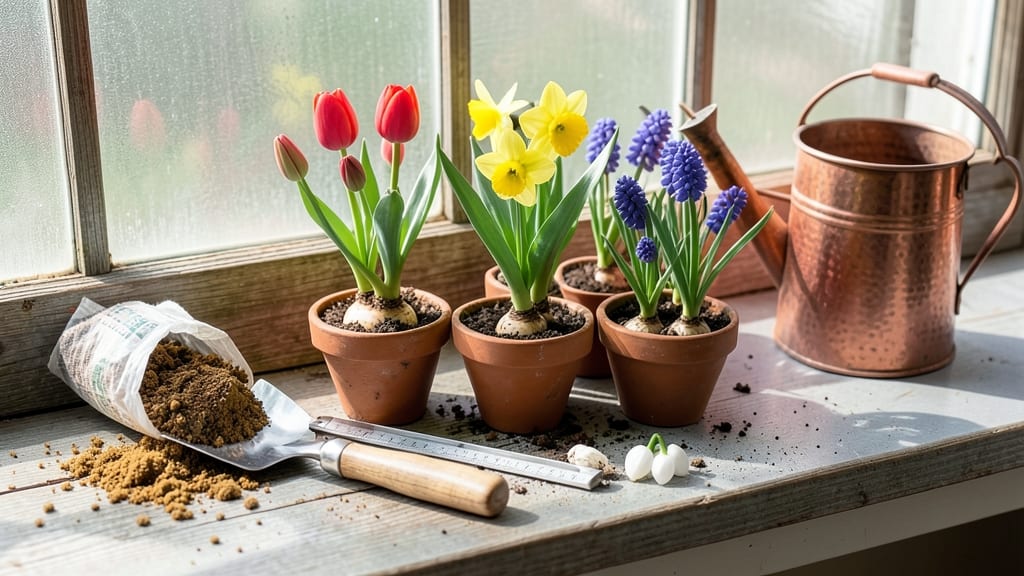
Knowing when to plant bulbs in pots can transform your container garden from a winter flop to a spring showstopper—especially in zones like 6a where timing is everything.
Those 🌷 Spring Flowering Bulbs (think tulips, daffodils, and hyacinths) need a head start, but planting too early or late risks frost damage or weak blooms.
Here's the secret: soil temperature is your best friend. Aim for 50°F-60°F when planting fall bulbs in pots—typically 4-6 weeks before your first frost. That usually lands in October-November for most gardeners, but don't guess: a simple soil thermometer (or even your finger!) tells you when it's prime time.
Whether you're forcing Christmas blooms indoors or prepping outdoor pots for next spring, I'll break down the exact timing for indoor vs. outdoor setups.
You'll learn how to avoid common pitfalls like overcrowding or waterlogging, and which bulbs thrive best in containers—so you can enjoy those vibrant blooms without the stress.
Let's dive into the soil temperature triggers and seasonal hacks that'll have your potted bulbs popping up right on schedule—no frozen surprises included.
Optimal soil temperature ranges for planting bulbs in pots
Getting the soil temperature right is the secret to successful bulb planting in pots. Unlike in-ground planting, containers heat up and cool down faster, so precise timing matters. Most spring-blooming bulbs like tulips and daffodils need soil temps between 50°F-60°F—this ensures roots establish before winter dormancy.
For summer bulbs such as dahlias, wait until soil warms to 60°F-70°F to avoid rot.
Why does temperature matter so much? Bulbs are dormant in cold soil but rot in warm, soggy conditions.
A soil thermometer ($10 at garden centers) gives accurate readings, but you can also use the finger test: push your finger into the soil—if it feels cool but not freezing, it’s likely in the ideal range.
For indoor forcing (like paperwhites), soil temps should stay between 65°F-70°F for consistent blooming.
Here’s a pro tip: Pre-chill bulbs for 6-8 weeks in a cool, dark place (like a fridge) before planting in pots. This mimics winter conditions and jumpstarts root growth. Just store them in a paper bag with pebbles for airflow—no soil needed yet!
| Bulb Type | Ideal Soil Temp | Planting Window | Notes |
|---|---|---|---|
| Spring Bloomers | 50°F–60°F | Fall (Oct–Nov) | Pre-chill bulbs for 6–8 weeks |
| Summer Bloomers | 60°F–70°F | Spring (Apr–May) | Use well-draining mix |
| Fall Bloomers | 55°F–65°F | Late Summer (Aug–Sep) | Plant 6–8 weeks before frost |
| Forcing Bulbs (Indoor) | 65°F–70°F | Year-round (with control) | Use grow lights if needed |
If you’re in a warmer climate (Zones 8-10), adjust your timing by 4-6 weeks later—bulbs can rot in overheated soil. For cold climates (Zones 3-6), plant earlier to let roots establish before the ground freezes.
A trick I swear by? Use black plastic pots—they absorb heat faster in spring and retain warmth longer in fall.
Ever wondered why some bulbs bloom earlier than others? It’s not just about the variety—pot size and soil mix play a role too. Smaller pots (under 6 inches) heat up faster, which can trigger blooming 2-3 weeks earlier than larger containers.
For consistent results, stick to pots that are at least twice as wide as the bulb’s diameter.
Don’t have a soil thermometer? No problem! Check your local USDA Hardiness Zone and use this rule of thumb: Plant spring bulbs when your zone’s average low temperature drops to 40°F-45°F at night. For summer bulbs, wait until daytime temps consistently stay above 60°F.
One more critical tip: Water before planting to settle the soil and eliminate air pockets. Bulbs need consistent moisture but hate soggy conditions—aim for soil that feels like a wrung-out sponge. After planting, place pots in a shady spot for a week to reduce stress on the bulbs.
Pro move: Label your pots with the planting date and bulb type. This helps you track which varieties need fertilizer in spring (like tulips) and which should be left alone until next year (like daffodils). A simple toothpick + masking tape works perfectly!
Remember, potted bulbs are more vulnerable to temperature swings than in-ground ones. If a late frost threatens, move pots to a protected spot or cover them with burlap. With the right timing, your containers will burst with color—earlier and more reliably than garden beds!
Best bulbs to grow in pots by planting season
Choosing the right bulbs for your pots depends entirely on when you plant them. Fall-planted bulbs like tulips and daffodils thrive in containers because they establish roots before winter dormancy. Meanwhile, summer bulbs such as dahlias and cannas need warmer soil to sprout, making spring the ideal time.
Let’s break down the best options for each season and how to care for them in pots.
For spring bloomers, focus on bulbs that tolerate cooler temperatures. Hyacinths and grape hyacinths are excellent choices—their fragrant flowers appear early, brightening patios before summer heat arrives. Use 6-inch-deep pots for these varieties, as their roots need space to grow.
Add a layer of gravel at the bottom to prevent rot from excess moisture during winter.
🌱
- Tulips – 6-inch pots, full sun, 6-8 weeks to bloom
- Daffodils – 8-inch pots, partial shade, deer-resistant
- Hyacinths – 5-inch pots, fragrant, needs well-draining soil
- Crocuses – 4-inch pots, early bloomers, tolerates cold
- Dahlias – 12-inch pots, full sun, stake for support
- Cannas – 10-inch pots, tropical look, water deeply
- Gladiolus – 8-inch pots, cut flowers, needs space
- Alliums – 6-inch pots, drought-tolerant, unique spherical blooms
- Paperwhites – 3-inch pots, indoor forcing, fast-growing
- Amaryllis – 8-inch pots, holiday blooms, needs bright light
- Caladiums – 6-inch pots, foliage plants, shade-loving
If you’re forcing bulbs indoors for holiday blooms, like paperwhites or amaryllis, plant them 6-8 weeks before you want flowers. Place pots in a cool, dark spot (like a basement) for 4-6 weeks to mimic winter conditions, then move them to a bright, warm window to trigger blooming.
This method works best for paperwhites, which bloom in just 6-8 weeks from planting.
For outdoor containers, prioritize bulbs that match your climate zone. In USDA Zones 3-5, tulips and daffodils thrive in pots left outside year-round, while Zone 7+ gardeners can experiment with tropical bulbs like cannas or ginger lilies.
Always use a lightweight potting mix to avoid pots becoming too heavy when saturated.
Remember, container size matters. A single dahlia bulb needs at least a 12-inch pot, while small crocuses can share a 4-inch pot with 3-4 companions. Layer bulbs with larger ones at the bottom and smaller ones on top to create a stunning cascading effect when they bloom.
This technique also saves space and maximizes your pot’s potential.
🌿