
Planting
Knowing when to plant garden in Alabama can mean the difference between a bountiful harvest and a wasted season. The state’s warm climate and long growing season offer plenty of opportunities, but timing is everything—especially when frost dates and soil temperatures shift between North and South Alabama.
With zones ranging from 7a to 8b, Alabama gardeners have flexibility, but planting too early or late can leave your 🌱 vulnerable to cold snaps or scorching heat.
Whether you're growing tomatoes, herbs, or flowers, understanding your zone’s frost-free deadlines and ideal soil temps is the key to a thriving garden.
I’ll break down the best months to plant by crop type, from cool-season greens to heat-loving vegetables, and share tips for adjusting your schedule based on Alabama’s unpredictable weather. No more guesswork—just a foolproof planting plan tailored to your region.
Ready to turn your garden dreams into reality? Let’s dive into the exact timing and strategies you need for a successful Alabama harvest.
Alabama planting calendar by zone: frost dates & ideal soil temperatures
Alabama spans USDA Hardiness Zones 7a-8b, giving gardeners a long growing season but requiring careful timing. The last spring frost typically arrives between mid-March (North Alabama) and early March (South Alabama), while the first fall frost hits mid-November in northern regions and late November in southern areas.
Soil temperatures are equally critical—cool-season crops like lettuce and broccoli thrive in 45-65°F soil, while warm-season plants such as tomatoes and peppers need 60-85°F to germinate. Below, I’ve broken down the key frost-free dates and soil temperature ranges for Alabama’s major cities.
| Zone | City | Last Frost Date | First Frost Date | Cool-Season Soil Temp (°F) | Warm-Season Soil Temp (°F) |
|---|---|---|---|---|---|
| 7a | Huntsville | March 25 | November 15 | 45-65°F | 65-85°F |
| 7b | Birmingham | March 15 | November 1 | 45-65°F | 60-80°F |
| 8a | Montgomery | March 5 | November 10 | 50-70°F | 65-85°F |
| 8b | Mobile | February 28 | November 25 | 55-75°F | 70-90°F |
*Frost dates are averages—always monitor local forecasts for adjustments.
For North Alabama (Zones 7a-7b), the last frost date is often late March, so I recommend waiting until April 1 to plant warm-season crops like tomatoes and peppers. In South Alabama (Zones 8a-8b), you can plant warm-season crops as early as mid-February if soil temperatures are ideal.
Use a soil thermometer to check temperatures before planting. For cool-season crops, aim for 45-65°F soil, while warm-season plants need 60°F+. If your soil is too cold, use black plastic mulch or row covers to warm it faster.
In Birmingham (Zone 7b), I’ve found that late March is the safest time to plant tomatoes and peppers outdoors, while Mobile (Zone 8b) gardeners can start as early as mid-February. Always adjust for microclimates—urban areas may stay cooler longer than rural spots.
Pro tip: Direct-sow cool-season crops like spinach and kale in late summer (August) for fall harvests. Warm-season crops like squash and beans can handle light frosts if planted early, but avoid hard frosts at all costs.
Alabama’s frost-free season spans 210-240 days, giving you plenty of time for two full growing seasons—spring and fall. Plan your succession planting accordingly to maximize your harvest!
🌱
Best months to plant vegetables, flowers & herbs in Alabama (by type)
Alabama’s long growing season lets you grow almost year-round, but timing matters for each plant type. Cool-season crops like lettuce and broccoli thrive in spring and fall, while warm-season favorites such as tomatoes and peppers need soil temperatures above 60°F to sprout.
Herbs like basil and cilantro also follow these seasonal rules—planting them at the wrong time means stunted growth or bolted leaves.
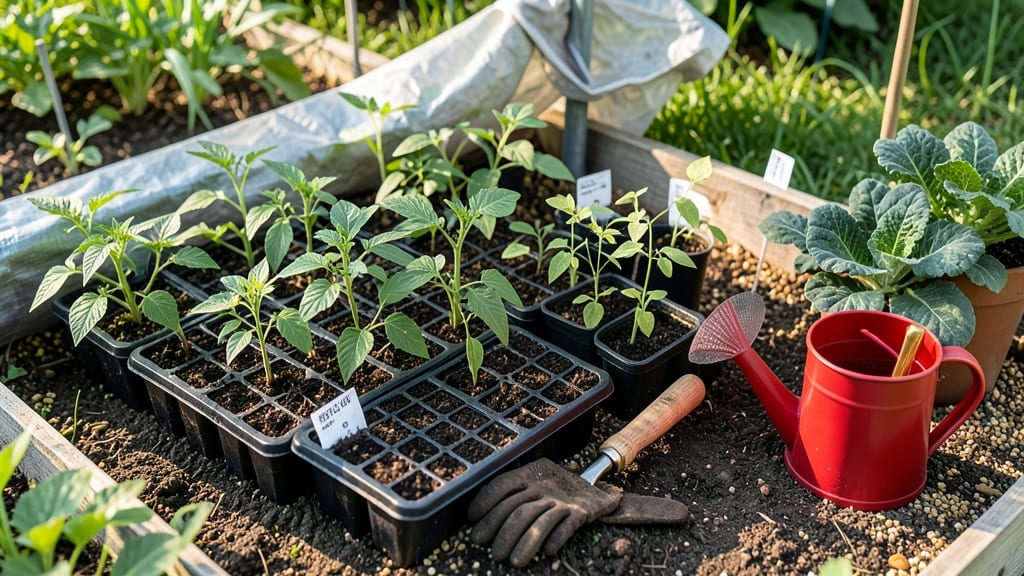
For vegetables, start seeds indoors 6-8 weeks before your last frost date (typically late February to early March for North Alabama and January to February for South Alabama). Transplant seedlings outdoors after the last frost, usually mid-March to early April in most zones. Succession planting every 2-3 weeks ensures a continuous harvest of fast-growing crops like radishes, lettuce, and bush beans.
🌱 Alabama Planting Schedule by Crop Type
| Crop Type | Best Planting Months | Soil Temp Requirement | Notes |
|---|---|---|---|
| Cool-Season Veggies | Feb-Mar, Aug-Sept | 45-65°F | Lettuce, broccoli, spinach |
| Warm-Season Veggies | Apr-May, June-July | 60-85°F | Tomatoes, peppers, cucumbers |
| Herbs | Mar-Apr, Aug-Sept | 50-75°F | Basil, parsley, cilantro |
| Flowers | Feb-Mar, Aug-Sept | 55-70°F | Marigolds, zinnias, pansies |
Flowers like marigolds and zinnias are heat-loving annuals that thrive when planted after the last frost. For perennial flowers such as black-eyed Susans or coneflowers, plant in early spring (March-April) or early fall (September) to give roots time to establish before winter. Bulbs like tulips should go in the ground by November for spring blooms.
Herbs are a gardener’s secret weapon for flavor, but their planting windows are short. Cilantro and parsley bolt (go to seed) in Alabama’s heat, so plant them in early spring or late summer. Basil and oregano, however, love the heat and can be planted as soon as soil warms in April-May. Rosemary and thyme are perennial herbs that handle Alabama’s winters if planted in fall (September-October).
Don’t forget about succession planting—it’s the trick to a never-ending harvest.
For fast-growing crops like radishes, lettuce, and bush beans, sow new seeds every 2-3 weeks during their growing season. Slow growers such as cabbage or broccoli can be planted in late summer for a fall harvest before the first frost hits.
Pro tip: Use shade cloth in summer’s peak heat to protect cool-season crops like spinach or kale. And always check your local frost dates—North Alabama’s last frost can be 2-3 weeks later than South Alabama’s, so adjust accordingly.
With these timing tricks, your Alabama garden will be productive from spring to fall!