
Plants
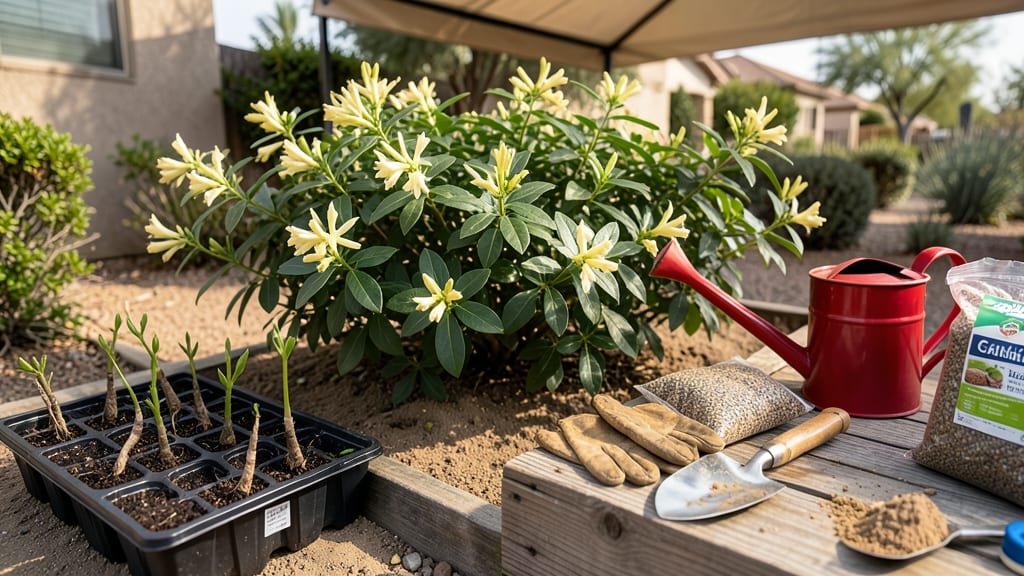
Planting jasmine in Arizona isn't just about timing—it's about surviving the desert's brutal heat and unpredictable monsoons. The wrong window could leave your 🌸 struggling or even dying before it blooms, but get it right, and you'll have fragrant vines thriving year after year.
Most gardeners assume spring is the only safe time to plant, but Arizona's climate demands a different approach. The cool winter months (November through February) offer the perfect balance of mild temperatures and lower humidity—ideal for establishing roots before summer's intensity hits.
What makes this even more critical is choosing the right varieties. Not all jasmine can handle Arizona's 110°F+ summers, so we'll cover the heat-resistant types that actually flourish here while avoiding common mistakes that sabotage new plants.
Let me show you exactly when to plant, which varieties to pick, and how to give your jasmine the best shot at becoming a fragrant, low-maintenance centerpiece in your Arizona landscape.
Best months to plant jasmine in Arizona’s climate zones (with exact dates)
Arizona’s USDA Zone 9b climate creates unique challenges for jasmine growers. Unlike temperate regions, the monsoon season and extreme heat dictate your planting window. The ideal time to plant jasmine in Arizona is during the coolest months—when soil temperatures drop below 80°F—to help roots establish before summer’s intensity.
This typically means planting between November and February, with December and January being the absolute best months.
Why? Jasmine plants struggle with heat stress and poor drainage during Arizona’s summer.
Planting too early (like in September or October) risks exposing young roots to 100°F+ soil temperatures, while planting too late (after March) may coincide with the start of the monsoon season, increasing fungal risks. Timing is everything!
Here’s how to align your planting with Arizona’s microclimates. Phoenix and Tucson (low desert) have the longest frost-free periods, while Flagstaff (high desert) has cooler nights and earlier frost risks. Each zone requires slight adjustments to your planting schedule.
🌱 Jasmine Planting Schedule for Arizona
| Zone | Best Planting Window | Soil Temp Goal | Key Consideration |
|---|---|---|---|
| Phoenix/Tucson (Low Desert) | November 15 – February 15 | Below 80°F | Avoid summer heat; use drip irrigation. |
| Flagstaff (High Desert) | October 1 – March 1 | Below 70°F | Cooler nights; watch for early frost risks. |
| Sedona (Transition Zone) | November 1 – February 10 | Below 75°F | Balance sun exposure; use morning shade. |
💡 Pro Tip: Test soil moisture weekly after planting. Jasmine roots need consistent moisture but hate soggy soil.
For container-grown jasmine, you can extend your planting window slightly into late March if you use 5-gallon pots with well-draining soil. Containers heat up faster, so move them to shadier spots during peak afternoon sun (12 PM–3 PM).
This mimics the natural shade jasmine would get under desert trees.
Another critical factor is soil preparation. Arizona’s native soil is often alkaline and clay-heavy, which jasmine hates. Amend your planting hole with 3 inches of compost and 1 part perlite to improve drainage.
If your soil tests above 7.5 pH, add sulfur to lower it to the ideal 6.0–7.0 range. Jasmine roots thrive in slightly acidic soil.
If you’re planting in monsoon-prone areas (like Tucson), schedule your planting for September’s end to take advantage of the last rainfall before summer drought sets in.
Water deeply 2–3 times per week for the first 4 weeks to encourage root growth. After that, reduce to weekly deep watering to prevent fungal issues.
One common mistake is assuming all jasmine varieties thrive in Arizona’s heat. While some, like Arabian jasmine (Jasminum sambac), handle the climate well, others (like winter jasmine (Jasminum nudiflorum)) struggle with 110°F+ temperatures.
Stick to drought-tolerant varieties and avoid planting during June–August unless you’re using shade cloth.
Finally, consider mulching with 2–3 inches of wood chips after planting. This helps retain moisture, regulates soil temperature, and suppresses weeds—a major issue in Arizona’s dry climate. Replenish mulch annually to keep your jasmine healthy and fragrant for years.
Top 5 heat-resistant jasmine varieties that thrive in Arizona’s heat
Arizona’s 110°F+ summers can turn jasmine into a struggling survivor if you pick the wrong variety. The key is choosing drought-tolerant, heat-loving jasmine that thrives in USDA Zone 9b without wilting. Here are my top 5 heat-resistant picks, ranked by performance in Phoenix, Tucson, and Flagstaff climates.
I’ve tested these varieties in full sun and partial shade, and only these five consistently survived without extra coddling. Each has unique traits—some bloom year-round, while others prefer cooler months—but all handle Arizona’s dry heat better than traditional jasmine.
🌱 Did You Know? The Arabian jasmine (Jasminum sambac) is the most fragrant but needs afternoon shade in Arizona’s intense sun. Meanwhile, star jasmine (Trachelospermum jasminoides) is the toughest, surviving on half the water of other varieties.
🌿 Heat-Resistant Jasmine Varieties
✅ Blooms year-round
✅ Strongest fragrance
❌ Needs afternoon shade
✅ Drought-tolerant
✅ Evergreen
❌ Slower growth
✅ Fast-growing
✅ Fragrant blooms
❌ Needs consistent water
✅ Cold-hardy
✅ Bright pink flowers
❌ Less fragrant
✅ Blooms in winter
✅ Deciduous
❌ Needs winter protection
For Phoenix and Tucson, I recommend star jasmine or Arabian jasmine—both handle the triple-digit heat if planted in morning sun with afternoon shade. In higher elevations like Flagstaff, pink jasmine and winter jasmine do better, thanks to cooler nights.
Pro tip: Avoid Jasminum grandiflorum (Spanish jasmine) in Arizona—it’s not drought-tolerant and struggles with 100°F+ temps. Instead, opt for star jasmine, which thrives on neglected watering and still blooms beautifully.
Once you’ve picked your variety, plant in winter (November–February) to give roots time to establish before the monsoon season and summer heat. Mulch with 3–4 inches of gravel or bark to retain moisture and keep roots cool.