
Plants
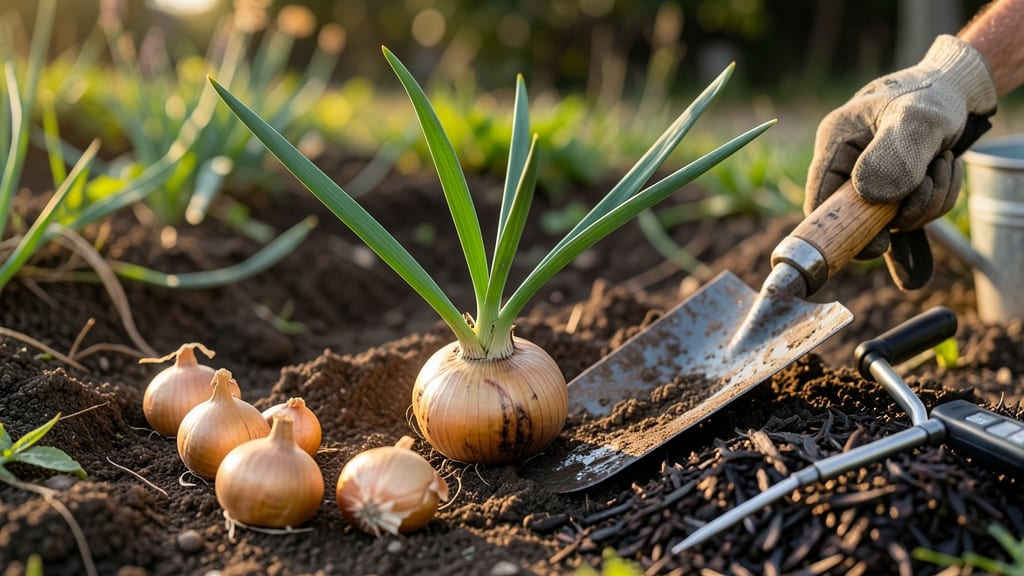
Timing your 🧅 onion bulb planting in Colorado can mean the difference between a thriving garden and a wasted effort—especially when frost lingers and summer heat arrives early.
The key isn’t just when you plant, but how you sync it with your zone’s last frost date, soil warmth, and the right variety for Colorado’s high-altitude growing conditions.
Most gardeners in USDA Zones 5-7 rush to plant their onion sets in early spring, but that’s only half the story. Fall planting is equally crucial for a double harvest, and getting it wrong can leave you with stunted bulbs or bolting plants.
I’ll break down the exact frost-free windows for both spring and fall, plus how to adjust for Colorado’s 4,000–8,000 ft elevation.
You’ll also discover how to prep your soil for maximum bulb size, avoid common mistakes like overcrowding (which leads to small onions), and even pair your onions with companion plants that thrive in Colorado’s climate.
Whether you’re a first-timer or a seasoned gardener, these tips will help you grow onions that rival the ones at the grocery store—without the cost.
Ready to turn your Colorado garden into an onion powerhouse? Let’s dive into the perfect planting schedule, variety choices, and pro tips that’ll have you harvesting plump, flavorful bulbs by mid-summer—or again in fall.
Colorado onion planting calendar: exact frost-free dates by Zone 5-6
Colorado’s Zone 5-6 climate demands precision when planting onion bulbs to avoid frost damage or wasted efforts. The key is planting 4-6 weeks before your last frost date, which varies across the state.
For most Colorado gardens, this means late February to early April for spring planting, while fall planting should happen in late August to early September for a late-summer harvest.
Onion bulbs thrive in soil temperatures between 40°F and 85°F, but they’ll rot if planted too early when soils are still cold. Use a soil thermometer to confirm temps are consistently above 40°F before planting.
In high-altitude areas (like Denver or Boulder), wait until March 15-April 1 to ensure safety from late frosts.
Here’s your Colorado onion planting calendar broken down by critical stages, including frost dates, ideal planting windows, and harvest timelines tailored to Zone 5-6:
| Stage | Zone 5 (e.g., Grand Junction) | Zone 6 (e.g., Denver, Colorado Springs) | Notes |
|---|---|---|---|
| Last Frost Date | April 15 | April 22 | Use Almanac’s frost calculator for your exact location. |
| Ideal Planting Window | March 1–April 1 | March 15–April 10 | Plant 4-6 weeks before last frost for spring harvest. |
| Fall Planting Window | August 15–September 15 | August 20–September 10 | Aim for 90 days before first frost for mature bulbs. |
| Harvest Time (Spring) | June 15–July 15 | June 20–July 20 | Stop watering 2 weeks before harvest to toughen skins. |
| Harvest Time (Fall) | September 15–October 15 | September 20–October 10 | Fall onions store well if cured properly. |
| Soil Temp Threshold | 40°F+ | 40°F+ | Use black plastic mulch to warm cold soils faster. |
For high-altitude gardens (6,000+ ft), like those in Summit County or Eagle County, push planting back by 1-2 weeks to account for slower soil warming. Test your soil’s pH too—Colorado’s alkaline soils (pH 7.5+) can stunt onion growth.
Aim for a pH of 6.0–7.0 by amending with sulfur or peat moss before planting.
If you’re planting onion sets (small bulbs) instead of seeds, they’re even more frost-tolerant. You can plant them as early as February in Zone 6 or March in Zone 5, giving them a head start.
Just cover them with row fabric if late frosts threaten. For seed-grown onions, wait until soil temps hit 50°F+ to avoid damping-off disease.
Pro tip: Use straw mulch after planting to retain moisture and regulate soil temps. In Colorado’s dry climate, onions need 1–1.5 inches of water per week, but avoid overhead watering to prevent fungal diseases like downy mildew. Drip irrigation is ideal for consistent moisture.
Remember, long-day onions (like Yellow Granex) need 14+ hours of daylight to bulb properly, which Colorado provides by late spring. Short-day varieties (like Texas Early White) can be planted earlier but may bolt faster in summer heat. Choose wisely based on your planting window!
Best onion varieties for Colorado’s climate and how to choose
Colorado’s high elevation and dramatic temperature swings mean not all onion varieties thrive here. I’ve grown Yellow Granex and Red Creole successfully in my Zone 5b garden at 6,000 feet, but choosing the right type depends on your elevation and day-length needs.
Short-day onions (like Texas Early White) perform best in Colorado’s longer summer days, while long-day varieties (such as Sweet Spanish) struggle to bulb properly above 5,000 feet.
For low-elevation gardens (4,000–5,000 ft), try Yellow Granex or Candy onions—they handle Colorado’s heat better than most. At higher elevations (6,000+ ft), Red Creole or Texas Early White are my top picks because they mature quickly before summer heat sets in.
Always check seed packets for day-length requirements—this is the #1 mistake Colorado gardeners make!
| Variety | Day-Length Needs | Best For | Colorado Elevation |
|---|---|---|---|
| Yellow Granex | Short-day | Sweet onions, storage | 4,000–6,000 ft |
| Red Creole | Short-day | Fresh eating, storage | 5,000–7,500 ft |
| Texas Early White | Short-day | Quick harvest, storage | 4,000–8,000 ft |
| Sweet Spanish | Long-day | Fresh eating (avoid storage) | Below 5,000 ft |
If you’re growing onions for storage, prioritize Yellow Granex or Texas Early White—they store best in cool, dry conditions. For fresh eating, Red Creole or Candy onions offer milder flavors.
Pro tip: Plant Red Creole in late summer for a fall harvest—it handles Colorado’s early frosts better than most varieties.
Colorado’s alkaline soil can stunt onion growth, so always amend with sulfur or compost to lower pH to 6.0–6.8. I test my soil every year because even a slight pH shift affects bulb size.
Pair onions with carrots or lettuce to improve flavor and deter pests—this companion planting trick works like magic in my garden!
For high-altitude gardens (7,000+ ft), stick to short-day varieties and plant them 4–6 weeks earlier than the recommended frost date. The cooler temps at elevation slow germination, so don’t rush—patience is key.
I’ve had the best luck with Texas Early White at 7,500 feet because it matures in just 90 days, avoiding summer bolting.
Finally, avoid long-day onions like Walla Walla or Purple Stripe unless you’re below 5,000 feet. They’ll bolt (flower prematurely) in Colorado’s long summer days, ruining your harvest. When in doubt, ask your local Cooperative Extension office for variety recommendations tailored to your specific microclimate.