
Plants
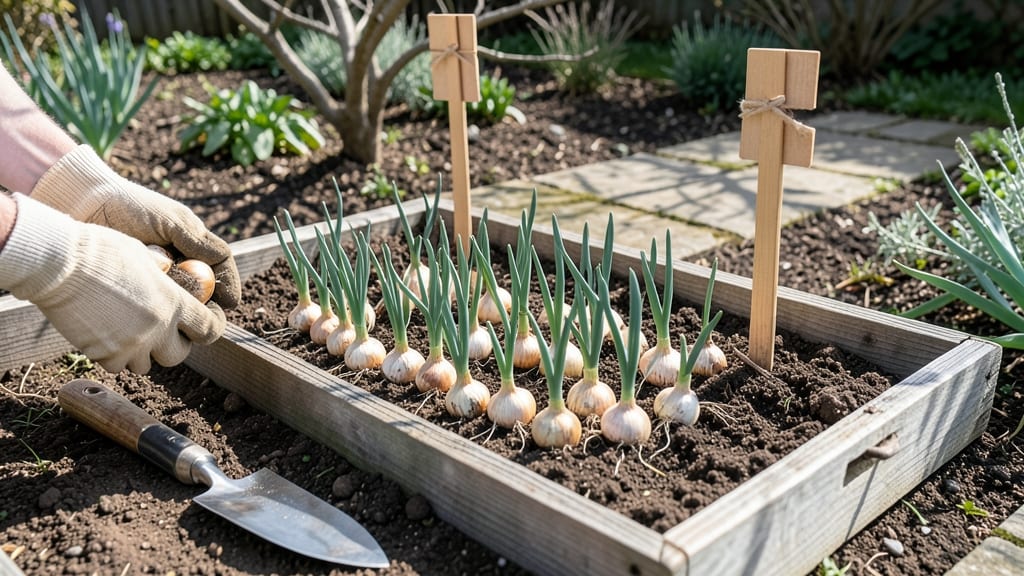
Timing your onion sets planting in North Carolina can mean the difference between a thriving harvest and a wasted investment.
With frost dates shifting from late February in the mountains to mid-April along the coast, getting it wrong could leave your 🧅 struggling—or worse, bolting before you even taste that first homegrown bulb.
I’ve grown onions in NC’s 7a-8b zones for years, and the 3-week window between late February and early March is where most gardeners either succeed or regret their timing.
But here’s the kicker: late summer plantings in July-August can actually outperform spring efforts in some regions, giving you a fall harvest when grocery store onions are at their priciest.
What you’re about to discover isn’t just about dates—it’s about reading your soil’s temperature, adjusting for your specific county’s microclimate, and knowing when to cover young plants if a surprise frost sneaks in.
Let’s break down the exact steps to plant your onions just right, so you’re harvesting plump, flavorful bulbs instead of pulling up sad little nubs.
Whether you’re a first-time gardener or a seasoned pro, these region-specific tips will help you avoid the most common mistakes—like planting too early and risking frost damage or waiting too long and ending up with bitter, pungent onions. Ready to get your timing perfect?
NC county zones & exact planting dates for onion sets
North Carolina’s three distinct climate zones—Coastal, Piedmont, and Mountains—each demand different timing for planting onion sets. Coastal areas like Wilmington have later frost dates (mid-March), while the Mountains (Asheville) freeze earlier (early March). This means your planting window could shift by 3-4 weeks depending on location.
For spring plantings, aim to set onions 4-6 weeks before your last frost date. In the Piedmont region (Raleigh/Durham), this typically means mid-February to early March. Summer plantings for fall harvest should happen in late July to early August to avoid bolting from summer heat.
Short-day onion varieties (like 'Texas Early White') thrive in NC’s climate, while long-day varieties (such as 'Sweet Sandwich') may bolt prematurely. Always check your seed packet for day-length requirements to match your zone.
| Region | USDA Zone | Last Frost Date | Spring Planting Window | Summer Planting Window |
|---|---|---|---|---|
| Coastal (Wilmington) | 8a-8b | Mid-March | Late Feb - Early March | Late July - Early Aug |
| Piedmont (Raleigh) | 7b-8a | Early March | Mid-Feb - Early March | Early July - Mid-Aug |
| Mountains (Asheville) | 6b-7a | Early March | Late Feb - Early March | Early July - Early Aug |
Soil temperature is just as critical as air temperature. Onion sets need soil temps above 40°F (4°C) to germinate properly. Use a soil thermometer to confirm readiness—planting too early in cold soil can stunt growth. In Zone 7a (e.g., Greensboro), wait until soil hits 45°F (7°C) for best results.
For fall harvests, plant onion sets in late July to early August to take advantage of NC’s cool autumn nights. This timing ensures bulbs mature before first frost (typically mid-October in the Piedmont).
In Coastal NC, you may push planting to early September for a late fall crop.
Pro tip: Mark your calendar for March 15 (average last frost date) and November 15 (first frost). These dates help you calculate your 60-90 day harvest window for spring plantings. Miss this by even a week, and you risk small, pungent bulbs instead of sweet, full-sized onions.
If you’re in Zone 7b or colder (e.g., western NC), consider starter plants instead of sets for an earlier harvest. They’re 2-3 weeks ahead of sets and can tolerate slightly cooler soils.
Always test your soil pH before planting—onions prefer 6.0-7.0. Amend with lime if your soil is too acidic, as this can delay germination and reduce bulb size. A simple soil test kit (available at garden centers) makes this easy.
For container growing, plant onion sets in late February to early March in deep pots (8+ inches). Containers warm up faster than soil, so you may need to delay planting by 1-2 weeks to avoid bolting from heat stress.
NC county zones & exact planting dates for onion sets
North Carolina’s three distinct regions—Coastal Plain, Piedmont, and Mountains—each have unique frost patterns that dictate the perfect onion set planting window. Coastal areas like Wilmington can plant 2-3 weeks earlier than the Mountains, where Asheville’s higher elevation delays spring.
Let’s break down the exact dates for your zone.
For spring plantings, aim to set onions 4-6 weeks before your last frost date. In the Piedmont, this typically means mid-February to early March, while the Coastal Plain can start as early as late January.
Mountain regions like Boone should wait until late March to avoid frost damage.
Fall plantings for a late-summer harvest work best when soil temps drop below 80°F. This usually lands in late July to early August across most of NC, giving bulbs time to mature before winter sets in. Use a soil thermometer to confirm—ideal temps are 60-70°F.
Choose short-day varieties (like Texas Early White) for spring plantings in NC’s longer daylight hours. These bulbs mature faster and resist bolting in heat. For fall, opt for long-day varieties like Yellow Granex—they handle NC’s summer heat better and store longer.
Pro tip: If your area had an early frost last year, err on the side of planting later in spring. Use row covers for extra protection if needed—just remove them during the day to prevent overheating. For fall plantings, prioritize well-draining soil to avoid rot from autumn rains.
Remember: Soil temperature, not air temperature, determines success. Use a soil thermometer to confirm 40-50°F for spring plantings—cooler soils delay germination. In Zone 7a (like Raleigh), this often means waiting until mid-March even if the air feels warm.