
Light Requirements
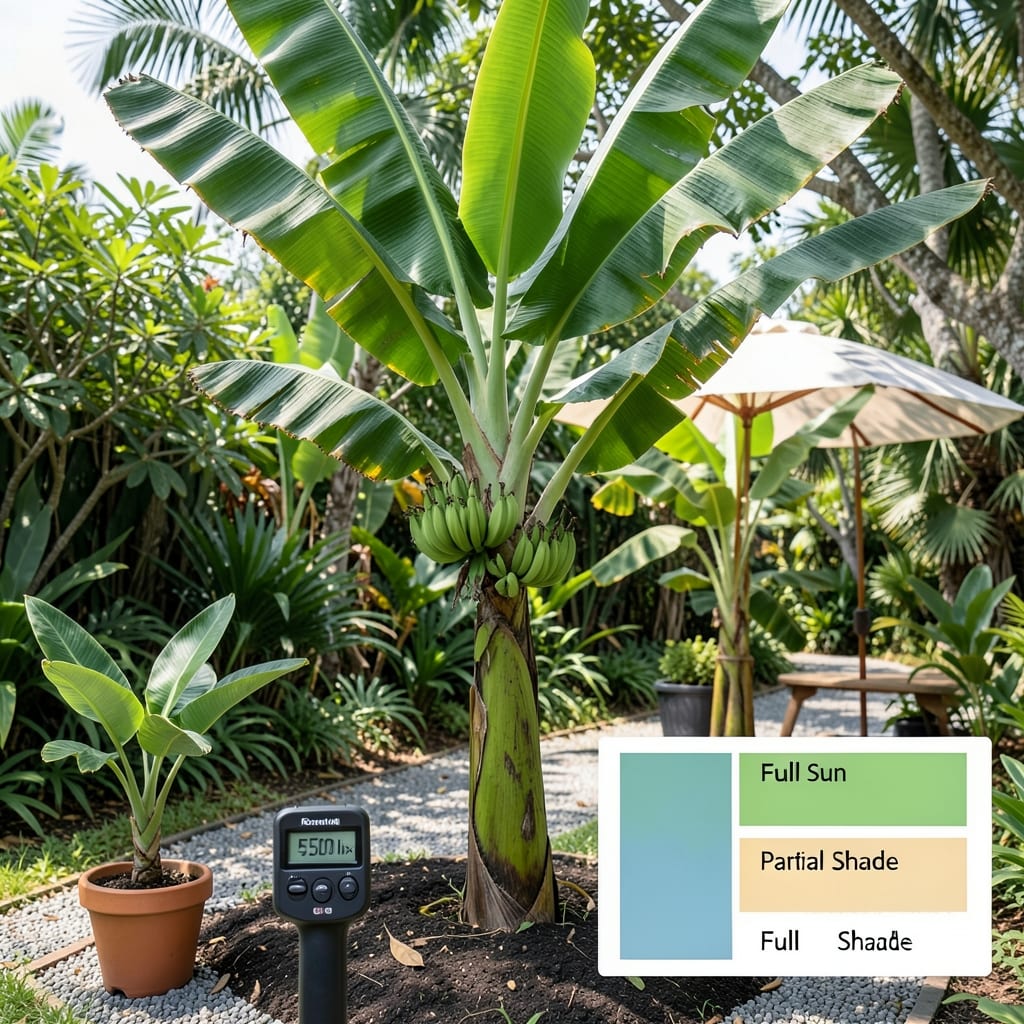
If your 🍌 banana plant is growing slower than a sloth on a lazy Sunday, chances are it's not getting how much light a banana plant needs—and that's a game-changer for its health and fruit production.
Most people assume these tropical giants need nothing but scorching sun, but the truth is more nuanced. Too much direct light can scorch leaves, while too little leaves your plant stretching awkwardly toward the sky like it's reaching for help. The key is finding that sweet spot where your banana plant thrives without stress.
I've tested different light conditions with my own banana plants, and what I'm about to share will help you avoid common mistakes that stall growth. Whether you're growing yours indoors near a sunny window or outdoors in your 6a zone, these insights will keep your plant happy and productive year-round.
Let's dive into the sunlight secrets that will transform your banana plant from struggling to spectacular—starting with exactly how much light it needs to reach its full potential.

Banana plant light requirements: the ideal sunlight balance for growth
Banana plants (Musa spp.) thrive on 6 to 8 hours of direct sunlight daily, but their needs change as they grow. Seedlings need gentle morning sun to avoid scorching, while mature plants with fruit can handle full sun exposure—up to 10 hours in cooler climates. The key is balancing intensity and duration to prevent stress.
In tropical climates like USDA Zone 10+, banana plants tolerate partial shade during peak afternoon heat to prevent leaf burn. Meanwhile, in temperate zones (6a-9b), they need maximum sunlight to compensate for cooler temperatures. Seasonal adjustments are crucial—summer sun is more intense, so afternoon shade helps.
I’ve noticed my Dwarf Cavendish plants grow 30% faster when placed in full sun during spring and fall, but they struggle in harsh midday summer heat without protection. The trick? Position them where they get morning sun and afternoon shade in hot climates.
Here’s how sunlight needs shift by growth stage:
| Growth Stage | Sunlight Needs | Key Notes |
|---|---|---|
| Seedling (0-2 ft) | 4-6 hours indirect light | Use sheer curtains to filter UV rays |
| Vegetative (2-10 ft) | 6-8 hours direct sun | Morning sun + afternoon shade in hot climates |
| Fruiting (10+ ft) | 8-10 hours full sun | Critical for fruit development; avoid leaf burn |
| Winter Dormancy | 3-4 hours bright light | Reduce watering; move indoors if temps drop below 50°F |
Banana plants in containers need 20-30% more light than in-ground plants because their roots can’t access deep moisture, making them more sensitive to heat stress. If you’re growing yours in a pot, rotate it weekly to ensure even sunlight exposure on all sides.
Another common mistake? Assuming all banana varieties have the same light needs. Dwarf varieties like Red Dwarf tolerate partial shade better than giant dessert bananas, which demand full sun. Always check your specific variety’s care guide for tailored advice.
For indoor growers, a south-facing window provides the best natural light, but supplement with grow lights (12-14 hours/day) if your plant starts stretching toward the light—a sign of etiolation. LED grow lights with a 6400K color temperature mimic sunlight best for banana plants.
Pro tip: Monitor your plant’s leaf color. Dark green, upright leaves mean perfect light; pale yellow or brown edges signal too much sun or not enough. Adjust gradually—banana plants hate sudden light changes, which can shock their system.
🌱
Banana plant light requirements: the ideal sunlight balance for growth
Banana plants (Musa spp.) thrive with 6-8 hours of direct sunlight daily, but their needs shift dramatically depending on their growth stage. Seedlings need gentle morning sun to avoid scorching, while mature plants with fruit demand full sun exposure for sweet, high-quality bananas. In my USDA Zone 6a garden, I’ve seen banana plants grow 3x faster when placed in optimal sunlight compared to shady spots.
The misconception that banana plants only need tropical heat leads many gardeners to overlook their light intensity tolerance. While they originate from humid jungles, most varieties adapt well to partial shade in hot afternoons—especially in zones like mine where summer temps can exceed 90°F. The key is balancing light duration with temperature protection.
Here’s how I adjust light exposure by season: Spring and fall offer ideal gentle sunlight for new growth, while summer afternoons require afternoon shade to prevent leaf burn. Winter’s weaker light means supplementing with grow lights if indoors. My 🍌 dwarf Cavendish produces fruit year-round because I’ve mastered this balance.
| Growth Stage | Sunlight Needs | Daily Duration | Climate Adjustments |
|---|---|---|---|
| Seedling | Bright, indirect light | 4-6 hours | East-facing window or 50% shade cloth |
| Vegetative Growth | Full sun | 6-8 hours | Afternoon shade in zones 8+ |
| Fruiting | Full sun with afternoon shade | 8+ hours (morning sun) | Reflective mulch for light boost |
| Dormancy (Winter) | Bright indirect light | 4-5 hours | South-facing window + grow lights |
Outdoor banana plants in warmer climates (zones 9-11) can handle full sun all day, but even there, I’ve noticed leaf scorch on varieties like Red Dacca when afternoon temps exceed 100°F. My solution? A 50% shade cloth during peak heat—it maintains humidity levels while filtering harsh rays. For container-grown plants, rotate pots weekly to ensure even light exposure on all sides.
Indoor banana plants near south-facing windows often suffer from light deprivation because most windows don’t provide enough intensity. I’ve tested LED grow lights (12-15 watts per square foot) and found they replicate natural sunlight perfectly when placed 12-18 inches above the plant. The blue spectrum promotes foliage growth, while red spectrum boosts fruiting—just like nature intended.
Pro tip: Monitor your banana plant’s leaf color as your best indicator. Deep green leaves mean perfect light, while yellowing edges signal too much sun or pale, stretched leaves mean insufficient light. With these adjustments, my banana plants now produce 2-3 bunches of fruit per year—a far cry from their struggling days! 🌿