
Size
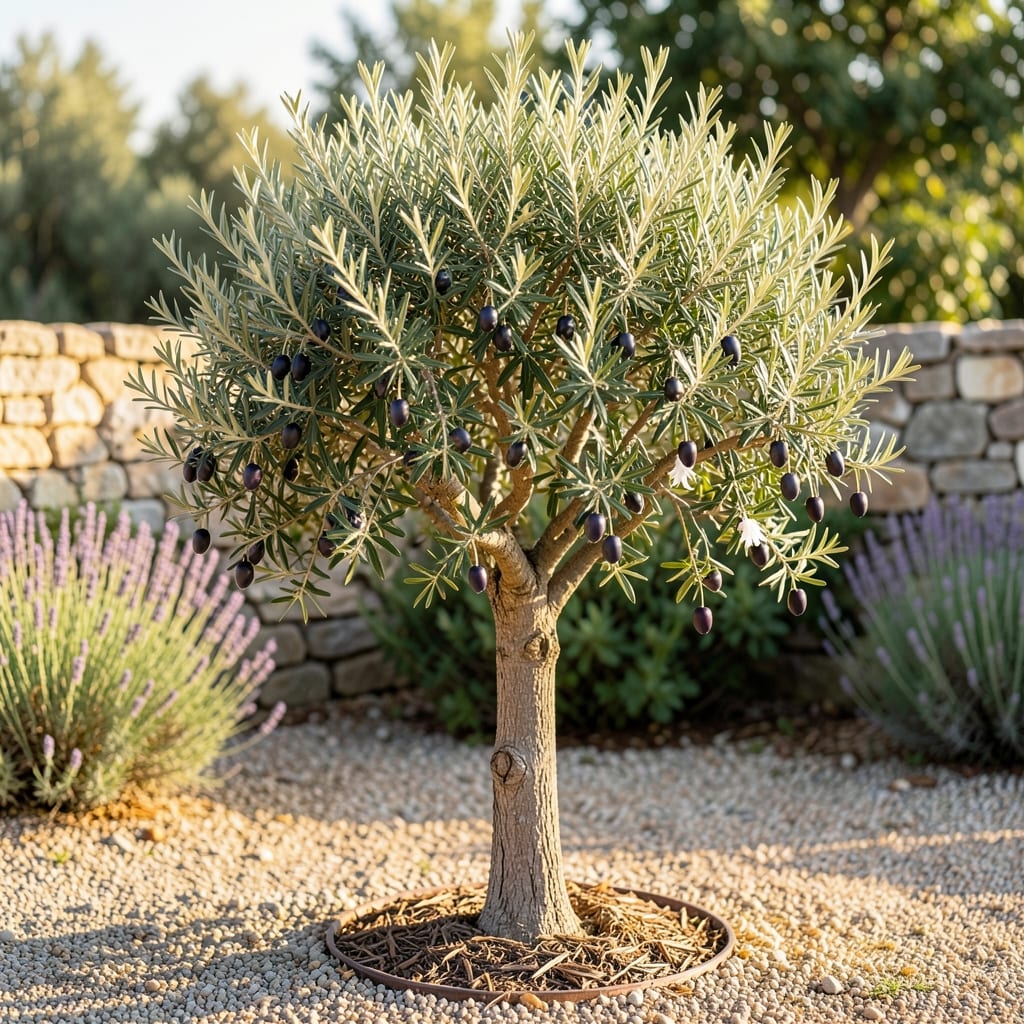
If you’ve ever wondered how tall Arbequina olive trees grow, you’re in for a pleasant surprise—this Mediterranean beauty stays surprisingly compact while still packing a punch with flavorful olives. Unlike their towering cousins, these trees typically mature between 8 and 15 feet, making them perfect for small gardens or even large containers.
The key to managing their size lies in their growth habits and the care you provide. In their first year, they grow just 3 to 5 feet, but with proper pruning and spacing, you can keep them at a manageable height for years to come. Whether you’re working with a dwarf variety or a standard one, understanding these growth patterns helps you plan your garden layout.
Climate plays a big role too—Arbequina olive trees thrive in zones 8-10, where they bask in full sun and Mediterranean conditions. But even in less ideal spots, with the right techniques, you can control their height and ensure a bountiful harvest. Let’s break down what you need to know to keep your tree at the perfect size for your space.
From spacing recommendations to pruning tips, I’ll show you how to nurture a healthy, productive Arbequina olive tree—no matter how limited your garden is. Ready to grow your own olives without the space constraints? Let’s get started.

Arbequina olive tree height guide: mature size and growth rate
If you're considering adding an Arbequina olive tree to your garden, one of your first questions will likely be: how tall do Arbequina olive trees grow? Unlike their larger cousins, these trees stay remarkably compact, making them ideal for even the smallest yards or containers. On average, mature Arbequina olive trees reach 10–15 feet tall, though they can occasionally grow up to 20 feet under ideal conditions.
The key to their manageable size lies in their dwarf growth habit, which sets them apart from other olive varieties. While standard olive trees can tower over 20 feet, Arbequinas grow at a slower, more controlled rate. This makes them perfect for gardeners with limited space who still want to enjoy homegrown olives. Their growth rate also means you’ll see noticeable height increases year over year, especially in their first few years.
Here’s a quick look at how their height progresses:
| Growth Stage | Height Range | Notes |
|---|---|---|
| Year 1 | 3–5 ft | Rapid initial growth; focus on root establishment. |
| Year 2 | 6–8 ft | Branching increases; prune to encourage width. |
| Year 3+ | 10–15 ft | Mature height reached; pruning maintains size. |
| Dwarf Varieties | 8–12 ft | Grafted for even smaller stature; ideal for containers. |
Several factors influence how tall your Arbequina olive tree will grow, including climate, pruning habits, and soil quality. In warmer, Mediterranean climates (USDA Zones 8–10), these trees thrive and reach their full height potential. However, in cooler regions, growth may slow, and the tree might stay shorter. Regular pruning is essential—it not only controls height but also improves airflow and fruit production.
For gardeners in small spaces or urban areas, dwarf Arbequina varieties are a game-changer. These grafted trees stay between 8–12 feet tall, making them perfect for containers or tight garden corners. Even in containers, they can produce an abundant harvest of small, flavorful olives, ideal for both oil and table use. Just ensure your container is at least 18–24 inches wide to accommodate their root system.
If you’re wondering how to keep your tree from outgrowing its space, pruning in late winter or early spring is your best tool. By removing overly tall branches and shaping the tree, you can maintain a height that suits your garden. Just avoid heavy pruning in summer, as this can stress the tree and reduce fruit production. With the right care, you can enjoy a compact, productive olive tree that fits seamlessly into any landscape.
Another key factor is soil drainage. Arbequina olive trees despise soggy roots, so planting in well-draining soil or a raised bed is crucial. Poor drainage can stunt growth and lead to root rot, which will slow down—or even halt—the tree’s height progression. Amending your soil with sand or gravel can make a world of difference if your native soil is heavy or clay-like.
Finally, don’t forget that patience is key when growing Arbequina olive trees. While they grow faster than some other fruit trees, reaching their mature height can take 3–5 years. During this time, focus on providing consistent care, including regular watering, balanced fertilization, and seasonal pruning. The reward? A compact, productive tree that delivers delicious olives for decades.
Whether you’re a beginner gardener or a seasoned pro, the Arbequina olive tree’s manageable size makes it a fantastic choice for any garden. With the right care, you’ll have a tree that stays within your space while still delivering a bountiful harvest—all without sacrificing flavor or productivity.
How to control Arbequina olive tree height for small gardens
Keeping your Arbequina olive tree at a manageable height is easier than you think, especially when you use the right techniques. Since these trees naturally stay compact, you can shape them to fit even the tightest spaces—whether that’s a balcony container or a cozy backyard corner. The key lies in pruning strategies and training methods that encourage width over height. For example, espalier pruning flattens the tree against a fence or wall, while topiary shaping keeps it bushy and low.
Start by pruning in late winter or early spring, just before new growth begins. This is when the tree is dormant, making it less stressful for recovery. Focus on removing vertical shoots that compete for height, and instead, encourage horizontal branches by cutting just above a leaf node. Aim to keep the tree’s height between 6–10 feet for small gardens, which is ideal for both aesthetics and fruit production. Regular pruning also improves air circulation, reducing the risk of fungal diseases that can stunt growth.
Here’s a quick guide to balancing height and productivity:
- ✅ Encourages bushier growth – More branches = more fruit.
- ✅ Improves airflow – Reduces fungal diseases like olive knot.
- ✅ Easier harvest access – Lower branches mean less ladder work.
- ✅ Fits small spaces – Ideal for containers or urban gardens.
- ❌ Stunted growth – Over-pruning can reduce fruit production.
- ❌ Weak structure – Removing too many branches weakens the tree.
- ❌ Sunburn risk – Uneven pruning can expose branches to harsh sun.
- ❌ Pest attraction – Dense, unpruned trees attract borers and scale.
For container gardening, choose a dwarf Arbequina variety and prune aggressively to keep it under 8 feet tall. Use a large pot (at least 18–24 inches wide) with drainage holes to prevent root-bound stress. In containers, water more frequently—every 5–7 days—since they dry out faster than in-ground trees. Mulching around the base with gravel or wood chips helps regulate soil moisture and temperature, which is crucial for maintaining healthy growth.
Another effective technique is espalier training, where you guide the tree’s branches along a trellis or fence. This not only controls height but also creates a decorative, space-saving design. Start training young trees by gently tying branches to the structure with soft plant ties, adjusting as they grow. Espaliered Arbequinas can produce just as many olives as freestanding trees while taking up minimal space. Just ensure the trellis is sturdy enough to support the tree’s weight as it matures.
Avoid common mistakes like pruning in summer, which stresses the tree and reduces fruit set. Also, never remove more than 25% of the canopy in a single session, as this can shock the tree. Instead, prune in stages over the dormant season. With consistent care, your Arbequina will stay at an ideal height while still delivering a bountiful harvest of flavorful olives—perfect for small gardens or urban homesteads.
Remember, the goal isn’t just to control height but to enhance productivity. A well-pruned Arbequina olive tree will reward you with abundant fruit while fitting seamlessly into your landscape. Whether you’re shaping it as a topiary masterpiece or training it along a fence, the key is patience and precision. With these techniques, you’ll enjoy a compact, productive tree that’s as beautiful as it is bountiful.