
Trees
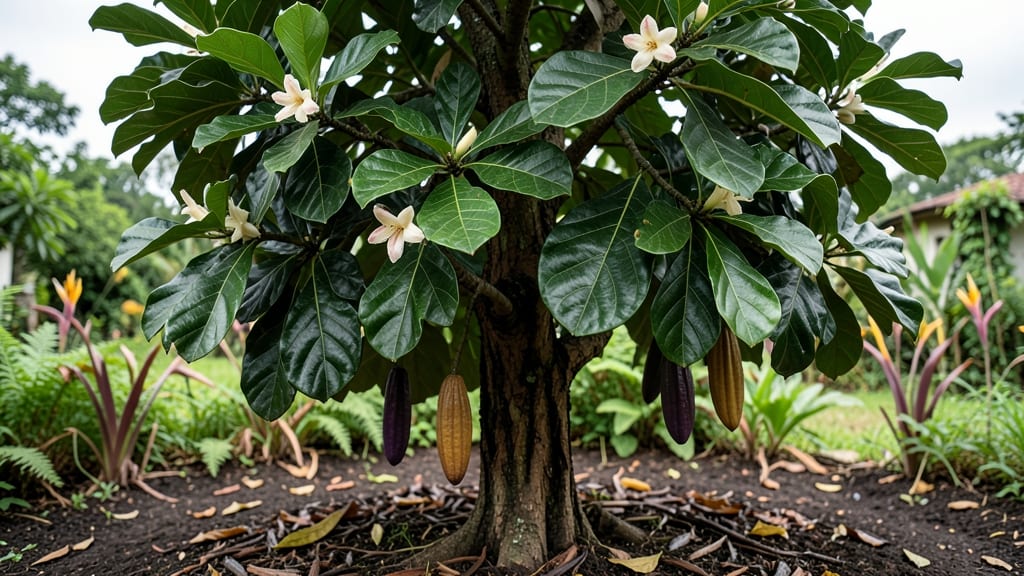
If you’ve ever wondered how tall do cacao trees grow, the answer might surprise you—these tropical giants can stretch up to 30 feet in the wild, towering like a two-story house!
But here’s the twist: most farm-grown cacao trees are pruned to a more manageable 12-16 feet to make harvesting easier. Whether you’re dreaming of growing your own 🌱 cacao tree or just curious about their growth habits, understanding these differences is key to cultivating them successfully.
The secret to their height lies in their environment and care. In tropical regions like Central and South America, wild cacao trees thrive without pruning, reaching their full height. But in farms, growers control their size through strategic pruning and spacing—12x12 feet apart—to boost pod production and accessibility.
This balance between wild growth and managed cultivation is what makes cacao trees so fascinating to grow.
For home gardeners in zones 10-12, growing a cacao tree means embracing their natural stature while adapting to smaller spaces. With the right care—partial shade, consistent moisture, and well-draining soil—you can nurture a tree that’s taller than a basketball hoop but still fits your garden.
The key? Mimicking their tropical habitat, whether in the ground or a large container.
Ready to dive deeper? I’ll walk you through the factors that shape cacao tree height, from soil conditions to pruning tips, so you can grow one that thrives—whether wild or tamed. Let’s get started!

Cacao tree height by variety: wild vs cultivated growth differences
Cacao trees (Theobroma cacao) showcase dramatic height variations depending on their environment and cultivation methods. In the wild, these tropical giants can reach 20 to 30 feet tall, towering like small trees in dense rainforests.
However, on commercial farms, they’re often pruned to a more manageable 12 to 16 feet to optimize pod production and ease harvesting.
The difference stems from genetic selection and agricultural practices. Wild varieties grow unchecked, developing thick trunks and sprawling canopies to compete for sunlight. In contrast, farm-grown cacao trees undergo selective breeding for shorter stature and higher yields, prioritizing accessibility over natural growth patterns.
Here’s how these two extremes compare in key growth metrics:
| Growth Factor | Wild Varieties | Farm-Grown Varieties |
|---|---|---|
| Mature Height | 20-30 ft (unpruned) | 12-16 ft (pruned) |
| Growth Rate | Slow (2-4 ft/year) | Moderate (3-5 ft/year) |
| Canopy Spread | 15-20 ft wide | 8-12 ft wide |
| Shade Tolerance | High (adapts to 80% shade) | Moderate (50-70% shade ideal) |
| Pod Production | Lower (fewer pods) | Higher yield (optimized branches) |
Wild cacao trees thrive under dense forest canopies, where they develop thick trunks and broad canopies to capture sunlight. Their slower growth and lower pod production reflect an evolutionary adaptation to survival, not productivity.
In contrast, farm-grown trees are bred for compact growth and abundant flowering, often using shade from taller trees like banana or coconut to mimic their natural habitat while boosting yields.
Climate also plays a role. In humid tropical regions like the Amazon or West Africa, wild cacao trees grow taller due to year-round warmth and high humidity.
Meanwhile, in subtropical zones (USDA 10-12), farm-grown trees may max out at 12 feet without pruning due to cooler nights and seasonal dry periods.
For home gardeners, understanding these differences is crucial. If you’re growing cacao in a container or small yard, dwarf varieties (though rare) or heavy pruning will be necessary.
In larger spaces, you can allow them to grow closer to their wild height while still managing their shape for easier pod harvesting.
One surprising fact: The Trinitario and Criollo varieties—beloved for their fine chocolate flavors—often grow taller than Forastero varieties (the most common farm type). This genetic trait makes them better suited for wild or semi-wild conditions but can be challenging for small-scale growers.
Whether you’re dreaming of a two-story cacao tree or a neatly pruned farm-style specimen, knowing these growth patterns will help you plan spacing, pruning, and even companion planting strategies to maximize your harvest.
Cacao tree height by variety: wild vs cultivated growth differences
Cacao trees (Theobroma cacao) are fascinating plants with dramatic height variations depending on their environment. In the wild, these tropical giants can reach 20 to 30 feet tall, towering like small trees in their native rainforest habitats.
However, on commercial farms, they’re often pruned to a more manageable 12 to 16 feet to simplify harvesting and maximize pod production. This difference isn’t just about aesthetics—it’s a response to genetic selection, farming practices, and environmental conditions.
The wild cacao tree thrives in dense, shaded forests where competition for sunlight is fierce. Without human intervention, these trees grow tall and slender, developing a single dominant trunk with broad canopies to capture dappled sunlight. Their height is an evolutionary adaptation to outcompete other vegetation for resources.
In contrast, cultivated varieties are bred for productivity rather than height, often featuring multiple stems and bushier growth to produce more pods within reach of harvesters.
| Variety | Mature Height | Growth Habit | Key Notes |
|---|---|---|---|
| Wild Cacao | 20–30 ft | Single trunk, tall canopy | Unpruned; thrives in dense shade |
| Farm-Grown Cacao | 12–16 ft | Multi-stemmed, bushy | Pruned for harvest efficiency |
| Home Garden Cacao | 6–12 ft | Container or small-space adapted | Requires pruning and support |
One critical factor influencing height is shade tolerance. Wild cacao trees evolved under the filtering canopy of rainforests, where they receive only partial sunlight. When exposed to full sun, they grow taller and more leggy, a response known as etiolation.
Farmers exploit this by planting cacao under shade trees like banana or ceiba, which keeps the trees shorter and bushier while protecting them from sunburn. This practice also reduces stress on the tree, leading to better pod production.
Another key difference lies in pod production priorities. Wild trees prioritize survival and reproduction, investing energy in height and seed dispersal. Cultivated varieties, however, are bred to produce more pods per year, even if it means sacrificing some height.
Farmers often prune lower branches to create an open center, allowing sunlight to penetrate and encouraging new growth lower on the tree. This technique not only controls height but also improves air circulation, reducing the risk of fungal diseases like moniliasis, which thrives in dense, humid conditions.
If you’re growing cacao in a home garden or container, height management becomes even more critical. Without proper pruning, a cacao tree can quickly outgrow its space, especially in USDA zones 10–12, where they thrive year-round.
I recommend pruning to 6–10 feet for manageability, using a balanced fertilizer (10-10-10) to encourage bushier growth, and providing 50–70% shade to mimic their natural habitat. This approach ensures your tree stays productive without becoming unruly.
Understanding these height differences helps you plan your cacao garden effectively. Whether you’re aiming for wild-type growth in a large plot or a compact, high-yielding tree in containers, tailoring care to the variety’s natural tendencies will determine your success.
With the right balance of pruning, shade, and nutrients, you can cultivate cacao trees that thrive at any height—whether they’re reaching for the sky or staying close to the ground. 🌿