
Plants
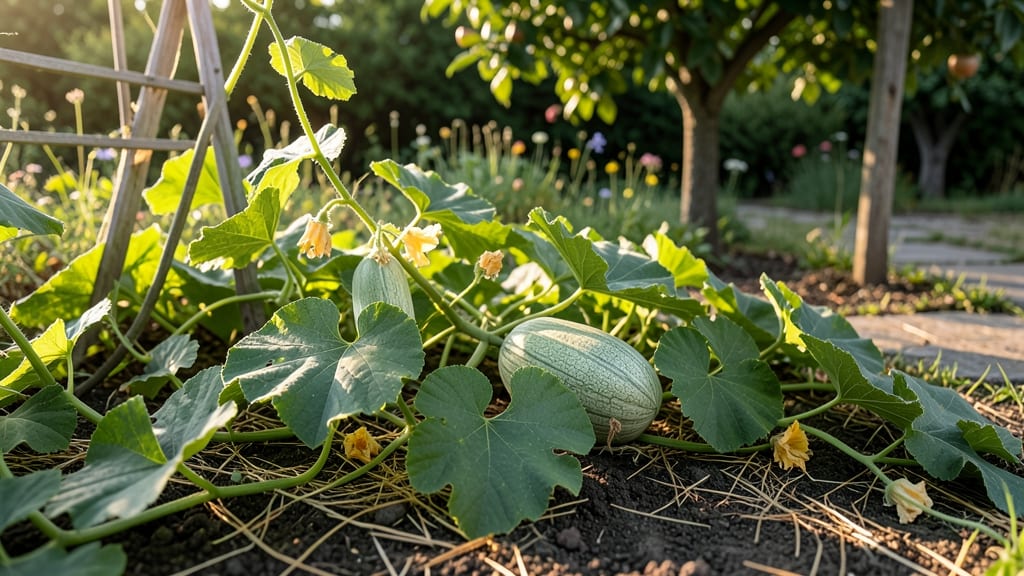
If you're planning your cantaloupe patch this spring, knowing how tall your 🍈 plants will grow is the first step to avoiding a garden full of tangled vines—or worse, wasted space.
These plants can stretch anywhere from 2 feet to over 6 feet, depending on the variety, which means your layout choices could make or break your harvest.
Most cantaloupe varieties are vining plants, meaning they spread out horizontally while climbing vertically, but some bush types stay more compact. The difference isn’t just about aesthetics—it affects everything from trellising needs to how much room you’ll need to dedicate in your garden beds.
Without the right setup, even the hardiest plants can struggle.
I’ll break down the exact height ranges for common cantaloupe types, including whether they’re better suited for sprawling across the ground or climbing a trellis.
You’ll also learn how to support them for better air circulation and higher yields—because even the most patient gardener can’t ignore a vine that’s outgrown its space.
Ready to plan your garden the smart way? Let’s dive into the specifics so you can give your cantaloupes the perfect home—whether that’s a sprawling patch or a neatly trellised corner. Your future harvest depends on it.

Cantaloupe plant height & vining lengths by variety: what to expect
Cantaloupe plants are annual vining vegetables that can dramatically change your garden layout depending on the variety you choose. While some sprawl aggressively across 10+ feet, others remain compact at 3-4 feet. Understanding these differences helps you allocate space wisely for maximum yields without overcrowding.
All cantaloupes belong to the Cucurbita family, but their growth habits vary between bush types and vining types. Bush varieties stay shorter but produce fewer fruits, while vining types spread farther but yield more melons.
My personal favorite, the Hale’s Best, is a classic vining variety that reaches 4-6 feet with vines stretching 8-10 feet if unchecked.
Here’s the key distinction: plant height refers to the upright growth of the main stem, while vine length describes how far the runners spread horizontally. For example, a 6-foot-tall plant might have 12-foot vines—so plan your garden bed accordingly!
| Variety | Plant Height | Vine Length | Space Needs | Notes |
|---|---|---|---|---|
| Hale’s Best (Classic) | 4-6 ft | 8-12 ft | 10x10 ft bed | High yield, needs trellis |
| Ambrosia (Bush Type) | 2-3 ft | 3-5 ft | 4x4 ft bed | Compact, fewer vines |
| Athena (Heirloom) | 3-5 ft | 6-8 ft | 6x6 ft bed | Sweet, needs staking |
| Honeydew (Muskmelon) | 5-7 ft | 10-15 ft | 12x12 ft bed | Heavy fruit, needs support |
If you’re short on space, bush varieties like Ambrosia are ideal—they stay under 3 feet tall and spread just 3-5 feet, making them perfect for container gardening or small plots. However, their lower yields mean you’ll need more plants for the same harvest as a vining type.
For container growing, choose dwarf or semi-dwarf varieties (though true dwarf cantaloupes are rare). A 5-gallon pot can support a 2-3 foot plant, but expect fewer fruits due to limited root space. Always use well-draining soil and large containers to prevent root rot in compacted roots.
Pro tip: If you’re growing vining cantaloupes, allocate at least 10 feet of space per plant or use trellises to save room. My Hale’s Best plants trellised to 6 feet tall produced just as many melons but took up half the ground space!
Remember, vine length ≠ plant height. A 6-foot-tall vine might stretch 12 feet horizontally, so measure both dimensions when planning. Overcrowding leads to poor air circulation, increasing disease risk (like powdery mildew) and reducing fruit quality.
For maximum yields, give vining types 10-12 feet of space or use trellises to guide them vertically. Bush types can handle 4-6 feet of space, but they’ll produce fewer melons. Always mulch heavily to retain moisture—cantaloupes hate dry soil!
🌱
Cantaloupe plant height & vining lengths by variety: what to expect
Cantaloupe plants are vining annuals that can reach dramatically different heights depending on the variety and growing conditions. Most cantaloupes sprawl 4 to 6 feet with vines extending 6 to 10 feet in ideal conditions, but some bush-type varieties stay compact at 2 to 3 feet.
Understanding these differences helps you plan your garden layout for optimal fruit production and space efficiency.
Standard cantaloupe varieties like 'Athena' or 'Hale’s Best' produce long, trailing vines that spread aggressively, requiring ample ground space or vertical support. These vines can stretch up to 12 feet in length, though the plant itself rarely exceeds 6 feet in height.
Meanwhile, bush-type cantaloupes like 'Burpee Bush Hybrid' stay shorter and more compact, making them ideal for small gardens or containers.
🔍 Key Takeaway: Most cantaloupes are not true bush plants—even "bush" types produce some vines, just shorter ones. Always check variety descriptions for vine length expectations before planting.
| Variety | Mature Height | Vine Length | Space Needs |
|---|---|---|---|
| Standard (e.g., Athena, Hale’s Best) | 4–6 ft | 6–12 ft | Full ground space or trellis |
| Bush (e.g., Burpee Bush Hybrid) | 2–3 ft | 3–5 ft | Compact beds or containers |
| Heirloom (e.g., 'Minnesota Midget') | 3–5 ft | 5–8 ft | Moderate space or trellis |
| Honeydew (e.g., 'Earlidew') | 5–7 ft | 8–10 ft | Full ground space |
Honeydew melons, like 'Earlidew', tend to be taller and more vigorous than standard cantaloupes, often reaching 7 feet in height with vines extending 10 feet or more. These varieties need rich, well-draining soil and plenty of nutrients to support their larger growth habit.
If you’re growing cantaloupes in containers or small spaces, prioritize bush-type varieties or use vertical trellising to manage vine spread.
Pro tip: Prune excess vines early in the season to redirect energy to fruit production rather than sprawling growth. Remove weak or unproductive vines at the base, leaving only the strongest 2–3 vines per plant to maximize yield in limited space.
🌱 Remember: Cantaloupe vines are sensitive to cold and will stop growing if nighttime temperatures drop below 55°F. Always plant after your last frost date and choose a sunny, sheltered location to encourage healthy vine development.