
How To
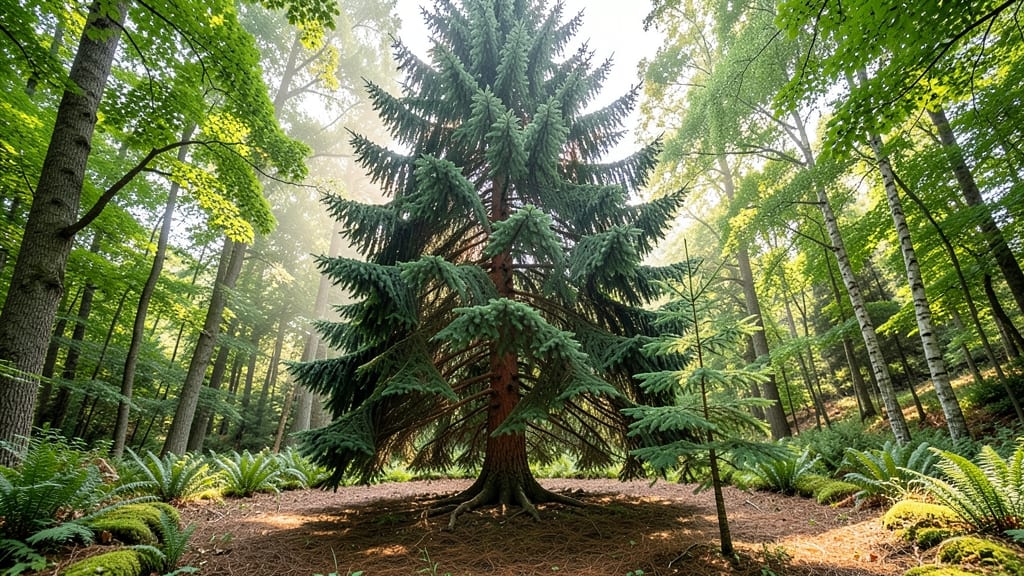
If you're dreaming of adding a 🌲 hemlock to your landscape, one question tops the list: how tall do hemlocks grow? The answer isn't one-size-fits-all—these evergreen giants can stretch from modest 30 feet to towering 70 feet, depending on the species and growing conditions.
Native hemlocks like the Eastern or Western varieties often reach their full height over decades, making them stunning shade providers but requiring serious space planning. Meanwhile, dwarf cultivars offer the same lush foliage in a fraction of the footprint—perfect for smaller yards or container gardening.
Whether you're eyeing a 6a zone specimen or a compact ornamental, understanding these height variations is key to choosing the right tree for your vision. I'll break down the specifics so you can plant with confidence and avoid costly mistakes down the road.
From spacing tips to pruning secrets, you'll discover exactly how to manage hemlock growth—whether you want a sky-scraping sentinel or a neatly trimmed accent piece in your garden design.

Native hemlock species height ranges by region and growing conditions
Hemlocks are iconic evergreens, but their mature height can vary wildly depending on species, climate, and growing conditions.
The Eastern Hemlock (Tsuga canadensis) and Western Hemlock (Tsuga heterophylla) are the most common native species in North America, with Carolina Hemlock (Tsuga caroliniana) offering a smaller alternative. Understanding these differences helps you choose the right tree for your space and climate zone.
In ideal conditions, Eastern Hemlocks can reach 70–90 feet tall, while Western Hemlocks often max out around 60–80 feet. However, their growth is heavily influenced by soil quality, sunlight exposure, and regional climate.
For example, a hemlock in the Pacific Northwest’s moist climate may grow taller than one planted in the drier Appalachian Mountains.
| Species | Mature Height Range | Growth Rate (Annual) | Ideal Climate Zones |
|---|---|---|---|
| Eastern Hemlock (Tsuga canadensis) | 60–90 ft | 1–2 ft/year (young), slows with age | USDA Zones 3–7 |
| Western Hemlock (Tsuga heterophylla) | 50–80 ft | 1.5–3 ft/year (fast in moist climates) | USDA Zones 4–8 |
| Carolina Hemlock (Tsuga caroliniana) | 30–50 ft | 0.5–1 ft/year (slow-growing) | USDA Zones 5–9 |
Soil drainage plays a critical role in hemlock height. These trees thrive in well-draining, acidic soil (pH 4.5–6.0) but struggle in waterlogged or alkaline conditions. For example, a Western Hemlock in the Pacific Northwest’s rich, moist soil can grow 30% taller than one planted in sandy, nutrient-poor soil.
Sunlight exposure also affects height. While hemlocks tolerate partial shade to full sun, they grow slowest in deep shade and fastest with morning sun and afternoon shade. In urban landscapes, where shade is limited, pruning young branches can encourage a fuller, shorter canopy while maintaining height control.
Regional climate further influences growth. Eastern Hemlocks in the Appalachian Mountains may only reach 40–60 feet due to cooler temperatures and shorter growing seasons, while those in the Southeastern U.S. can exceed 80 feet with warmer winters. Always check your USDA hardiness zone before planting to avoid stunted growth.
Spacing is another key factor. Plant Eastern Hemlocks 20–30 feet apart to allow for their full height, while Carolina Hemlocks can be spaced 15–20 feet apart in smaller gardens. Overcrowding leads to competition for nutrients, resulting in shorter, weaker trees.
If you’re planting hemlocks for shade or wildlife habitat, prioritize soil prep and spacing to maximize their natural height potential. For ornamental use, consider pruning young trees to shape their growth early. Regular mulching with pine needles also mimics their natural forest floor conditions, promoting healthier, taller growth.
One common misconception is that all hemlocks grow equally tall. In reality, Carolina Hemlocks are the shortest native species, making them ideal for smaller properties or container gardening. Meanwhile, Eastern Hemlocks in optimal conditions can rival redwoods in stature, though they grow much more slowly.
For precise height predictions, monitor your hemlock’s growth in the first 5 years. If it’s growing less than 1 foot per year, it may need better soil or sunlight. With proper care, even a dwarf cultivar can exceed expectations in the right conditions!
Dwarf and cultivar hemlocks: compact options for small gardens
If your garden space is limited but you still want the beauty of hemlocks, dwarf and cultivar varieties are perfect solutions. These ornamental hemlocks offer all the stunning evergreen foliage without the towering heights of their native counterparts.
Whether you're looking for a ground cover or a small shrub-like tree, there's a cultivar to fit your needs.
One of the most popular dwarf hemlocks is 'Teddy Bear' (Tsuga canadensis 'Teddy Bear'), which typically reaches 3–5 feet tall and wide. This variety has a dense, rounded shape and soft, blue-green needles, making it ideal for foundation plantings or container gardens.
Its slow growth rate—about 6 inches per year—makes it low-maintenance and perfect for small spaces.
Visual Element: Comparison Table
| Variety | Mature Height | Spread | Growth Rate | Best For |
|---|---|---|---|---|
| 'Teddy Bear' | 3–5 ft | 3–5 ft | 6 in/year | Containers, borders |
| 'Glauca Prostrata' | 2–3 ft | 4–6 ft | 4 in/year | Ground cover, slopes |
| 'Little Gem' | 10–15 ft | 5–7 ft | 12 in/year | Small yards, privacy screens |
| 'Pendula' | 10–15 ft | 6–8 ft | 10 in/year | Weeping effect, focal points |
For those who love a weeping or cascading effect, the 'Pendula' cultivar is a standout. While it can grow up to 10–15 feet tall, its pendulous branches create a stunning, dramatic silhouette that’s perfect for landscape focal points or near patios.
This variety thrives in partial shade and is surprisingly drought-tolerant once established.
If you're aiming for a ground cover solution, 'Glauca Prostrata' is an excellent choice. This prostrate hemlock spreads wide—up to 4–6 feet across—while staying low at just 2–3 feet tall.
Its silver-blue needles add a striking contrast to garden beds, and its slow-spreading habit makes it ideal for slopes or erosion control.
When planting dwarf or cultivar hemlocks, spacing is key. For varieties like 'Teddy Bear', plant them 3–4 feet apart to allow for airflow and prevent overcrowding. For spreading cultivars like 'Glauca Prostrata,' give them 5–6 feet of space to fully showcase their ground-hugging beauty.
Always plant in well-draining soil with partial shade to mimic their natural forest understory conditions.
With their compact sizes and year-round interest, dwarf and cultivar hemlocks are game-changers for small gardens.
Whether you choose a rounded shrub, a weeping beauty, or a ground cover, these varieties bring the elegance of hemlocks to every space—without the overwhelming height of their larger relatives. 🌿