
Trees
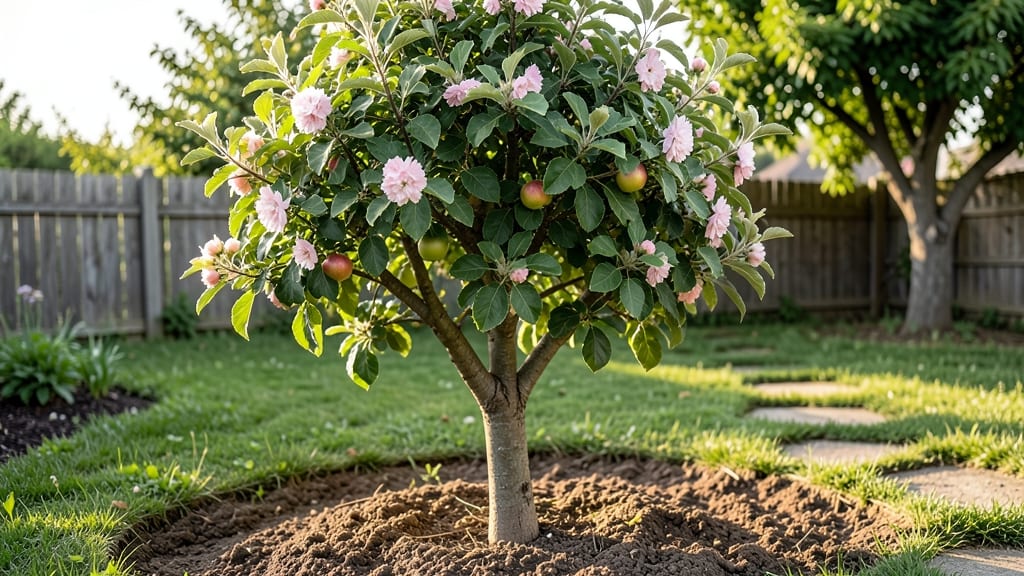
If you’re dreaming of a backyard apple orchard but don’t have room for towering 20-foot trees, semi dwarf apple trees are your game-changer—but how tall do they really grow?
These compact 🍎 wonders typically reach 8–12 feet at maturity, making them perfect for small yards, containers, or even urban gardens. Unlike their full-sized cousins, they grow just half the height while still producing bountiful fruit.
Whether you’re planning a cozy orchard or a single tree, knowing their mature size helps you space them right for sunlight and airflow.
But here’s the catch: their final height depends on pruning, rootstock, and care. With the right techniques, you can keep them even shorter—ideal for tight spaces. I’ll break down everything you need to know, from variety-specific heights to pruning tips that keep your tree in check.
Ready to grow apples without sacrificing your lawn? Let’s dive into the heights, spacing, and secrets to maximizing your harvest in limited space.

Average height ranges for semi dwarf apple trees by variety
Semi dwarf apple trees strike the perfect balance between manageable size and robust fruit production. Unlike their towering standard apple tree counterparts (which can reach 20–30 feet), semi dwarfs typically mature between 12–18 feet—ideal for small yards or tight spaces.
But not all varieties grow the same height, and their growth rates vary too. Let’s break down what to expect from popular semi dwarf apple tree varieties, including how they compare to dwarf varieties (which max out around 8–12 feet).
Understanding these height ranges helps you plan your orchard layout or container gardening setup. For example, a Gala semi dwarf might top out at 14–16 feet, while a Honeycrisp semi dwarf could reach 16–18 feet.
These differences matter when spacing trees 12–15 feet apart for proper airflow and sunlight penetration. Below, we’ll compare the most popular varieties so you can choose the perfect fit for your space.
📊 Height Comparison Table for Semi Dwarf Apple Trees
| Variety | Mature Height (ft) | Growth Rate (ft/year) | Best For |
|---|---|---|---|
| Gala | 14–16 | 1–1.5 ft | Small yards, containers (with support) |
| Fuji | 15–17 | 1.2–1.8 ft | Urban gardens, mixed orchards |
| Honeycrisp | 16–18 | 1–2 ft | Spacious backyards, pollinator-friendly gardens |
| Granny Smith | 13–15 | 0.8–1.2 ft | Small spaces, cold climates |
| Red Delicious | 14–16 | 1–1.5 ft | Traditional orchards, heritage gardens |
| Dwarf Comparison | 8–12 | 0.5–1 ft | Containers, patios, balconies |
| Standard Comparison | 20–30 | 2–3 ft | Large rural properties |
Note: Heights vary by rootstock (e.g., M.9 or MM.106). Always check the specific variety’s rootstock for precise expectations.
As you can see, Honeycrisp semi dwarfs tend to be the tallest, while Granny Smith semi dwarfs stay more compact—perfect if you’re working with limited vertical space. The growth rate also plays a role in planning.
For instance, a Fuji semi dwarf might add 1.5 feet per year in ideal conditions, while a Red Delicious grows slightly slower. This means it could take 8–10 years to reach maturity, compared to 5–7 years for faster-growing varieties like Gala.
One common question I hear is: "Can I grow a semi dwarf apple tree in a container?" The answer depends on the variety and container size. While dwarf apple trees thrive in large pots (15+ gallons), semi dwarfs need at least 30–50 gallons of soil to support their root systems.
Even then, you’ll need to prune aggressively to keep them under 10–12 feet. For container growing, stick to dwarf varieties like Columnar apples or spindle-bush types, which stay under 8 feet.
Another key factor is rootstock type. Semi dwarf apple trees are typically grafted onto rootstocks like M.9 (which produces slightly smaller trees) or MM.106 (a bit taller but more vigorous). The rootstock influences not just height but also cold hardiness and disease resistance.
For example, MM.106 rootstock is better suited for USDA Zone 5 or colder, while M.9 works well in Zone 6+. Always check the rootstock details when selecting your tree.
If you’re planning to grow multiple semi dwarf apple trees, spacing is critical. Aim for 12–15 feet between trees to allow for proper air circulation and sunlight exposure. This spacing also makes pruning and harvesting much easier.
In smaller spaces, you can reduce spacing to 10–12 feet, but be prepared for slightly smaller fruit yields due to increased competition for nutrients and light.
For those with ultra-small spaces, consider espalier training. This technique involves
Factors that influence semi dwarf apple tree height
Understanding what affects your semi dwarf apple tree height helps you manage its growth naturally. The rootstock you choose plays the biggest role—most semi dwarf varieties are grafted onto M.9 or M.26 rootstocks, which limit height to 12-18 feet at maturity.
However, other factors like pruning techniques, soil quality, and sunlight exposure can fine-tune that range.
Your pruning strategy is critical. Regular structural pruning in early spring encourages a compact shape while removing water sprouts prevents vertical growth. I recommend open-center pruning for easier access to fruit and better air circulation, which also keeps the tree smaller than it might otherwise grow.
Soil quality directly impacts growth vigor. Well-draining, nutrient-rich soil with organic matter promotes steady but controlled growth. If your soil is poor or compacted, roots struggle, leading to stunted growth or uneven height development. Amending with compost or aged manure before planting sets the foundation for optimal size management.
Sunlight exposure affects both height and fruit production. Full sun (6-8+ hours daily) ensures balanced growth, while partial shade can cause leggy, taller growth as the tree stretches for light. I’ve found that southern exposures yield the most compact trees with better fruit quality.
Climate conditions matter too. Cooler climates often result in slower growth rates, keeping trees slightly shorter than their potential in warmer regions.
For example, a Gala semi dwarf in Zone 5 might max out at 14 feet, while the same variety in Zone 8 could reach 17 feet without intervention.
Here’s how these factors interact to control height naturally:
- 🌱 Rootstock Type: M.9 (12-15 ft) vs. M.26 (8-12 ft)
- ✂️ Pruning Frequency: Annual pruning keeps trees 20-30% shorter than unpruned
- 💧 Watering Practices: Overwatering can cause rapid vertical growth; deep watering promotes root spread
- ☀️ Sunlight Exposure: Full sun = compact growth; partial shade = taller, leggier trees
- 🌡️ Climate Zones: Cooler zones = slower growth (shorter trees); warmer zones = faster growth
For example, if you’re growing a Fuji semi dwarf in a small urban yard, combine M.26 rootstock, aggressive early pruning, and morning sunlight to keep it under 10 feet. This approach maximizes fruit production while minimizing space use—ideal for container growing or tight landscapes.