
Trees
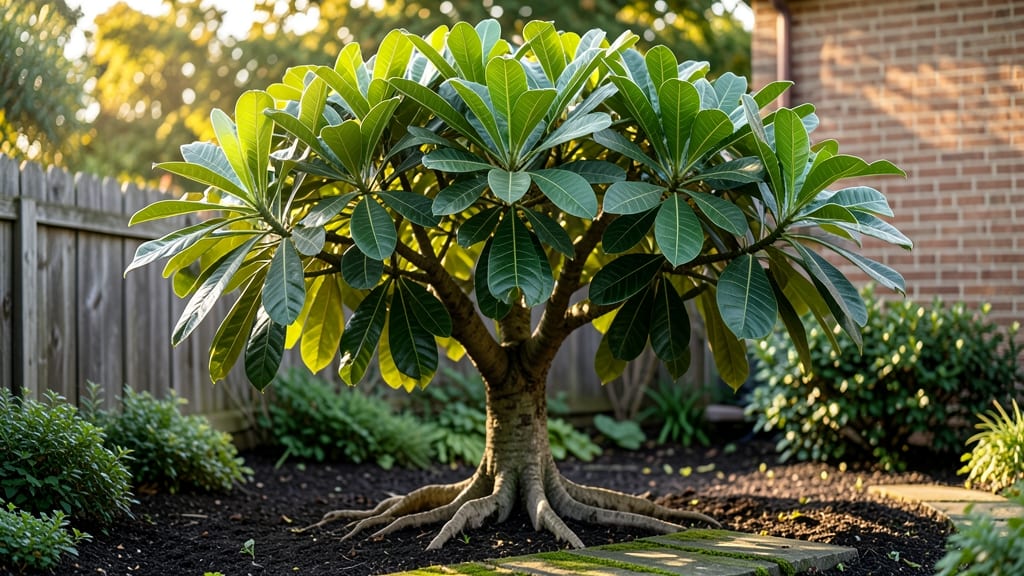
If you're wondering how tall do umbrella trees grow, get ready for a surprise—these tropical stunners can become your backyard's new centerpiece, reaching heights that'll make your neighbors take notice.
The 🌳 Umbrella Tree isn't just a pretty face; some varieties shoot up to 30 feet tall, while others stay compact enough for containers.
But here's the kicker: their growth speed is what makes them so exciting. Whether you're planning a fast-growing shade solution or just love the lush foliage, understanding their mature size helps you pick the perfect variety for your space.
From dwarf types that stay under 6 feet to towering giants that need room to stretch, there's an umbrella tree for every yard.
What really sets these trees apart is how quickly they grow—some gain 2 feet per year when given the right conditions. That means in just a few seasons, you could have a mature tree providing shade and beauty.
The key? Knowing when to plant them in your USDA Zone 6a area (like in spring) and how to care for them to keep them thriving.
Ready to transform your outdoor space? I'll break down everything you need to know about umbrella tree heights, growth rates, and how to keep them at your ideal size—whether that means letting them reach for the sky or keeping them perfectly contained.

Umbrella tree height by variety: from dwarf to towering giants
When choosing an umbrella tree for your landscape, size matters—especially if you're working with limited space or aiming for dramatic shade. These trees, scientifically known as Schefflera actinophylla, come in stunning varieties with wildly different mature heights.
Some stay compact enough for containers, while others grow into towering giants that dwarf two-story homes. Let’s break down the height ranges and growth habits of the most popular varieties so you can pick the perfect fit for your yard.
The umbrella tree gets its name from its distinctive umbrella-like foliage, but its height can vary dramatically depending on the cultivar. For example, the 'Amate' variety is one of the smallest, while the 'Trinidad' can reach staggering proportions.
Understanding these differences helps you avoid surprises down the road—whether you’re planting near a patio or aiming for a backyard canopy.
| Variety | Mature Height | Growth Rate | Best For |
|---|---|---|---|
| 'Amate' | 15-25 ft | 6-12 in/year | Large yards, privacy screens |
| 'Novate' | 10-15 ft | 4-8 in/year | Medium spaces, containers (with pruning) |
| 'Trinidad' | 25-30+ ft | 12-24 in/year | Large estates, shade trees |
| 'Australia' | 20-25 ft | 8-12 in/year | Urban landscapes, street trees |
| 'Emerald Gem' | 6-10 ft (dwarf) | 3-6 in/year | Containers, patios, small gardens |
The 'Emerald Gem' is a game-changer if you love the look of umbrella trees but lack space. This dwarf variety maxes out around 10 feet, making it ideal for containers or small gardens. It’s also slower-growing, so you won’t need to prune it as aggressively as taller varieties.
For those with bigger properties, the 'Trinidad' variety grows 2-3 feet per year and can easily surpass 30 feet in ideal conditions—think of it as a natural shade canopy for your backyard oasis.
If you’re torn between varieties, consider your long-term goals. A 'Novate' might start small but could outgrow its spot in 5-10 years. Always measure your space and account for the tree’s mature height plus its spread, which can be nearly as wide as it is tall.
For example, a 25-foot 'Trinidad' will need at least 15 feet of clearance on all sides to thrive without crowding other plants or structures.
Another key factor is your climate zone. Umbrella trees thrive in USDA Zones 10-11 but can also grow in cooler zones with proper winter protection. In colder regions, even the tallest varieties may grow slower, staying smaller unless you provide winter mulch or container protection.
For instance, a 'Australia' variety in Zone 9 might only reach 18 feet instead of its full 25-foot potential.
For urban gardeners, the 'Australia' variety strikes a balance—tall enough to provide shade but not so massive it overwhelms a city lot. Its glossy leaves and fast growth make it a favorite for street trees, where it can be pruned to maintain a 15-20 foot height.
If you’re planting near a driveway or sidewalk, always check local regulations on tree height and root spread to avoid fines or property damage.
One variety often overlooked is the 'Emerald Gem', which is perfect for balconies or rooftop gardens. Its compact size and slow growth rate make it low-maintenance, but don’t let its size fool you—it still needs full sun and well-draining soil to reach its full potential.
Pair it with dwarf citrus trees or succulents for a tropical container garden that stays under 6 feet tall.
Pro tip: If you’re buying an umbrella tree from a nursery, ask about its growth rate and whether it’s been pruned for size. Some nurseries sell 'Trinidad' varieties as 6-foot trees by heavily pruning them, but they’ll quickly rebound to their natural height if not maintained.
Always inspect the trunk thickness—a thicker trunk usually means a faster-growing, taller tree.
Ready to pick your perfect umbrella tree? Start by measuring your space and matching it to the mature height of the variety you love.
Whether you go for a dwarf 'Emerald Gem' or a towering 'Trinidad', these trees bring year-round interest with their lush foliage and dramatic height. 🌳
How fast do umbrella trees grow? Growth rates and pruning tips
Umbrella trees (Schefflera actinophylla) are known for their rapid growth, but their speed depends heavily on the variety you choose.
On average, these trees grow 6 to 24 inches per year, with some dwarf varieties like 'Amate' growing slower at just 6-12 inches annually, while larger types like 'Trinidad' can surge up to 24 inches per year under ideal conditions.
This means a standard umbrella tree could reach 6 feet in just 3 years if given the right care.
Growth rates are influenced by several factors, including sunlight exposure, soil quality, and watering consistency. For example, trees planted in full sun (6+ hours daily) grow significantly faster than those in partial shade.
Well-draining, nutrient-rich soil also fuels faster growth, while consistent moisture (but not soggy soil) ensures steady upward progress. In my experience, trees in USDA Zones 9-11 thrive and grow the fastest, while those in cooler zones may grow more slowly.
Here’s what you can expect in terms of height progression over time: Year 1: 3-5 feet Year 2: 8-12 feet Year 3: 12-18 feet Mature Height: 15-30 feet (depending on variety) This rapid growth is one of the reasons umbrella trees are popular for quick shade solutions, but it also means you’ll need to plan for their eventual size.
- Sunlight: Full sun (6+ hours) speeds growth by 30-50% compared to partial shade.
- Soil: Well-draining, slightly acidic soil (pH 6.0-7.0) promotes faster root and stem development.
- Water: Deep watering 2-3 times per week in hot months supports rapid growth.
- Fertilizer: Balanced 10-10-10 NPK applied every 4-6 weeks during growing season.
- Pruning: Regular trimming in late winter/early spring encourages bushier growth and controls height.
If you’re concerned about an umbrella tree outgrowing its space, pruning is your best tool. The ideal time to prune is late winter or early spring, just before new growth begins. Use clean, sharp pruners to cut back 1/3 of the new growth to encourage a fuller shape.
For height control, focus on trimming the topmost branches, which will redirect energy to lateral growth. I’ve found that pruning annually keeps trees at a manageable height while maintaining their lush, umbrella-like canopy.
For those growing umbrella trees in containers or small spaces, pruning becomes even more critical. Regularly trimming back overgrown branches and pinching back new growth can keep a tree under 6 feet tall for years.
Just be sure to sterilize your pruners with rubbing alcohol between cuts to prevent disease. With consistent pruning, you can enjoy a compact umbrella tree that fits perfectly in your garden or patio.
One common mistake gardeners make is waiting too long to prune. If you let an umbrella tree grow unchecked for a few years, it can become difficult to manage. Start pruning early—even in the first year—to establish the desired shape and size.
This not only keeps the tree under control but also encourages denser foliage and a healthier structure. With the right approach, you can enjoy a beautiful, well-proportioned umbrella tree that grows at a pace that suits your space.
🌿