
How To
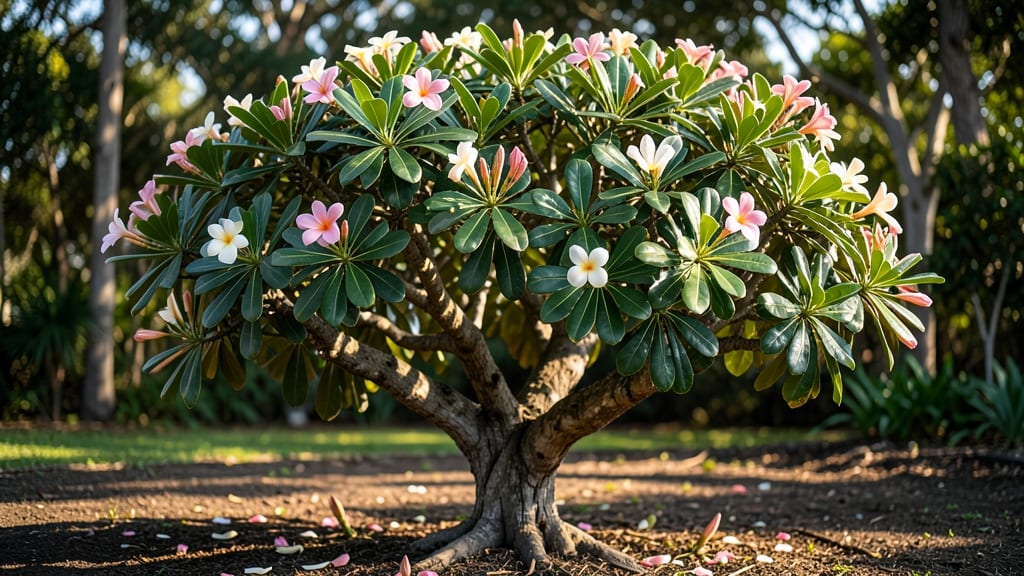
Have you ever wondered just how tall that fragrant 🌺 Plumeria Tree in your dream garden could actually grow? The answer might surprise you—this tropical beauty can stretch from a modest 10 feet to a towering 25 feet, depending entirely on the variety and care you provide.
If you're planning a backyard oasis in zones 10-12, you're in luck—Plumeria thrives year-round when given the right conditions. But whether you're aiming for a petite patio centerpiece or a full-sized statement tree, understanding its growth potential is key to making it work in your space.
In this guide, I’ll break down exactly how tall different Plumeria varieties can reach, what factors influence their height, and how you can control their growth with simple pruning and care tricks. Ready to transform your garden with this stunning tropical star?
Let’s dive into the details so you can choose the perfect Plumeria size for your vision—whether that’s a dwarf variety for containers or a full-grown giant for your landscape.

Plumeria tree height by variety: from dwarf to giant species
If you’re wondering how tall does a plumeria tree grow, the answer depends entirely on the variety you choose. Plumerias range from compact patio plants to towering tropical giants, each with unique growth patterns.
For example, the Plumeria rubra (commonly called the red plumeria) typically reaches 10–15 feet at maturity, while Plumeria obtusa can soar up to 20–25 feet in ideal conditions. Understanding these differences helps you select the perfect plumeria for your space and climate.
Most plumeria varieties don’t have true dwarf or semi-dwarf forms, but some hybrids and grafted varieties stay smaller—often between 6–10 feet. These are ideal for containers or small gardens where space is limited.
For instance, the Plumeria ‘White Queen’ hybrid often maxes out around 8–10 feet, making it a favorite for balconies and patios. Always check the specific variety’s growth habits before planting.
Here’s a quick breakdown of what to expect from popular plumeria types:
- Standard varieties (e.g., Plumeria rubra, Plumeria pudica): 10–25 feet
- Hybrid varieties (e.g., Plumeria ‘Hawaiian Snow’): 8–15 feet
- Fast-growing varieties (e.g., Plumeria obtusa): 15–25 feet in tropical climates
Choosing the right variety ensures your plumeria thrives without overwhelming your garden.
| Variety | Mature Height (ft) | Growth Rate (ft/year) | Ideal Climate | Best For |
|---|---|---|---|---|
| Plumeria rubra | 10–15 | 1–2 | Tropical/Subtropical | Backyard gardens, borders |
| Plumeria obtusa | 15–25 | 2–3 | Tropical | Large landscapes, privacy screens |
| Plumeria pudica | 12–20 | 1.5–2.5 | Subtropical | Containers, small yards |
| Plumeria ‘Hawaiian Snow’ (Hybrid) | 8–12 | 1–1.5 | Tropical/Subtropical | Patios, balconies, containers |
| Plumeria ‘White Queen’ (Hybrid) | 6–10 | 0.8–1.2 | Tropical/Subtropical | Small spaces, urban gardens |
When planning your plumeria’s placement, consider both its mature height and its growth rate. For example, a Plumeria obtusa can grow 2–3 feet per year in ideal conditions, so it’ll quickly outgrow a small yard.
In contrast, the Plumeria ‘White Queen’ grows more slowly, making it perfect for container gardening or tight spaces. Always measure your space and choose a variety that fits your long-term vision.
Climate plays a huge role in determining how tall your plumeria will grow. In USDA zones 10–12, plumerias thrive year-round and can reach their full potential height. However, in cooler climates (zones 9 or below), they may stay smaller or require container growing to survive winters.
For instance, a Plumeria rubra in zone 11 might hit 15 feet, while the same variety in zone 10 could max out at 10 feet due to seasonal stress.
Soil quality and sunlight exposure also influence height. Plumerias need well-draining, slightly acidic soil (pH 6.0–7.0) and 6+ hours of direct sunlight daily to grow vigorously. Poor soil or shade can stunt growth,
How to control Plumeria tree height: pruning, training & care tips
Controlling your plumeria’s height isn’t just about aesthetics—it’s about health, bloom production, and space management. Even the tallest varieties like Plumeria rubra (which can hit 25 feet in ideal conditions) can be shaped with the right techniques.
The key? Pruning at the right time and understanding how your tree responds to care.
Start by pruning in late winter or early spring before new growth begins. This encourages stronger, bushier growth while keeping your plumeria at your desired height. For container-grown trees, pruning also prevents root-bound stress, which can stunt growth or even kill your plant.
🌺 Pro Tip: Never prune more than one-third of the tree’s height at once. Over-pruning shocks plumeria trees, leading to fewer blooms and weaker stems. Think of it like haircuts—gradual trims keep things balanced!
- When: Late winter/early spring (before blooming season)
- How: Cut just above a leaf node (never at a joint)
- Tools: Sterilized pruners (dip in rubbing alcohol)
- Goal: Encourage lateral branches for fuller growth
For smaller spaces, consider container gardening with dwarfing rootstocks (though true dwarf plumeria varieties are rare). Choose a large pot (15+ gallons) with drainage holes and use a well-draining cactus/succulent mix. This limits root expansion, naturally restricting height while keeping your plumeria manageable.
Sunlight plays a huge role in height control too. Plumeria trees in partial shade grow taller but produce fewer blooms, while those in full sun (6+ hours daily) stay compact and flower prolifically. If your tree is stretching toward light, it’s a sign it needs more direct sunlight.
Finally, fertilize wisely. Over-fertilizing with nitrogen promotes leafy growth at the expense of height control. Instead, use a balanced 7-9-5 NPK fertilizer in spring and fall to encourage controlled, bushy growth without skyrocketing height.
With these tips, you can keep your plumeria at any height—whether you want a 3-foot patio centerpiece or a 15-foot tropical statement piece. The secret? Patience, precision pruning, and the right growing conditions. 🌿