
How To
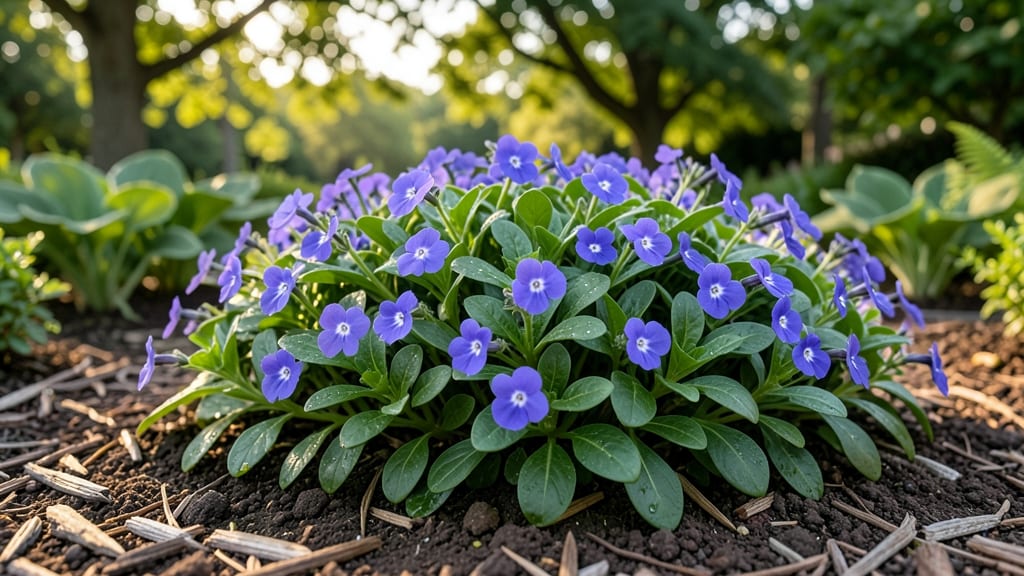
If you're wondering "how tall does periwinkle grow", you're not alone—this charming ground cover can quickly transform from a delicate accent to an unruly sprawl if you don’t plan ahead.
Periwinkle 🌸 thrives in zones like 6a, where its lush foliage and delicate blooms make it a garden favorite, but its natural spread can surprise even seasoned gardeners.
The good news? With the right care, you can keep periwinkle’s height between 6–12 inches while managing its spread to create a polished, low-maintenance border. Whether you’re using it as a living mulch or a vibrant edge, understanding its growth habits is the key to a tidy, thriving garden.
In this guide, I’ll break down exactly what to expect from periwinkle’s mature size, how different varieties behave, and the simple tricks to control its growth—so you can enjoy its beauty without the chaos. Let’s get started!
From pruning tips to soil secrets, you’ll learn how to keep periwinkle looking its best year after year. No more guessing—just practical advice to make your garden look effortlessly polished.

Natural height range of periwinkle: what to expect in different varieties
Periwinkle (Vinca) is a versatile ground cover that thrives in 6–18 inches of height, but its sprawling habit makes spread—rather than height—the real consideration. Most gardeners plant periwinkle for its dense foliage and vibrant blooms, not its stature.
The two most common varieties, Vinca minor and Vinca major, offer distinct growth patterns that suit different garden designs.
If you're wondering, "How tall does periwinkle grow?" the answer depends on the variety and growing conditions. Dwarf periwinkle (Vinca minor) typically stays between 6–12 inches tall with a spread of 12–18 inches, making it ideal for edging and small gardens.
In contrast, greater periwinkle (Vinca major) reaches 12–18 inches tall and spreads 24–36 inches, perfect for larger borders or slopes.
Regional climate plays a surprising role in periwinkle's height. In cooler USDA zones (5–7), periwinkle often stays shorter due to slower growth, while warmer zones (8–10) can see taller, more vigorous plants.
For example, my Vinca major in Zone 8 hits 16 inches tall by midsummer, whereas a neighbor’s in Zone 6 maxes out at 12 inches.
Soil drainage also influences height. Periwinkle planted in well-draining soil grows more compactly, while heavy clay soil can stunt its growth or encourage legginess. Always amend soil with compost or sand to promote healthy, proportional growth.
| Variety | Mature Height | Spread | Best Use |
|---|---|---|---|
| Vinca minor (Dwarf Periwinkle) | 6–12 inches | 12–18 inches | Edging, rock gardens, small borders |
| Vinca major (Greater Periwinkle) | 12–18 inches | 24–36 inches | Slopes, large borders, woodland gardens |
| Vinca 'Illumination' (Variegated) | 8–14 inches | 18–24 inches | Accent plant, containers, mixed borders |
| Vinca 'Lavender Mist' | 10–15 inches | 20–30 inches | Ground cover, shade gardens |
Note: Height can vary by 20–30% based on sunlight, soil, and climate.
Periwinkle’s height growth slows significantly after the first year. In its second and third years, it focuses more on spreading horizontally to fill gaps. This makes it perfect for suppressing weeds and creating a dense carpet of foliage, but it also means height rarely exceeds 18 inches unless over-fertilized.
For containers or small pots, periwinkle’s height stays on the shorter end (6–10 inches) because its roots are confined. However, in ground plantings, it will always prioritize spread over height.
This is why many gardeners pair it with taller perennials like hostas or ferns to create layered designs.
If you’re planning a periwinkle border, account for its mature spread by planting 12–18 inches apart. Over time, the plants will knit together to create a seamless, weed-blocking barrier.
In my own garden, I spaced Vinca major 18 inches apart and now enjoy a continuous green curtain with minimal gaps.
One common misconception is that periwinkle grows "too tall" for ground cover. In reality, its low height is one of its biggest assets—it stays out of the way while still providing year-round color and low-maintenance coverage. The key is managing its spread, not its height.
For shade gardens, periwinkle’s height tends to be on the shorter side (6–12 inches) because it grows more slowly in low-light conditions. In sunny locations, it may reach 14–18 inches but still remains a compact plant compared to other ground covers like
Natural height range of periwinkle: what to expect in different varieties
Periwinkle (Vinca) is prized for its low-growing, vibrant foliage and delicate flowers, but its height and spread vary dramatically between varieties. Most gardeners expect 6 to 12 inches of height at maturity, though some aggressive types can reach 18 inches under ideal conditions.
The real variable is its sprawling habit, which can stretch 12 to 36 inches wide—making it a ground cover powerhouse.
For example, Vinca minor (dwarf periwinkle) stays compact at 6 to 12 inches tall, perfect for borders or woodland gardens. Meanwhile, Vinca major (greater periwinkle) can climb to 12 to 18 inches, thriving in sunny spots.
Climate also plays a role: Periwinkle in warmer zones (USDA 7-10) tends to grow taller and bushier than in cooler regions (USDA 4-6), where it may stay shorter but denser.
| Variety | Height | Spread | Best Use |
|---|---|---|---|
| Vinca minor | 6–12" | 12–24" | Borders, shade gardens |
| Vinca major | 12–18" | 24–36" | Slopes, sunny areas |
| 'Illinois' (compact) | 4–8" | 12–18" | Containers, edging |
| 'Giant' (tallest) | 18–24" | 36+" | Mass planting, slopes |
If you're planting periwinkle in containers, expect it to stay shorter (4–10 inches) but still spread aggressively. In ground beds, its height remains consistent, but its width can double if unchecked.
To predict growth, observe your local climate: Southern gardens see faster, taller growth, while Northern regions may stunt it slightly due to cooler summers.
For first-year growth, periwinkle starts slow—often just 3–6 inches tall by late spring. By year two, it fills in dramatically, reaching 50–75% of its mature height.
This rapid spread is why many gardeners use it to suppress weeds or stabilize slopes, but it also means planning ahead for containment strategies like edging or regular pruning.
One common misconception is that periwinkle’s height is purely genetic. In reality, light exposure and soil fertility heavily influence its growth. Over-fertilized plants can grow 20–30% taller and spread wider, while shady conditions may keep it shorter but denser. Always match your variety to your site’s conditions to avoid surprises.
For example, in my own garden, Vinca minor in partial shade stays at 8 inches tall but spreads 24 inches wide, creating a lush carpet. The same variety in full sun reaches 12 inches tall but spreads only 18 inches—proving that light trumps genetics for height control. 🌿