
How To
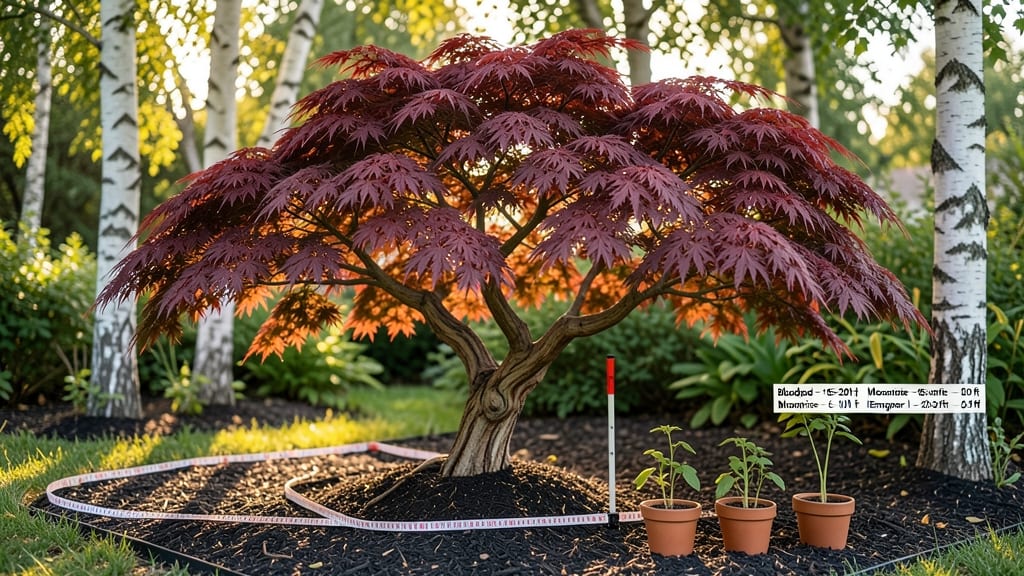
If you're wondering "how tall will a Japanese Maple grow", the answer depends more on the variety you choose than you might think. This stunning 🌿 tree can range from a compact 4-foot patio beauty to a towering 30-foot backyard centerpiece, making proper placement absolutely crucial.
Picture this: a delicate Bloodgood cultivar reaching just 8 feet—perfect for framing your front door—while an Emperor I stretches toward 25 feet, casting shade over an entire garden.
The key difference? Some varieties grow slowly over decades, while others put on height more quickly, especially when given the right care.
I’ll break down exactly which types stay small enough for containers, which need room to sprawl, and how to control their growth through pruning. Whether you’re planning a tiny urban garden or a sprawling landscape, knowing these details will help you pick the perfect Japanese Maple for your space.
Ready to transform your outdoor area with this iconic tree? Let’s explore the height ranges, growth habits, and care tips that will give you the exact look you’re dreaming of.

Japanese maple height by variety: mature sizes and growth rates
Japanese maples (Acer palmatum) are prized for their stunning foliage and compact forms, but their mature height varies dramatically by variety. Understanding these differences helps you choose the perfect specimen for your space—whether it's a delicate patio centerpiece or a backyard statement tree.
Most cultivars fall into three height categories: dwarf (4–8 ft), semi-dwarf (8–15 ft), and standard (15–30 ft).
The Bloodgood variety, for example, typically reaches 15–20 feet at maturity, making it ideal for larger gardens. In contrast, the Dissectum group—like 'Seiryu'—stays under 6 feet, perfect for containers or small yards.
Even within the same cultivar, growth can vary by 1–3 feet depending on soil, sunlight, and pruning habits.
Here’s how to match your space to the right variety:
| Variety | Mature Height (ft) | Growth Rate (in/year) | Ideal Spacing (ft) |
|---|---|---|---|
| Bloodgood | 15–20 | 6–12 | 10–12 |
| Emperor I | 8–12 | 4–8 | 6–8 |
| Dissectum 'Seiryu' | 4–6 | 2–4 | 3–4 |
| Shishigashira | 10–15 | 5–10 | 8–10 |
| Viridis | 20–25 | 8–12 | 12–15 |
*Growth rates vary by climate and care; pruning can reduce height by 20–30%.
For small spaces, prioritize dwarf varieties like 'Dissectum' or 'Tamukeyama'. These thrive in containers (15–20 gallons) and can be moved seasonally. Meanwhile, standard varieties like 'Viridis' need ample room—plant them 20+ feet from structures to avoid root competition and allow their spreading canopies to flourish.
Soil quality dramatically impacts height. Japanese maples prefer acidic, well-draining soil (pH 5.0–6.0). Amend heavy clay with organic matter like compost or pine bark to prevent root rot, which can stunt growth. In containers, use a mix of 50% potting soil and 50% perlite to mimic ideal drainage.
Light exposure also plays a role. While most varieties tolerate partial shade (4–6 hours of sun), full sun (6+ hours) can cause leaf scorch and slower growth.
In hot climates, morning sun with afternoon shade is ideal. For indoor growing, place near an east-facing window to limit direct sunlight.
Pruning in late winter or early spring can control height by up to 30%. Focus on removing suckers at the base and thinning crowded branches. Avoid heavy pruning in summer, as it stresses the tree and may reduce autumn color.
For dwarf varieties, a light trim after flowering keeps them compact and bushy.
If you’re unsure about a variety’s growth, check the nursery tag for estimated mature height. Reputable growers often include 5-year growth projections, which can help you visualize the tree’s future size. For example, a 10-foot 'Emperor I' at purchase may reach 15 feet in a decade with optimal care.
Remember: Japanese maples grow slowly—expect 6–12 inches per year for most varieties. This makes them low-maintenance but requires patience for full maturity. With the right variety and care, your Japanese maple will become a lifelong focal point in your garden. 🌿
How fast do Japanese maples grow? Growth habits by type
Japanese maples are famous for their slow, steady growth—perfect for gardeners who appreciate patience and precision. Most varieties grow just 6-12 inches per year, making them ideal for long-term landscaping projects. However, growth rates vary dramatically depending on the cultivar, climate, and care.
For example, dwarf varieties like 'Crimson Queen' may only add 3-6 inches annually, while larger types like 'Emperor I' can reach 12-18 inches per year under ideal conditions.
Seasonal growth also plays a role. Japanese maples typically burst into growth in spring (April-May) and slow down by late summer. In cooler climates (USDA Zones 5-7), growth may pause entirely during winter, while warmer zones (Zones 8+) allow for year-round, albeit slower, development.
Understanding these patterns helps you plan for pruning windows and nutrient needs at the right times.
- 5 years: 4-8 ft tall (dwarf) to 10-15 ft (standard)
- 10 years: 6-12 ft (dwarf) to 15-25 ft (standard)
- 20 years: 8-15 ft (dwarf) to 20-30 ft (standard)
- 30 years: Mature height reached (varies by variety)
Pruning is one of the most effective ways to control height and shape your Japanese maple. Light pruning in late winter or early spring encourages bushier growth, while heavy pruning in summer can stunt vertical growth.
Avoid cutting back more than 25% of the canopy in a single session, as this can stress the tree. For varieties like 'Bloodgood', which naturally grow taller, annual tip-pruning can keep them manageable for smaller spaces.
Soil and sunlight also influence growth speed. Japanese maples thrive in well-draining, acidic soil (pH 5.0-6.5) with partial shade (4-6 hours of sun daily). Full sun can scorch leaves and speed up growth too quickly, leading to weaker wood.
Amending your soil with organic compost and mulching with wood chips provides the nutrients needed for steady, healthy growth without aggressive height spikes.
If you're growing a Japanese maple in a container or bonsai-style pot, expect even slower growth—often just 1-3 inches per year. Root-bound conditions naturally restrict height, making these varieties perfect for patios or small balconies. Just
For faster (but still controlled) growth, focus on consistent watering and balanced fertilization in spring. A slow-release 10-10-10 fertilizer applied in early April can give your tree a gentle growth boost without overwhelming it. Pair this with morning watering to keep the soil evenly moist but never soggy—this combo ensures your Japanese maple reaches its mature height gracefully, not all at once.