
How To
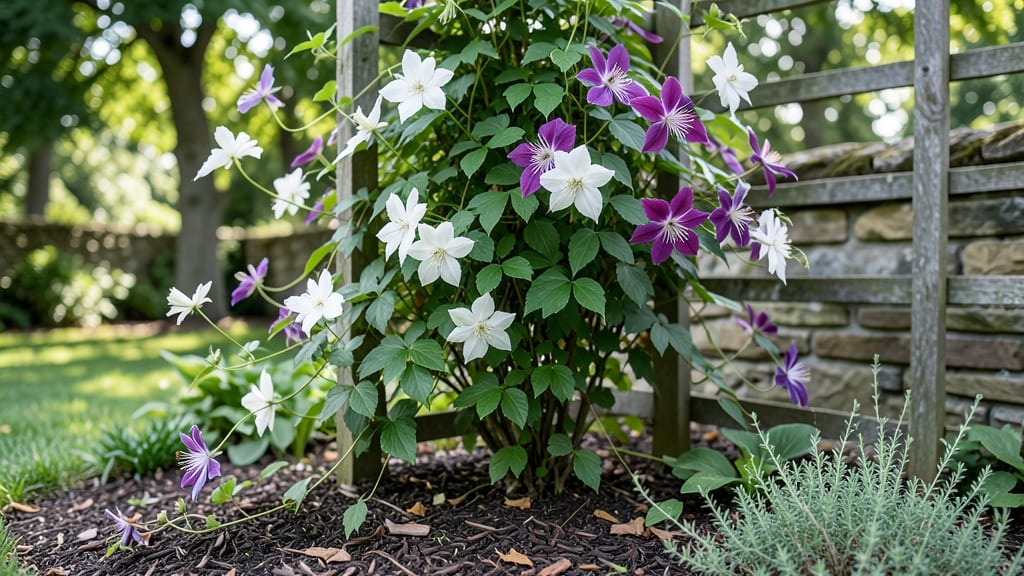
Wondering how tall will clematis grow? The answer depends entirely on the variety you choose, with some varieties stretching toward your roof while others stay neatly contained in a small garden bed.
From towering vines that climb 20 feet to compact varieties that max out at 6 feet, clematis growth varies dramatically based on pruning group, species, and even your local climate. Understanding these differences is the key to selecting the perfect plant for your space.
Whether you're planning a dramatic vertical garden or need a manageable addition to your patio, I'll break down exactly what to expect from each type. You'll discover how pruning groups 1-3 influence height, which varieties thrive in small spaces, and how to control growth naturally.
Let's explore the stunning range of clematis heights and how to make them work perfectly for your garden—no matter how big or small your space may be.

Clematis height by type: growth zones & maximum heights explained
Clematis vines are famous for their dramatic vertical growth, but their mature height varies wildly depending on the variety. Some dwarf types stay under 6 feet, while giants like Clematis montana can reach 20+ feet—think climbing a two-story house!
Understanding these differences helps you choose the right plant for your space and support structure.
All clematis varieties fall into three pruning groups, each with distinct growth habits. Group 1 (hard-pruned) varieties grow aggressively, while Group 3 (minimal-pruned) types focus energy on fewer, larger blooms.
Your local climate also plays a role—warmer zones (like USDA 8+) often see faster, taller growth compared to cooler regions.
The table below breaks down height ranges by pruning group, including real-world examples. I’ve included first-year growth expectations too, since many gardeners underestimate how quickly these vines establish themselves.
Group 2 clematis (like Clematis montana) are the heavyweights, often topping 20 feet in just 3–4 years. These varieties thrive on trellises, arbors, or even tree trunks, making them perfect for large gardens or privacy screens.
If you’re growing near a fence, plan for 6–10 feet of vertical space by year 3.
For small spaces, Group 3 varieties like Clematis integrifolia (6–10 ft) or dwarf types (3–6 ft) are game-changers. These stay manageable while still delivering stunning blooms. The key? Pruning early and often to shape their growth—more on that in the next section!
One common mistake I see is assuming all clematis grow equally tall. In reality, Group 1 varieties (like Jackmanii) need aggressive pruning to control their height, while Group 3 types (like Viticella) bloom on old wood and should only be trimmed lightly.
Always check your variety’s pruning group before planting!
Climate also tweaks growth expectations. In cooler zones (USDA 5–6), clematis may grow 1–2 feet shorter than in warmer zones (USDA 8+). For example, Clematis lanuginosa might hit 12 feet in California but only 8–10 feet in the Pacific Northwest. Adjust your trellis height accordingly!
Pro tip: If you’re unsure about your clematis’s height potential, check the plant tag or look up its pruning group online. Most nurseries list mature heights, but I’ve found real-world growth can vary by 20–30% based on care.
For example, a Clematis montana in my garden hit 25 feet in 5 years—double the 12–15 feet listed on its tag!
Ready to harness this vertical growth? The next step is learning how to control clematis height through pruning—whether you want to encourage towering vines or keep them
Clematis height by type: growth zones & maximum heights explained
Clematis vines are famous for their dramatic vertical growth, but not all varieties reach the same heights. The three pruning groups (1-3) dictate how tall your clematis will grow, with Group 3 varieties often topping 20 feet while Group 1 types max out around 6-10 feet.
Understanding these differences helps you choose the perfect variety for your space—whether you have a small balcony or a large trellis.
Most clematis varieties grow 3-5 feet per year under ideal conditions, but factors like sunlight exposure, soil fertility, and pruning practices can accelerate or slow growth.
For example, Clematis montana (Group 3) can shoot up 10+ feet in a single season if given full sun and consistent moisture, while Clematis integrifolia (Group 2) typically stays between 6-10 feet.
| Variety | Pruning Group | Mature Height (ft) | Growth Rate (ft/year) | Best For |
|---|---|---|---|---|
| Clematis montana | 3 | 15-25 | 3-5 | Large trellises, walls |
| Clematis viticella | 2 | 8-12 | 2-4 | Arbors, pergolas |
| Clematis integrifolia | 2 | 6-10 | 1-3 | Balconies, small fences |
| Clematis armandii | 3 | 10-15 | 2-3 | Shrub borders, walls |
| Clematis recta | 1 | 3-6 | 1-2 | Containers, small gardens |
If you live in a cooler climate (USDA Zones 3-6), clematis varieties like Clematis montana thrive, often exceeding 20 feet with minimal winter dieback. In warmer zones (7-10), however, growth can be more vigorous year-round, requiring regular pruning to manage height.
For example, Clematis viticella in Zone 8 may need hard pruning to keep it under 10 feet.
For small-space gardening, opt for Group 1 varieties like Clematis recta or Clematis texensis, which stay under 6 feet. These are perfect for containers or balcony railings and bloom prolifically without overwhelming your space.
Pair them with dwarf sunflowers or ornamental grasses to create a vertical garden that fits even the tightest yards.
Pro tip: Early-season growth (first 6 weeks) is the fastest, so provide support structures (trellises, arbors) as soon as you plant. Without support, vines can become woody and unruly, reducing bloom quality. Aim for a 5-foot trellis for Group 1 varieties and a 15-foot arbor for Group 3 climbers.
Need more guidance? Check out our clematis care guide for tips on soil prep, fertilization, and seasonal pruning to maximize height—or contain it—based on your variety. 🌸