
Companion Plants
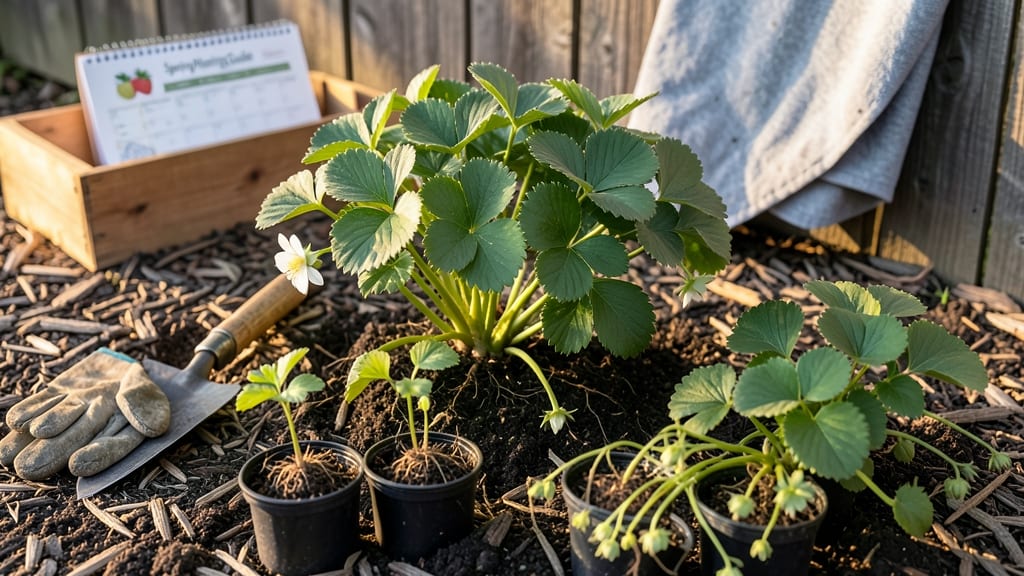
If you're asking "when can I plant strawberries in Zone 6", timing is the secret weapon between a bountiful harvest and wasted effort. The difference between 3 weeks of perfect berries and none at all often comes down to planting just a few days too early or late.
Zone 6 gardeners know the struggle—frost can still linger in April while summer heat arrives earlier than you'd expect. That's why everbearing varieties need a second chance in late summer, while June-bearing types demand precise spring timing.
Let me show you the exact weeks to plant for both, plus how to adjust for your specific microclimate.
We'll cover the critical 4-6 week window before your last frost date, soil temperature tricks to jumpstart growth, and why some gardeners swear by July plantings for fall harvests.
Whether you're in Pittsburgh's cooler pockets or Roanoke's milder stretches, these strategies will help you avoid the top 5 planting mistakes that ruin strawberry crops every year.
Ready to transform your garden into a 🍓 powerhouse? By the end, you'll know exactly when to plant—down to the week—and how to protect your berries from late frosts or early heat. Let's get those strawberries in the ground the right way.

Zone 6 strawberry planting schedule: exact weeks before last frost for June-bearing vs. everbearing varieties
Zone 6 gardeners have two prime windows to plant strawberries: early spring and late summer. The exact timing depends on whether you're growing June-bearing (one harvest) or everbearing (multiple harvests) varieties.
For most of Zone 6, the last average frost date falls around mid-April, but microclimates can shift this by 1-2 weeks.
June-bearing varieties need 4-6 weeks of warm soil before planting, while everbearing types tolerate cooler soil and can go in 2-3 weeks earlier. Bare-root plants should be set out when soil temperatures reach at least 40°F (4°C)—use a soil thermometer to check.
Container-grown strawberries adapt faster and can handle slightly cooler soil.
Here’s the exact planting schedule for Zone 6, accounting for both frost risk and soil temperature thresholds:
For northern Zone 6 (e.g., Pittsburgh, PA), aim for April 1-15 to avoid late frosts. In southern Zone 6 (e.g., Roanoke, VA), you can start as early as March 15.
Everbearing varieties like 'Seascape' or 'Ozark Beauty' are ideal for fall planting, while June-bearing types such as 'Jewel' or 'Chandler' thrive with spring planting.
Use row covers or cold frames to extend your spring planting window by 2-3 weeks if frost threatens. Always plant bare-root strawberries on a cloudy day or in the evening to reduce transplant shock. Water deeply after planting to settle the soil around the crown (where leaves meet roots).
If you miss spring planting, July is your second chance—especially for everbearing varieties. Plant in well-draining soil and mulch heavily to retain moisture. These late-season plants will produce a small harvest in fall before winter dormancy.
Pro tip: Mark your last frost date with stakes and flags to track progress. Most Zone 6 gardeners find that planting 3 weeks before the average last frost (around March 20) gives strawberries enough time to establish roots before warm weather arrives.
Remember, soil temperature matters more than air temperature. Use a soil thermometer to confirm readiness—strawberries won’t thrive in cold, wet soil. Aim for consistently above 40°F (4°C) for 5-7 days before planting.
For container gardening, you can plant 2-3 weeks earlier since pots warm up faster. Just ensure your containers have drainage holes and use a lightweight potting mix to prevent root rot.
Zone 6 strawberry planting schedule: exact weeks before last frost for June-bearing vs. everbearing varieties
Zone 6 gardeners have two prime windows to plant strawberries: early spring (March–April) and late summer (July–August). The exact timing depends on whether you're growing June-bearing (one harvest) or everbearing (two harvests) varieties.
For June-bearing types, aim to plant 4–6 weeks before your last frost date—typically mid-March to early April in most of Zone 6. Everbearing varieties can handle a slightly later window, especially for fall planting.
Your last frost date in Zone 6 usually falls around mid-April, but this varies by location. In colder northern areas like Pittsburgh (Zone 6a), plant closer to late March. Warmer southern regions like Roanoke (Zone 6b) can start as early as mid-March.
Soil temperature is just as critical as air temperature—wait until the soil reaches at least 40°F (4°C) for planting.
For June-bearing strawberries, the goal is to establish roots before the spring flush of growth begins. Planting too early risks frost damage, while waiting too long delays harvest. Everbearing varieties are more flexible—they tolerate cooler soils and can even be planted in late summer (July–August) for a fall harvest.
| Variety Type | Best Planting Window | Soil Temp Requirement | Harvest Time |
|---|---|---|---|
| June-Bearing | March 15–April 15 (4–6 weeks before last frost) | 40–50°F (4–10°C) | June–July (one harvest) |
| Everbearing | March 15–April 15 OR July 1–August 15 | 40°F+ (4°C+) | June–July AND September–October (two harvests) |
| Day-Neutral | March 1–April 15 OR June 15–July 15 | 45°F+ (7°C+) | Continuous harvest (spring–fall) |
If you’re planting bare-root strawberries (the most common type), soak the roots in lukewarm water for 30 minutes before planting to revive them. For container-grown plants, you can plant slightly later—up to 2 weeks after bare-root varieties—since their roots aren’t as sensitive to cold.
Just ensure the container has drainage holes to prevent root rot, a common issue in Zone 6’s humid summers.
Pro tip: Use black plastic mulch in early spring to warm the soil faster and extend your planting window. This is especially helpful in Zone 6a areas where frosts linger.
For everbearing varieties planted in late summer, apply a thick layer of straw mulch (4–6 inches) to insulate roots as temperatures drop in fall.
Remember, soil preparation is half the battle. Strawberries thrive in well-draining, slightly acidic soil (pH 5.5–6.5). Work in 2–3 inches of compost and a balanced fertilizer (10-10-10) at planting time.
Avoid fresh manure—it can burn tender roots and attract pests like slugs, which love strawberry beds in Zone 6’s damp springs.
Once planted, water deeply to settle the soil and keep it consistently moist (but not soggy) for the first 2–3 weeks. After that, aim for 1 inch of water per week, delivered in the morning to reduce fungal diseases like gray mold.
With the right timing and care, your Zone 6 strawberries will reward you with sweet, juicy berries all season long! 🍓