
Plants
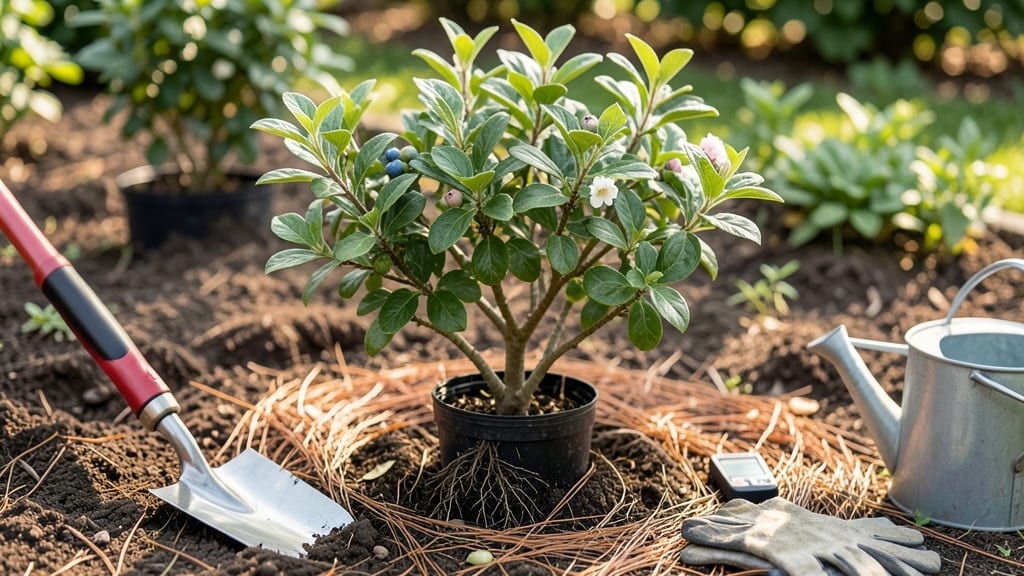
Timing your blueberry 🫐 planting in Colorado isn’t just about the calendar—it’s about outsmarting the 120-day frost-free window that separates success from disappointment.
Plant too early in Zone 4, and a late snowstorm could wipe out your saplings; wait too late in Zone 7, and your bushes won’t root deeply enough before winter. The difference between thriving bushes and struggling plants often comes down to knowing when to dig in.
Most Colorado gardeners swear by the late April to early June window, but that’s just the starting point. Your exact timing depends on elevation—whether you’re in Denver’s urban heat pockets or the high-altitude slopes near USDA Zone 7.
I’ll break down how to adjust for your specific microclimate, including container gardening hacks for late planters and soil prep tricks to mimic the acidic conditions these shrubs crave.
Here’s the game-changer: even experienced growers mess up timing by ignoring chilling hour requirements or skipping soil tests. We’ll cover the 3 critical mistakes that kill blueberries in Colorado—and how to avoid them before you even plant.
Whether you’re a first-timer or a veteran gardener, these insights will help you nail the perfect window for your elevation zone.
Ready to transform your backyard into a blueberry powerhouse? Let’s dive into the exact dates, soil secrets, and care tips that’ll have you harvesting July through August in no time. Your future breakfast smoothies will thank you.
Colorado blueberry planting dates by elevation Zone (frost-date guide)
Colorado’s elevation zones create dramatic differences in frost dates—planting blueberries in Denver (5,280 ft) requires a different timeline than Grand Junction (4,500 ft) or Telluride (8,750 ft). The key is waiting until the last frost date for your area, then adding 2–4 weeks for root establishment before winter.
Below is your zone-by-zone breakdown, using USDA Zone 4–7 data with Colorado-specific adjustments.
For most Colorado gardeners, the prime planting window falls between late April and early June. However, high-elevation growers (above 7,000 ft) should push planting to mid-June or even early July to avoid early snow.
Use your local CoCoRaHS frost calculator (or the Old Farmer’s Almanac) to pinpoint your exact date.
Here’s how to match your elevation to the right planting window, including soil prep tips to ensure success. Remember: blueberries are acid-loving shrubs—Colorado’s alkaline soils (pH 7.5–8.5) need amendment to pH 4.5–5.5 for optimal growth.
🌱
If you’re in Zone 6 or 7 (below 5,000 ft), aim for planting by May 15 to give roots time to establish before Colorado’s first hard frost (typically October 15).
For high-elevation zones (above 7,000 ft), delay until after June 10—early planting risks late-spring frosts that can kill young shoots.
Pro tip: Container-grown blueberries can be planted 2–3 weeks later than bare-root plants because their roots are already established. This flexibility is a game-changer for late spring in Colorado!
🌿
For Northern Highbush varieties (e.g., ‘Bluecrop’ or ‘Duke’), which thrive in Zones 4–7, the window is slightly wider. But Southern Highbush types (e.g., ‘Southern Highbush’) struggle in Colorado’s cold winters—stick to cold-hardy varieties like ‘Patriot’ or ‘Jersey’ for reliability.
After planting, mulch with 3–4 inches of pine straw to retain moisture and regulate soil temperature. This is especially critical in high-desert areas where soil can dry out quickly. Water deeply 2–3 times per week for the first month to encourage root growth.
✂️
One final note: Colorado’s chilling hour requirements (300–900 hours below 45°F) are typically met by winter, but early spring warmth can trick plants into blooming too soon.
If you plant in late May or June, monitor for early buds and protect with frost cloth if temperatures dip below 32°F.
How to adjust planting timing for Colorado’s microclimates and soil types
Colorado’s microclimates can shift planting windows by weeks—even within the same city. Urban heat islands in Denver or Colorado Springs may allow earlier planting by 2–3 weeks compared to rural areas, while high-elevation gardens near Boulder or Aspen face later frost risks.
Always check your local last frost date (use the Almanac’s calculator) and adjust accordingly.
For alkaline soils (common in Colorado), amend planting holes with peat moss or pine fines to lower pH to 4.5–5.5.
Test soil before planting—ignore this, and your blueberries will yellow and drop leaves despite ideal timing. Container gardening is a game-changer for late planters: pots warm faster in spring, letting you plant 2–4 weeks later than ground plantings.
Wind exposure? Row covers or windbreaks (like burlap fences) protect young plants from desiccating winds common in Front Range valleys. In high-elevation zones (7,000+ ft), delay planting until mid-May to avoid late frosts—even if soil feels warm.
Mulch heavily with straw or wood chips to insulate roots during temperature swings.
🌱 5 Microclimate Adjustments for Colorado Blueberries
- Urban Heat Islands: Plant 2–3 weeks earlier (e.g., late March in Denver) if nights stay above 32°F.
- High Elevation (7,000+ ft): Wait until mid-May; use row covers for extra frost protection.
- Alkaline Soils: Mix 1 part peat moss to 2 parts native soil in planting holes.
- Wind-Exposed Sites: Plant near natural windbreaks (fences, hedges) or use burlap screens.
- Containers: Plant 2–4 weeks later than ground plantings; pots warm faster in spring.
If you’re in Zone 4 (e.g., Grand Junction), prioritize cold-hardy varieties like ‘Northblue’ or ‘Patriot’, which tolerate -25°F. In Zone 7 (e.g., Pueblo), ‘Duke’ or ‘Bluecrop’ thrive with later planting (early April).
Always water deeply after planting to encourage root growth—drought stress in Colorado’s dry soil can stall establishment.
Pro tip: Mulch with pine needles (double-duty for acidity!) to retain moisture and regulate soil temps. In low-desert areas (e.g., Colorado Springs), shade cloth can protect young plants from intense afternoon sun during June heat waves.
Adjust your timing based on these factors, and your blueberries will thrive year after year.
Remember: Soil prep is 50% of success. Test your soil’s pH, amend it, and choose the right variety for your elevation and microclimate. With these adjustments, you’ll avoid the #1 mistake Colorado gardeners make—planting at the wrong time for their specific conditions. 🌿