
Plants
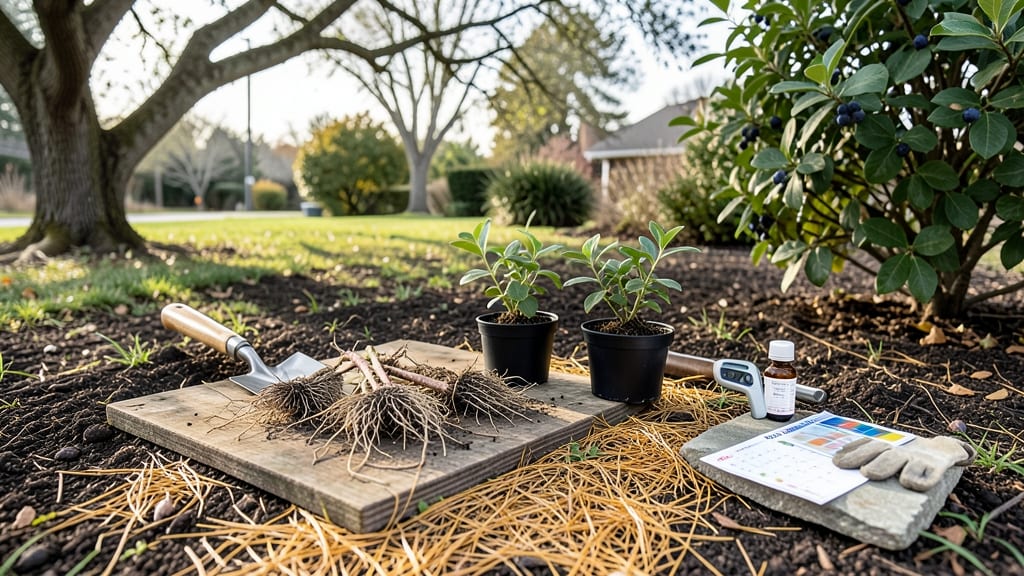
Timing your blueberry 🫐 planting in New Jersey can make the difference between a thriving bush and a sad, frost-nipped failure. With NJ’s 6a-7b zones, you’ve got just a narrow window—late April to early June or fall—to get those roots established before winter sets in.
Most gardeners assume spring is the only time to plant, but fall actually gives your blueberries a head start. The key is beating the first frost while giving young plants enough warm soil to take root.
I’ll show you exactly how to read NJ’s microclimates and adjust your planting schedule for maximum success.
Whether you’re in northern NJ where frosts linger or southern NJ with milder winters, the right timing ensures your bushes grow strong enough to produce those juicy harvests from late June to August.
Let’s break down the best months, soil prep secrets, and pro tips to avoid common mistakes that even experienced gardeners make.
Ready to grow blueberries that outperform your neighbors’? The first step is planting them at the perfect moment—here’s how to nail it in NJ’s unpredictable climate.
Best planting months for blueberries in NJ by Zone (6b vs 7a)
New Jersey’s USDA zones 6b and 7a create distinct planting windows for blueberries. In Zone 6b (northern NJ), last frost typically arrives around April 15, while Zone 7a (southern NJ) sees frost-free conditions by March 20.
These differences mean your planting timeline should shift based on where you live—even within the same county.
For both zones, spring planting (after last frost) is ideal, but fall planting (September-October) works too. The key is ensuring soil temperatures stay above 45°F (7°C) for root establishment.
In Zone 6b, aim for late April to early June, while Zone 7a gardeners can start as early as mid-March.
Soil temperature is critical—blueberry roots struggle below 50°F (10°C). Use a soil thermometer to confirm readiness. In northern NJ, wait until soil warms to 55°F (13°C) before planting. Southern NJ’s warmer microclimates allow earlier starts, but rushing can lead to frost damage if late cold snaps hit.
Here’s how NJ’s microclimates affect your timing:
- Northern NJ (Zone 6b): Plant late April–early June after frost risk passes.
- Central NJ (6b/7a transition): Mid-April–late May works best.
- Southern NJ (Zone 7a): March 20–April 30 is ideal.
| Zone | Last Frost Date | Ideal Planting Window | Soil Temp Requirement | Fall Planting Window |
|---|---|---|---|---|
| 6b (Northern NJ) | April 15 | Late April–Early June | ≥55°F (13°C) | September 15–October 15 |
| 7a (Southern NJ) | March 20 | Mid-March–Late April | ≥50°F (10°C) | August 30–October 1 |
Fall planting offers one major advantage: cooler soil temperatures reduce transplant shock. In Zone 7a, September-October planting lets roots establish before winter, while Zone 6b gardeners should wait until after September 15 to avoid early frost risks. Mulch heavily (3–4 inches) to protect roots if planting in late fall.
Watch for NJ’s unpredictable late frosts, especially in Zone 6b. Even after last frost, cold snaps can linger into May. Use frost cloth or choose hardy varieties like ‘Bluecrop’ or ‘Patriot’, which tolerate 10°F (-12°C) once established.
For container-grown blueberries, move pots to a sheltered spot if frost is forecasted.
Pro tip: Check local frost dates via the NJ State Climate Office or Almanac.com. Their 10-year averages help refine your planting schedule. For example, Trenton (Zone 7a) averages 3 fewer frost days than Newark (Zone 6b), meaning you can plant 2 weeks earlier in southern NJ.
If you’re in transition zones (e.g., Monmouth or Burlington Counties), err on the side of late spring planting. These areas experience mixed frost patterns, and early planting can lead to root rot if soil stays too cold. Always test soil temperature before planting—it’s the most reliable guide.
Remember: Blueberries need time to establish. Plants started in late May may not bear fruit until year 3 or 4, while those planted in ideal windows can produce within 2 years. The earlier you plant (within frost-free windows), the sooner you’ll enjoy juicy, homegrown blueberries!
How to prepare your NJ garden bed for blueberry planting success
Blueberries are fussy eaters—they demand acidic soil (pH 4.5-5.5) to thrive. NJ’s native soils are often alkaline and clay-heavy, which means most garden beds need serious prep work before planting.
Skipping this step? Your bushes will struggle, leading to yellow leaves, poor growth, and tiny, tart berries instead of sweet harvests.
Start by testing your soil’s pH at least 6 weeks before planting. Use a home test kit (available at garden centers) or send a sample to the Rutgers Soil Testing Lab.
If your soil tests above 6.0, you’ll need to lower the pH dramatically—this isn’t a quick fix but absolutely necessary for blueberry success in NJ.
🌱 Step-by-Step NJ Garden Bed Prep for Blueberries
- Step 1: Clear the Area – Remove grass, weeds, and debris from your planting site. Blueberries hate competition for nutrients.
- Step 2: Amend with Organic Matter – Mix in 3-4 inches of compost or well-rotted manure to improve soil structure and fertility.
- Step 3: Add Sulfur for Acidification – Work in 2-4 pounds of elemental sulfur per 100 sq ft (follow package instructions for your soil pH). This is the secret weapon for NJ gardeners.
- Step 4: Incorporate Peat Moss – Add 2-3 inches of peat moss to the top 12 inches of soil. This helps retain moisture and maintains acidity.
- Step 5: Test Again After Amending – Re-test your soil pH 4-6 weeks later. Aim for 4.8-5.2—this is the sweet spot for blueberries.
- Step 6: Build Raised Beds (Optional but Recommended) – If your soil is extremely heavy clay, consider raised beds filled with a mix of 50% peat moss, 30% compost, and 20% perlite.
💡 Pro Tip: Avoid fresh wood chips or sawdust—they can raise soil pH over time.
Once your soil is prepped, choose a sunny spot with 6+ hours of direct sunlight. Blueberries in NJ need full sun to produce their best fruit, but they’ll tolerate partial shade if it’s morning sun and afternoon shade (to prevent afternoon heat stress).
Avoid low-lying areas where cold air pools—late frosts can damage young plants.
If your garden bed is in an area prone to waterlogging, improve drainage by adding coarse sand or perlite to the soil mix. Blueberries need well-draining soil to prevent root rot, especially during NJ’s wet springs and autumns.
A slight mound or raised bed can also help excess water run off.
Finally, mulch heavily around your blueberry bushes with pine needles or shredded bark (both naturally acidic). This helps maintain soil acidity, retains moisture, and suppresses weeds. Apply a 3-inch layer of mulch, keeping it 2-3 inches away from the plant stem to prevent rot.