
Plants
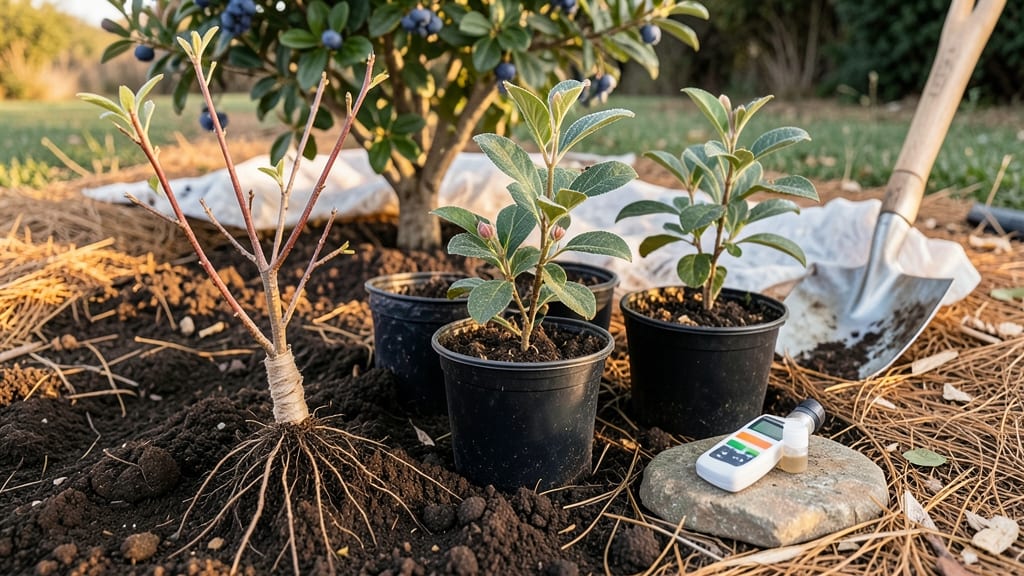
Timing your 🫐 blueberry planting in South Carolina isn't just about picking a month—it's about giving your bushes the best shot at thriving in your specific zone. Plant too early, and frost might catch them off guard; too late, and they won't establish roots before winter hits.
The difference between a flourishing harvest and a struggling plant often comes down to these critical windows we're about to explore.
If you're in zones 7b-9a, like most of SC, you've got two prime opportunities: late winter to early spring (February through April) or fall (September to October). These aren't random guesses—they're based on soil temperatures, frost patterns, and how blueberries naturally adapt to SC's climate.
I'll walk you through exactly which window works best for your specific zone and why timing matters more than you might think.
Let's say you're eager to get planting—maybe you've been dreaming of fresh 🫐 blueberries picked straight from your garden. The good news is that both planting seasons offer advantages, but they require different preparations.
Spring planting gives your bushes a full growing season to establish roots before summer heat arrives, while fall planting lets them settle in before winter dormancy. Either way, we'll cover the essential steps to set your blueberries up for success from day one.
Beyond just the calendar, we'll tackle the practical details that make all the difference in SC's unique growing conditions. From adjusting soil pH to choosing the right variety for your microclimate, this guide will help you avoid common mistakes that trip up even experienced gardeners.
By the end, you'll know exactly when—and how—to plant your blueberries for a bountiful harvest in 2025 and beyond.
Best months to plant blueberries in SC by hardiness zones
South Carolina’s climate—with its humid subtropical conditions and USDA zones 7b-9a—creates two ideal windows for planting blueberries. Timing depends on whether you’re planting bare-root bushes or container-grown plants, but the golden rule is: plant when soil temps are above 40°F and frost risk has passed.
For SC, that means late winter to early spring or early fall.
Most gardeners in SC opt for September-October planting, as cooler temps reduce transplant shock. However, February-April works too, provided you avoid late frost dates.
Check your specific zone—Zone 7b (e.g., Greenville) has a last frost around March 15, while Zone 9a (e.g., Charleston) can plant as early as February 15.
Here’s the zone-by-zone breakdown for precision planting, including soil temperature thresholds and frost-free guidelines:
| Zone | Best Planting Months | Soil Temp (°F) | Last Frost Date | Notes |
|---|---|---|---|---|
| 7b (e.g., Greenville) | Sep-Oct or Mar-Apr | 45°F+ | Mid-March | Avoid planting after Oct 15. |
| 8a (e.g., Columbia) | Sep-Oct or Feb-Apr | 50°F+ | Early March | Spring planting extends harvest season. |
| 9a (e.g., Charleston) | Sep-Oct or Jan-Feb | 55°F+ | Mid-February | Early spring planting avoids summer heat stress. |
🌱 Pro Tip: Use a soil thermometer to confirm temps—blueberries hate cold, soggy soil.
For container-grown blueberries, you have slightly more flexibility. These plants can handle transplanting year-round in SC, but avoid extreme heat (June-August) or freezing temps (December-January). If you’re in Zone 9a, you can even plant in late winter (February) for an earlier harvest.
One critical factor SC gardeners often overlook is local microclimates. For example, Charleston’s coastal zone has warmer winters and longer frost-free periods than Upstate SC. Use the USDA Plant Hardiness Zone Map and check your local Cooperative Extension Service for hyper-local frost data.
My go-to resource? The SC Weather and Climate portal for 10-year frost averages.
If you’re planting in fall, aim to finish by October 15 in most of SC. This gives roots 6-8 weeks to establish before first frost.
For spring planting, wait until soil temps are consistently above 50°F—typically mid-March for Zone 7b and early February for Zone 9a. Use a moisture meter to check soil readiness; blueberries hate waterlogged roots.
For dwarf varieties (like ‘Top Hat’ or ‘Peach Sorbet’), which are popular in SC’s home gardens, follow the same timing but space plants 3-4 feet apart.
Standard varieties need 6-8 feet of space. Southern Highbush types (e.g., ‘Climax’) thrive in SC’s heat and are self-pollinating, making them ideal for small spaces.
Finally, avoid planting blueberries in summer—SC’s humidity and heat create stressful conditions for new transplants. If you must plant in summer, use shade cloth and deep watering to reduce transplant shock. But honestly? Fall planting is your best bet for SC’s climate.
How to prepare your SC garden for blueberry planting success
Preparing your South Carolina garden for blueberry bushes isn’t just about digging a hole—it’s about creating the perfect acidic, well-draining environment these plants crave. Blueberries thrive in pH levels between 4.5 and 5.5, which is rare in most SC soils.
I’ll walk you through the essential steps to set your bushes up for success from day one.
First, test your soil pH using a home testing kit or send a sample to your local Cooperative Extension Service. Most SC soils lean alkaline, so you’ll likely need to lower the pH with sulfur or peat moss.
Aim to amend the soil 6-8 weeks before planting to give it time to adjust.
- Test soil pH (aim for 4.5-5.5).
- Amend with 2-3 inches of peat moss or pine bark fines.
- Mix in 1 pound of sulfur per 100 sq ft for acidic soil.
- Loosen soil to 12 inches deep for root growth.
- Add compost or well-rotted manure for organic matter.
- Ensure well-draining soil—avoid heavy clay.
Next, choose a sunny spot with at least 6 hours of sunlight daily. While blueberries tolerate partial shade, full sun produces bigger, sweeter berries. If your yard has hot afternoon sun, consider a morning sun location to prevent stress.
Drainage is critical—blueberries hate soggy roots. If your soil is clay-heavy, raise beds or plant in containers with drainage holes. I recommend adding a 1-inch layer of gravel at the bottom of planting holes to improve drainage further.
Mulch your newly planted bushes with pine straw or wood chips to retain moisture and suppress weeds. Keep the mulch 2-3 inches thick but avoid piling it against the trunk. This helps maintain consistent soil moisture and acidity levels over time.
Finally, consider companion planting to deter pests and improve growth. Basil, thyme, and marigolds are excellent companions for blueberries, while avoiding brassicas (like cabbage) that compete for nutrients. Plant these around your bushes to create a natural, thriving ecosystem.
With these steps, your South Carolina blueberry bushes will have the ideal environment to grow strong roots and produce abundant fruit for years to come. 🌱