
Plants
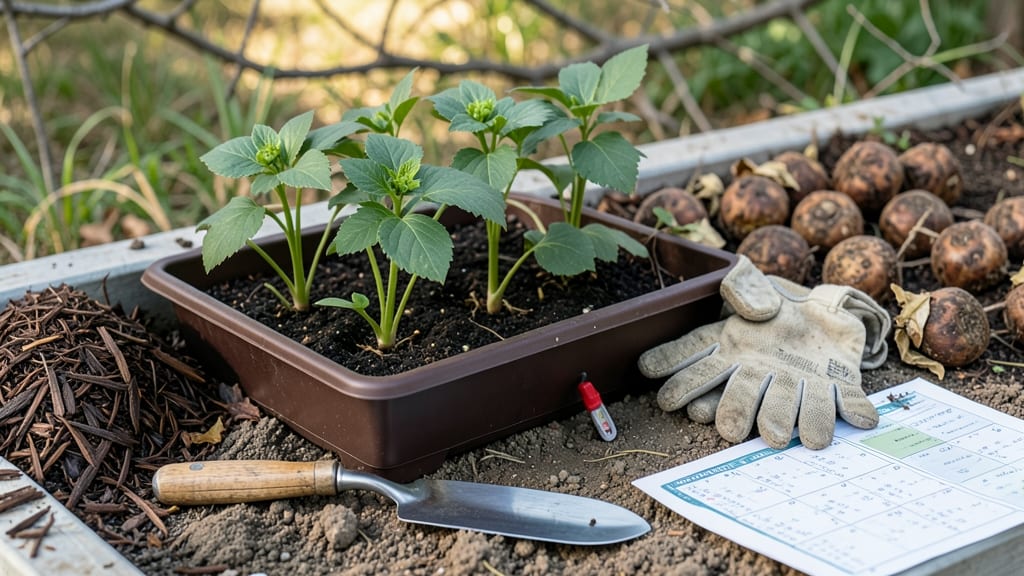
Timing your dahlia planting in Alabama isn’t just about waiting for spring—it’s about outsmarting the state’s unpredictable frosts and sweltering heat to guarantee months of vibrant blooms.
The difference between a thriving 🌼 dahlia garden and a failed experiment often comes down to those critical 2-3 weeks between last frost and soil warmth.
If you’ve ever watched your tubers rot in cold soil or wilt under early summer heat, you know the stakes. Alabama’s USDA zones 7b-8b give you a narrow window—typically late March to early April—but regional differences mean Huntsville gardeners face different risks than those in Mobile.
The key? Planting when soil hits 60°F and nighttime temps stay above 50°F consistently.
I’ll walk you through the exact timeline for your corner of Alabama, plus pro tips for soil prep, spacing, and whether to plant tubers or seeds.
Whether you’re working with raised beds or container gardens, these adjustments will help you avoid the most common mistakes—and keep your dahlias blooming until October.
Ready to transform your garden? Let’s dive into the heat-zone-specific strategy that’ll have your dahlias thriving when most neighbors are still waiting for their first flowers.
Alabama’s ideal dahlia planting window by heat zone (with frost-free guarantees)
Alabama’s USDA zones 7b-8a create a tricky balance for dahlia lovers—too early, and a late frost zaps tender tubers; too late, and summer heat stunts growth. The sweet spot is after your average last frost date, when soil hits 60°F consistently.
For most of Alabama, this lands in late March to early April, but city-specific adjustments matter.
In North Alabama (Huntsville, Decatur), aim for April 1-15—frost risks linger until mid-April. Central Alabama (Birmingham, Montgomery) can plant March 25-April 5, while South Alabama (Mobile, Dothan) often escapes frost by March 10-20, allowing earlier starts. Always check your local Alabama Cooperative Extension frost maps for precision.
Dahlias thrive in Alabama’s long, hot summers, but timing matters. Planting too early in clay-heavy soils (common in North Alabama) risks rot from cold, wet soil. Conversely, delaying past mid-April in South Alabama may stress plants before they establish roots.
The goal? 6-8 weeks before first frost—typically July to October blooms if planted right.
🌼
| Alabama Region | USDA Zone | Last Frost Date | Ideal Planting Window | Soil Prep Tip |
|---|---|---|---|---|
| North Alabama (Huntsville) | 7b | April 15 | April 1-15 | Amend clay soil with compost |
| Central Alabama (Birmingham) | 7b-8a | March 25 | March 25-April 5 | Test soil pH (6.0-7.0) |
| South Alabama (Mobile) | 8a | March 10 | March 10-20 | Add organic mulch |
| All Regions | 7b-8a | N/A | Soil temp ≥60°F | Plant tubers 4-6" deep |
For container gardening in Alabama, adjust timelines slightly—pots warm faster than soil, so you can plant 1-2 weeks earlier than in-ground. Use black plastic pots to absorb heat and choose dwarf varieties like ‘Mignon’ or ‘Totem’ to handle Alabama’s humidity and heat better.
Just ensure containers have drainage holes to prevent root rot.
Pro tip: Mark your dahlia planting date on a garden calendar and track soil temperature with a cheap probe. In Alabama’s variable spring weather, this beats guessing. If a late frost threatens after planting, cover tubers with frost cloth or a cold frame—dahlias are tougher than they look!
Once planted, stake or cage dahlias immediately to support their top-heavy blooms in Alabama’s thunderstorms and winds. Tall varieties like ‘Galaxy’ need 6-foot stakes, while smaller types benefit from tomato cages. Mulch with straw or pine needles to retain moisture—critical during Alabama’s dry summer spells.
🌿
If you’re itching to extend your dahlia season, consider chitting tubers indoors 4-6 weeks before your target planting date. Place tubers in a bright, warm spot (70°F) with the “eye” facing up—they’ll sprout 1-2 inches before transplanting.
This head start helps dahlias outpace Alabama’s pests, like slugs and earwigs, which love tender new growth.
Remember: Alabama’s heat tolerance is a double-edged sword. While dahlias love summer sun, afternoon temps above 90°F can scorch leaves. Provide light afternoon shade in South Alabama during peak summer if you notice wilting or yellowing.
Varieties like ‘Café au Lait’ (heat-tolerant) or ‘Bishop’ (disease-resistant) are Alabama-proven winners for pushing limits.
Finally, don’t let Alabama’s humidity fool you—dahlias need well-draining soil. If your garden holds water after rain, amend with perlite or sand before planting. And always water at the base, not overhead, to avoid fungal diseases like powdery mildew, which thrives in Alabama’s sticky summer air.
5 Critical signs your Alabama soil is ready for dahlias (before you plant)
Alabama’s clay-heavy soils and humidity fluctuations can turn dahlia planting into a gamble if you don’t check these key conditions first. I’ve learned the hard way—skipping soil prep means stunted growth or worse, rotten tubers before they even sprout.
Let’s fix that with 5 foolproof indicators your soil’s ready for dahlias.
First, soil temperature must hit 60°F or warmer. Use a soil thermometer (they’re cheap!) to check 4-6 inches deep. Cold soil = delayed growth.
In North Alabama, wait until mid-April; in South Alabama, late March works. Pro tip: Press your finger into the soil—if it feels cool to the touch, wait a few more days.
Next, test moisture balance. Dahlias hate soggy roots but also wilting stress. Dig a 6-inch hole, fill it with water, then let it drain. If water pools for more than 2 hours, amend with compost or sand.
For sandy soils (common in Mobile), mix in 2 inches of organic matter like coconut coir to retain moisture.
🌱 5 Critical Signs Your Soil Is Ready
- 60°F+ soil temp (use thermometer, not guesswork)
- No standing water after 2 hours (test drainage)
- Crumbly texture (not hard clay or powdery sand)
- pH 6.0–7.0 (test with kit or send to extension office)
- Worms or microbes visible (healthy soil = busy soil!)
Don’t overlook soil texture. Squeeze a handful—ideal soil should hold shape but crumble when dry. If it forms a hard brick, break it up with a broadfork or add gypsum for clay.
For sandy soils, work in peat moss to improve water retention. I once planted dahlias in pure sand in Dothan, and they nearly died—never again!
Check pH levels with a simple test kit (available at garden centers). Dahlias thrive in 6.0–7.0 pH. If your soil’s too acidic (below 6.0), add lime; if alkaline (above 7.0), use sulfur. Alabama’s red clay often skews acidic, so lime is my go-to fix.
Just sprinkle and water in—no need to dig deep.
Finally, look for signs of life. Healthy soil teems with earthworms, fungi, and microbes. Dig a small patch—if you see wriggly worms or dark, spongy matter, your soil’s ready.
No critters? Add composted manure or worm castings to jumpstart activity. Bonus: This boosts nutrient availability for your dahlias’ hungry roots.
Once you’ve checked these signs, amend your soil 2 weeks before planting. Mix in 3–4 inches of compost and a slow-release fertilizer (like 5-10-10). Then, plant your dahlia tubers 4–6 inches deep, spacing them 12–18 inches apart.
With these prep steps, you’ll avoid the #1 Alabama dahlia killer: rot from poor drainage.