
Plants
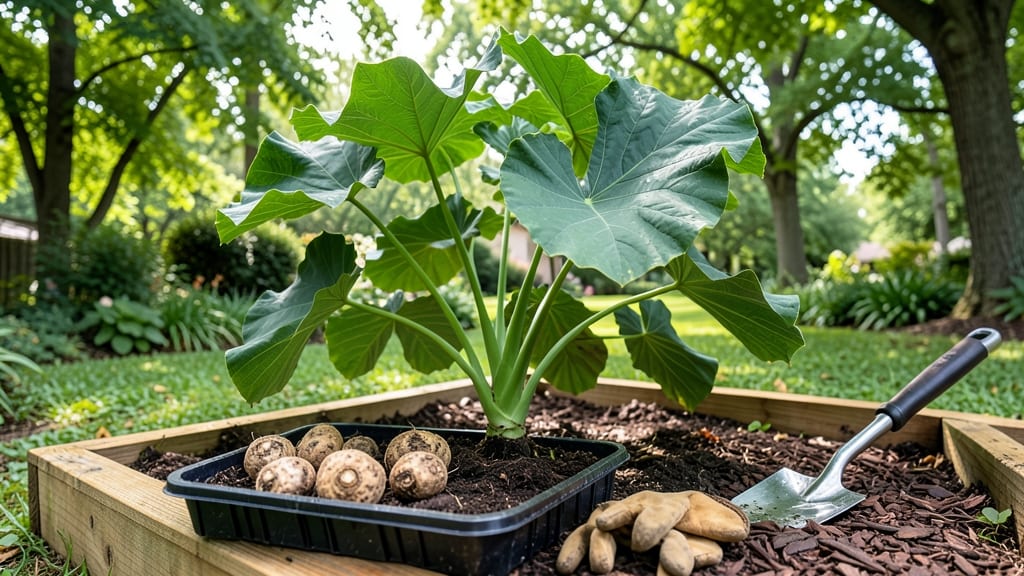
Planting elephant ear bulbs at the wrong time in Texas can turn your bold foliage dreams into a sad, wilted mess—especially when those 100-degree summers arrive too soon.
The key to thriving 🌿 elephant ear plants lies in understanding your specific Texas heat zone, because what works in North Texas (Zone 8a) won’t cut it in South Texas (Zone 10b).
Most gardeners assume March is the only month to plant, but timing varies wildly depending on whether you’re dodging late frosts in Dallas or racing against summer’s early heat in Houston.
I’ll break down the exact windows—plus soil prep secrets—that keep your elephant ears lush and pest-free, so you’re not left scrambling when the thermometer hits 95°F.
You’ll discover how to read your local frost dates (yes, they matter even in Texas), which varieties handle heat best, and why waiting until May could mean sacrificing that dramatic 5-foot foliage you’re dreaming of. Let’s get those tubers in the ground at the perfect moment—before the heat wins.
From container hacks for urban gardeners to soil temperature tricks for rural plots, this guide covers everything you need to turn your elephant ear planting into a foolproof spring ritual. Ready to grow foliage that steals the show?
Best planting months for elephant ear bulbs in Texas heat zones
Texas’ diverse heat zones mean your elephant ear planting window depends on whether you’re in North Texas (8a-9a) or South Texas (9b-10b). In Zone 8a, the last frost typically arrives by mid-March, while Zone 10b sees frost-free conditions as early as mid-January.
Planting too soon risks frost damage to tender tubers, while waiting too long can stress plants before summer’s peak.
For optimal growth, aim to plant elephant ear bulbs when soil temperatures hit 60°F or higher. Use a soil thermometer to check—55°F is the minimum for sprouting, but 60°F+ ensures faster establishment.
In North Texas, this usually aligns with late March to early April, while South Texas gardeners can start as early as February.
Soil preparation is non-negotiable in Texas’ clay-heavy soils. Amend with 2-3 inches of compost or aged manure to improve drainage, and mix in perlite or sand if your soil feels dense. Well-draining soil prevents root rot, a common killer of elephant ears in Texas’ humid summers.
Here’s a heat-zone breakdown of ideal planting windows, soil temps, and key prep steps to ensure your elephant ears thrive before summer’s brutal heat arrives:
Once you’ve planted, mulch heavily (3–4 inches) with straw or pine bark to lock in moisture and regulate soil temps. In Zone 10b, where summers are relentless, mulch also protects roots from heat stress. Avoid synthetic mulches—they can overheat soil in Texas’ intense sun.
After planting, water deeply (1–1.5 inches) to encourage tuber establishment, then maintain consistent moisture without soggy soil. Elephant ears in full sun (like in West Texas) may need daily watering during 100°F+ heat waves.
Monitor for yellowing leaves, a sign of underwatering or salt buildup from tap water.
Pro tip: In North Texas (Zones 8a-9a), consider a lightweight row cover for the first 2–3 weeks to shield young plants
Best planting months for elephant ear bulbs in Texas heat zones
Texas' diverse climate means elephant ear bulbs (Colocasia spp.) thrive in different windows across USDA zones 8a-10b. In North Texas (8a-9a), wait until mid-April after the last frost—typically around March 15-April 1—when soil temps hit 60°F+.
Meanwhile, South Texas (9b-10b) gardeners can plant as early as late February, since frosts are rare after January 15.
For Central Texas (9a), aim for early April to avoid late frosts that can damage tender tubers. Always check your local frost-free date—planting too soon risks cold-sensitive foliage browning before it even sprouts.
I’ve seen elephant ears planted in May still grow, but they’ll struggle in 100°F+ heat without proper shade.
Here’s a quick reference for soil temperature readiness—critical for tuber growth:
| Texas Region | Ideal Planting Window | Soil Temp Requirement | Key Prep Step |
|---|---|---|---|
| North Texas (8a-9a) | Mid-April to early May | 60°F+ | Soak tubers 24 hours before planting |
| Central Texas (9a) | Early April to late April | 65°F+ | Add compost for heat retention |
| South Texas (9b-10b) | Late February to March | 60°F+ | Mulch heavily to prevent heat stress |
| East Texas (8a-9a) | Late March to April | 62°F+ | Test soil pH (aim for 6.0-7.0) |
Pro tip: Pre-soak tubers for 24 hours before planting to jumpstart growth. I’ve found this cuts 2-3 weeks off the time until foliage emerges. Plant tubers 2-3 inches deep in well-draining soil—sandy loam works best in Texas’ heat.
Add a 2-inch layer of mulch after planting to lock in moisture and regulate soil temps.
If you’re in West Texas (10a-10b), where summers hit 110°F+, opt for partial shade and plant in early spring (March) to avoid midday sun. I’ve grown ‘Illustrious’ elephant ears here by placing them under dappled shade from oak trees—their deep purple-black foliage thrives without scorching.
Remember: Elephant ears are tender perennials in Texas. They’ll die back in winter but return if tubers survive. For guaranteed regrowth, dig up tubers in late fall and store them in dry peat moss until replanting next spring. This works especially well for container gardening in colder zones.
Timing your plantings right means bold foliage all summer—no more sad, wilted leaves by July. Start with the right month, and your elephant ears will reward you with dramatic, tropical-style leaves that steal the show. 🌿