
Trees
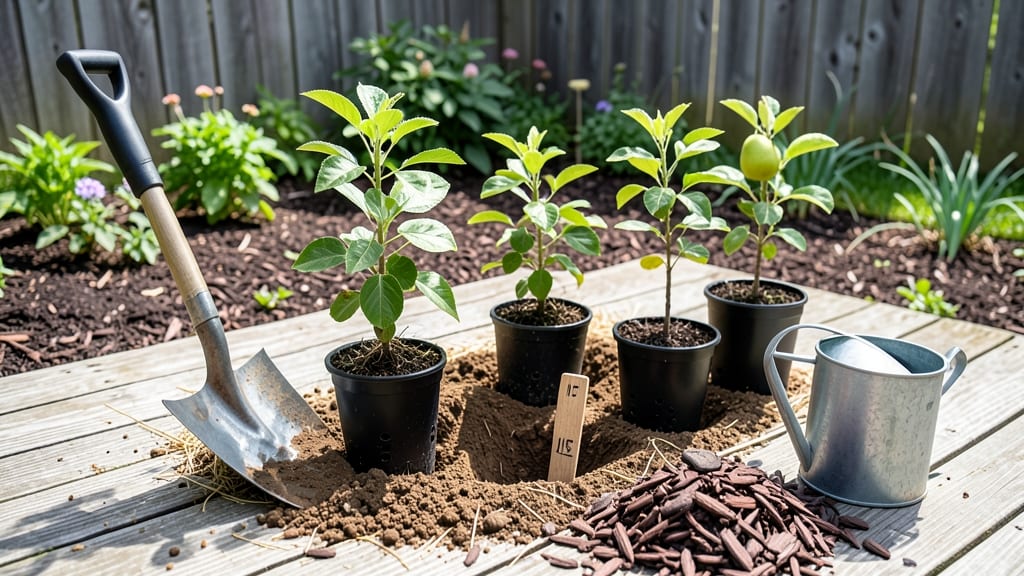
Timing your fruit tree planting in Washington State can make or break your orchard’s success—especially with the state’s dramatic shifts from 6b to 8b zones and unpredictable spring frosts.
Plant too early, and your young trees risk damage from late cold snaps; wait too long, and you miss the ideal window for root establishment before summer heat arrives.
I’ve seen firsthand how late winter to early spring (February through April) offers the perfect balance for most varieties, but the right timing depends on where you live.
Western Washington’s milder climate lets you start planting as early as February, while Eastern Washington’s harsher winters often demand waiting until March or even April to avoid frost. The key? Understanding your local microclimate and choosing the right tree type for your zone.
Whether you’re planting bare-root saplings or container-grown trees, this guide will help you navigate Washington’s diverse growing conditions.
You’ll learn how to read frost dates, prepare soil for maximum root growth, and pick the best varieties for your specific location—so you can enjoy a bountiful harvest from cherries in June to apples in October.
Let’s dive into the exact planting windows, zone-specific tips, and common mistakes to avoid—so your 🍎 fruit trees thrive from day one.
Washington State planting zones: best months for fruit tree success
Washington State spans USDA Zones 6b through 8b, creating dramatic differences in planting windows from the Puget Sound region to the Yakima Valley.
In Western WA (Zones 7b-8b), mild winters mean you can plant as early as late February, while Eastern WA (Zones 6b-7a) gardeners should wait until mid-April to avoid late frosts. These differences explain why a cherry tree thrives in Wenatchee but struggles in Seattle without proper timing.
The ideal window for planting bare-root fruit trees is when soil temperatures rise above 40°F (4°C) and before buds begin to swell. This typically falls between February and April across most of the state.
For container-grown trees, that window extends slightly—planting is possible year-round except during extreme heat or cold, but spring remains optimal for root establishment.
Here’s how Washington’s diverse microclimates impact your planting schedule:
For apples and pears, which thrive in cooler climates, early planting (late February to March) gives roots time to establish before summer heat. In contrast, stone fruits like peaches and cherries need warmer soil—plant them in April or May in Eastern WA to avoid frost damage to blossoms.
My Yakima Valley neighbors swear by planting cherry trees in May to ensure they escape late frosts that can devastate early blooms.
If you’re planting dwarf varieties in containers, you have more flexibility. These trees can be planted in spring or fall, but avoid summer heat stress or winter freezing. For in-ground planting, stick to spring—it’s the safest bet for root development and frost avoidance.
I’ve seen too many failed orchards where gardeners planted in fall, only to watch roots rot over winter.
Don’t overlook local frost dates—they’re your best guide. Check the USDA Plant Hardiness Zone Map for your specific area, then add 2-4 weeks after the average last frost to your planting timeline.
For example, in Pullman (Zone 6b), wait until May 1, while in Bellingham (Zone 8b), you can plant by March 15. Pro tip: Use frost-free date calculators from your local WSU Extension office for hyper-local precision.
One mistake I see often is planting too early in hopes of a longer growing season. But cold soil slows root growth, and frost-sensitive varieties (like peaches) can suffer if planted before the ground warms.
Always dig a 6-inch hole and check soil temperature—it should be at least 50°F (10°C) at planting time. In Western WA, this usually means waiting until March, even if the calendar says spring.
For container-grown trees, the rules relax slightly. You can plant them in fall or early spring, but avoid extreme conditions. The key is to water thoroughly before planting and mulch heavily to protect roots.
I planted a dwarf apple tree in a pot in October last year—it survived winter with extra mulch and frost cloth, but I won’t do it again without heated mats for next winter.
Finally, remember that tree varieties matter. Late-blooming apples (like Gala) handle frost better than early cherries (like Bing). Always check the variety’s chill hours—most WA-grown fruit trees need 500-1,000 hours below 45°F (7°C).
If you’re in a low-chill zone (like parts of Western WA), choose low-chill varieties like ‘Lapins’ or ‘Crimson Crisp’ apples.
🌱
Critical factors that determine planting timing (beyond just months)
While calendar months give a general guideline, soil temperature is the true decider for fruit tree success in Washington State. I’ve learned the hard way that planting when the ground is still cold (below 50°F/10°C) stunts root growth, leaving trees vulnerable to disease and drought.
Use a soil thermometer—your best tool for precision. In Eastern WA, soil may not warm enough for planting until late April, even if March feels like spring.
Another critical factor is dormancy cycles. Most fruit trees enter dormancy in fall and need chill hours (500-1,000 hours below 45°F/7°C) to bloom properly. Planting too early can break dormancy prematurely, leaving young trees exposed to late frosts.
In Western WA, where winters are milder, some varieties like ‘Lapins’ apples may not get enough chill—so choose low-chill varieties or supplement with artificial chilling if needed.
🌱 5 Key Timing Factors for WA Fruit Trees
- 🌡️ Soil Temperature: Wait until 50°F+ (10°C+)—use a thermometer to check 6-inch depth.
- ❄️ Frost Dates: Plant 2-4 weeks after your area’s average last frost (check WSU Extension maps).
- 🌿 Bud Swell: Plant bare-root trees before buds swell (late winter/early spring).
- ☀️ Day Length: Longer days in spring signal trees to break dormancy—align planting with this natural cue.
- 🌊 Rainfall Patterns: Avoid planting in saturated soil (common in Western WA springsdrier conditions to prevent root rot.
The 100-degree day rule is another pro tip I picked up from WSU horticulturists. Count the number of days with temperatures above 100°F (38°C) in your area—most WA fruit trees handle 50-100 days of extreme heat.
In Eastern WA, where summers are hotter, plant heat-tolerant varieties like ‘Zestar!’ apples or ‘Sweetheart’ cherries to avoid stress.
Microclimates play a huge role too. A Puget Sound garden might see mild winters and wet springs, while a Yakima Valley orchard faces harsh frosts and dry summers. For example, cherry trees in Western WA often suffer from bacterial canker due to high humidity—so plant them in well-drained, sunny spots with good airflow. In contrast, peach trees in Eastern WA need protected sites to avoid spring frost damage.
Don’t forget about rootstock compatibility. Some rootstocks (like M.9 for apples) establish roots faster than others (like MM.106), so adjust your planting timeline accordingly.
I once planted a dwarf apple tree on M.9 rootstock in late March, and it outpaced a standard-sized tree planted the same day—proof that rootstock matters as much as timing.
Finally, container planting offers flexibility but requires extra care. Potted trees can be planted in fall or spring, but avoid summer heat (roots can bake) and winter freezing (roots can rot).
If you’re planting in containers, use fast-draining soil mixes and larger pots (at least 15-gallon) to prevent root binding. I’ve had success with dwarf pear trees in containers over winter, but I always wrap the pot in bubble wrap and use a heat mat in Zone 7a areas.
🌳