
Plants
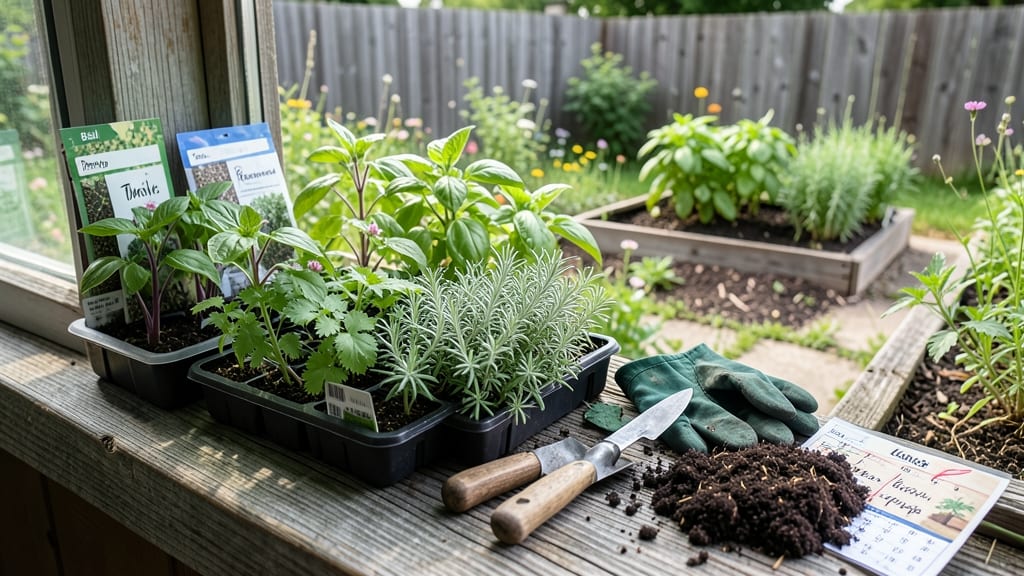
Timing your herbs planting in Kansas isn't just about following a calendar—it's about outsmarting the state's unpredictable swings between freezing nights and 90-degree days before summer even arrives.
Whether you're dreaming of snipping fresh basil for your summer pasta or harvesting hardy rosemary for winter stews, getting the timing right means the difference between a thriving 🌱 herb garden and a sad, frost-nipped disappointment.
Kansas' USDA Zones 5-6 throw curveballs with last frost dates that can vary by weeks between Wichita and Kansas City.
That's why I've dug into the data to give you exact windows—when to start seeds indoors, when to brave direct sowing, and how to protect tender herbs from late-season cold snaps. No more guesswork, just proven strategies tailored to your specific corner of the state.
From heat-loving basil that bolts if planted too early to cold-hardy thyme that thrives with minimal fuss, we'll cover the top 5 herbs that actually succeed in Kansas conditions.
You'll learn when to plant each one, how to extend your harvest season, and which varieties play well together in containers or in-ground beds. Let's turn your herb dreams into a flavorful reality—starting with the perfect planting schedule.
Ready to grow herbs that taste like summer all season long? The key is working with Kansas' climate, not against it. I'll show you exactly when to make your move so you can enjoy fresh, homegrown flavors from your kitchen to the table—without the stress of last-minute frost warnings.
Kansas frost-free dates by Zone: best planting windows for herbs
Kansas' USDA zones 5-6 create unique challenges for herb gardeners, with last frost dates ranging from late April in southern zones to early June in northern areas. Getting your timing right means the difference between lush basil and frost-nipped seedlings.
Most Kansas gardeners experience their average last frost between April 15-30, but mountain regions can delay planting until early May.
For tender herbs like basil and cilantro, wait until after the last frost date—planting too early risks cold damage when temperatures dip below 50°F. Cold-hardy herbs such as parsley and chives, however, can handle light frosts and may even thrive when planted 4-6 weeks before your typical last frost date.
Here's how to use Kansas' frost-free windows for optimal herb planting:
| Herb Type | Zone 5 (Northern KS) | Zone 6 (Southern KS) | Key Consideration |
|---|---|---|---|
| Annual Herbs (Basil, Cilantro, Dill) | May 1-15 (after last frost) | April 15-30 (after last frost) | Soil temp must be 55°F+ for germination |
| Perennial Herbs (Oregano, Thyme, Rosemary) | April 1-15 (6 weeks before last frost) | March 15-April 1 (6 weeks before last frost) | Cold-hardy; can handle 28°F+ temps |
| Cold-Tolerant Annuals (Parsley, Chives) | March 20-April 10 (before last frost) | March 1-April 1 (before last frost) | Survives 20°F+ with mulch protection |
| Heat-Lovers (Basil, Rosemary) | Wait until May 20+ (soil 65°F+) | Wait until May 10+ (soil 65°F+) | Basil bolts below 80°F; rosemary needs full sun |
Kansas' variable spring weather means checking your local Almanac frost dates is crucial. For example, Wichita (Zone 7a) typically sees its last frost by April 15, while Hays (Zone 5b) may not reach frost-free conditions until May 10.
Use these dates as guidelines, but always monitor your local 7-day forecast before planting.
For container gardening, you gain flexibility—move pots indoors if frost threatens. In-ground planting, however, requires more precision. Amend your soil with compost to improve warmth retention, which helps tender herbs establish faster after the last frost.
Pro tip: Plant fast-growing herbs like cilantro and dill 2-3 weeks after your last frost date to ensure they mature before Kansas' summer heat causes bolting. Slow growers like rosemary and thyme can handle later plantings, even up to June 1 in most zones.
Remember that Kansas' first frost typically arrives between October 15-30, giving you a 4-5 month growing season for most herbs. Use this timeline to plan succession plantings of fast-growing varieties like basil and cilantro for continuous harvests.
If you're new to Kansas gardening, start with cold-hardy perennials like oregano and thyme—they'll establish roots early and reward you with years of harvests. For annuals, focus on timing your last sowings by July 15 to ensure mature plants before frost.
For extra protection, consider using row covers or cold frames to extend your herb-growing season by 2-4 weeks in both spring and fall. This simple trick can add 30-50% more harvest time for tender varieties like basil and parsley.
Top 5 herbs to plant in Kansas (and when to start indoors)
Kansas gardeners know the struggle—planting herbs too early risks frost damage, while waiting too long cuts harvests short. The key is matching each herb’s temperature needs with Kansas’ 5-6 USDA zones.
Some herbs, like parsley, handle cool soil, while others, like basil, bolt if exposed to late frosts. Let’s break down the top 5 herbs for Kansas and the perfect indoor-starting schedule to maximize your garden’s potential.
Start with cilantro, a cool-season favorite that thrives when soil temps hit 40°F. Kansas’ average last frost in Zone 5 is around April 15, but cilantro seeds can be direct-sown 2-3 weeks earlier under row covers.
For basil, the heat-loving superstar, begin seeds indoors 6-8 weeks before your last frost date—that’s roughly mid-March for Zone 6—and transplant after May 10 when night temps stay above 50°F.
Top 5 Kansas Herbs & Planting Timeline
- Cilantro: Direct-sow 2-3 weeks before last frost (March 30 in Zone 5). Harvest in 45-60 days.
- Parsley: Start indoors 8-10 weeks before last frost (early March). Transplant after soil warms to 50°F.
- Basil: Indoor start 6-8 weeks before last frost (mid-March). Transplant after May 10.
- Oregano: Direct-sow in early spring (April 1) or fall (September 15). Perennial—no replanting!
- Thyme: Start indoors 4-6 weeks before last frost (late February). Hardy once established.
💡 Pro Tip: Use a heat mat for slow soil warming in early spring.
Don’t overlook parsley, a biennial that handles Kansas’ cool springs beautifully. Sow seeds indoors 8-10 weeks before your last frost (early March) and transplant after soil reaches 50°F).
For perennials like oregano and thyme, direct-sow in early spring (April 1) or fall (September 15) to establish roots before winter. These hardy herbs reward patience with year-round harvests.
Kansas’ summer heat can be brutal for tender herbs, so plan for succession planting. After harvesting your first basil crop in July, sow a second batch in late summer (August 15) for a fall harvest.
Use shade cloth during peak afternoon sun to prevent bolting in cilantro and dill. Container gardening is another smart move—it lets you move heat-sensitive herbs to shadier spots or even indoors during extreme heat waves.
Timing isn’t just about frost dates—it’s also about soil temperature. Use a soil thermometer to check when your garden is ready. Most herbs need soil between 50°F and 80°F.
In Kansas, this typically means waiting until mid-April for cool-season herbs and mid-May for warm-season varieties. Rosemary, another great Kansas herb, prefers well-draining soil and can be planted as early as April 15 in Zone 6, but it’s best to start it indoors 4-6 weeks before.
Remember, Kansas’ unpredictable weather means flexibility is key. Keep a gardening journal to track your local frost dates and herb performance. Over time, you’ll fine-tune your schedule to outsmart Mother Nature.
With the right timing, your herb garden will be bursting with flavor from spring to fall—and maybe even winter with proper protection!