
Companion Plants
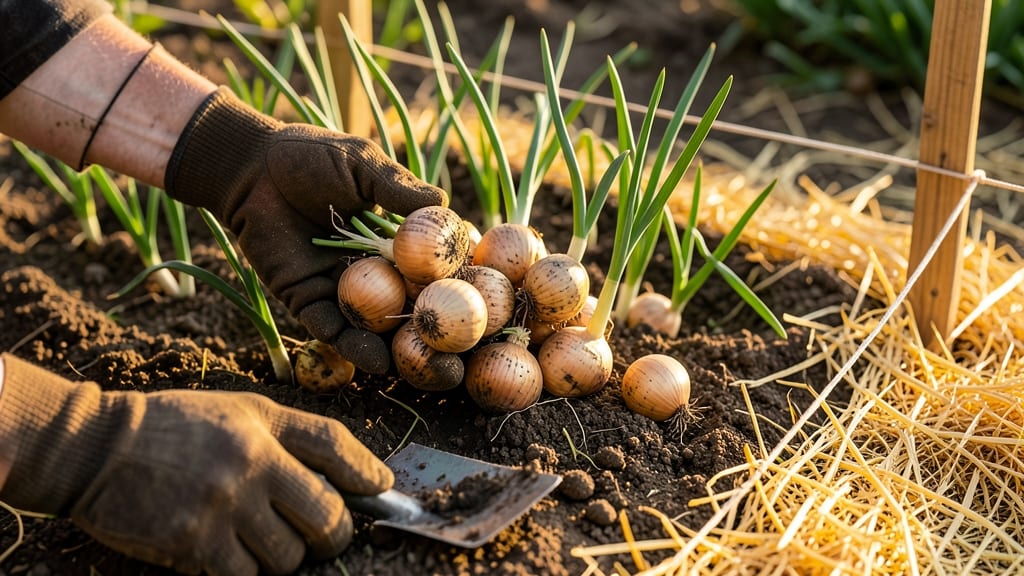
Timing your onion sets in Pennsylvania can make or break your harvest—plant too early, and you’ll end up with bitter, bolted greens instead of sweet bulbs. The key to flavorful 🧅 harvests lies in understanding your local frost dates and microclimates, which vary dramatically across PA’s 5b-7a zones.
Most gardeners in the Keystone State swear by late March to early April for spring planting, but fall is actually the secret weapon for avoiding bolting. With just 6-8 weeks before the first frost, you can grow onions that mature perfectly for winter storage or fresh eating.
I’ll walk you through how to calculate your exact frost dates, adjust for unpredictable PA weather, and choose the best varieties for your region. Skip the guesswork—let’s get those onion sets in the ground at the perfect moment.
Whether you’re a first-time gardener or a seasoned pro, these actionable tips will help you avoid common mistakes and enjoy a bountiful harvest from June through November.
Pennsylvania onion planting zones: when to plant for zero-bolt success
Pennsylvania’s diverse climate—spanning USDA zones 5b through 7a—means your onion set planting window shifts dramatically from the Poconos to Pittsburgh.
In colder northern regions like Erie or Scranton, aim for late April to early May to avoid frost damage, while southern PA gardeners in Philadelphia or Lancaster can plant as early as mid-March. The key is planting 4-6 weeks before your last frost date to prevent premature bolting.
Onion sets are hardy little powerhouses that tolerate light frosts, but they hate heat stress during bulb formation. In zone 6a (central PA), this typically means late March to early April for spring planting.
For fall harvests, plant 6-8 weeks before your first frost—usually late August to mid-September—to let bulbs mature before winter. Timing is everything to avoid bitter, bolting onions.
Use this frost-date calculator trick: Subtract 30 days from your last frost date for spring planting. For example, if your last frost is April 15, plant onion sets by March 15.
For fall, add 60 days to your first frost date. If frost hits October 15, plant by August 15. This ensures bulbs mature before winter dormancy.
Microclimates play a huge role in PA. If you’re in a valley or low-lying area, like the Poconos, plant 2 weeks later than your zone’s average. Conversely, hilltop gardens in Allegheny County can plant 1-2 weeks earlier thanks to warmer air circulation.
Observe your garden’s behavior for 3 years to refine your timing—note when frost hits and when heat waves arrive.
For zero-bolt success, pair precise timing with soil prep. Onions thrive in well-draining, fertile soil with a pH of 6.0-7.0. Work in 2-3 inches of compost before planting and avoid fresh manure—it can cause excessive leafy growth at the expense of bulb development.
A light mulch of straw keeps soil temps stable and suppresses weeds.
Don’t overlook fall planting—it’s a PA gardener’s secret weapon. Onions planted in late summer often produce larger, sweeter bulbs than spring-planted sets because they avoid summer heat stress.
Aim for 6-8 weeks before frost (usually August-September) and harvest before winter sets in. Store extras in a cool, dry place for fresh onions year-round.
If you’re new to onion sets, start with short-day varieties like ‘Yellowstone’ or ‘Sweet Spanish’—they’re bolting-resistant and perfect for PA’s climate. For longer storage, choose storage onions like ‘Red Baron’ or ‘Copra’.
Always buy certified disease-free sets from reputable suppliers to avoid soil-borne diseases like downy mildew.
Remember: Timing beats everything in onion growing. When in doubt, plant early—you can always thin later—but never plant too late. With PA’s unpredictable springs, having a backup planting date (like early May) ensures you’ll always have fresh onions.
🌱
How to adjust onion set planting for Pennsylvania’s unpredictable spring weather
Pennsylvania’s spring weather is famously unpredictable—one day it’s 60°F and sunny, the next it’s a 20°F frost. Onion sets planted too early risk bolting (flowering prematurely), while late plantings may never mature.
The key is flexibility: adjust your timing based on soil temperature, frost forecasts, and your specific microclimate.
Start by checking soil temperatures—onion sets thrive when the ground stays above 40°F consistently. Use a soil thermometer or rely on local agricultural extension reports (like Penn State’s) for real-time updates.
In Zone 5b, this usually means waiting until mid-to-late April, while Zone 7a gardeners can plant as early as late March.
If a late frost threatens, protect your onion sets with a lightweight row cover or frost cloth. These barriers trap heat during the day and shield plants from cold nights without overheating the soil.
For extra insurance, plant a second batch 2-3 weeks later—this staggered approach ensures a steady harvest even if one planting fails.
Planting onion sets after May 1st in PA often results in small, pungent bulbs or no harvest at all. The 60-day growth window before summer heat sets in is critical—don’t wait too long!
🌡️ Pro Tip: Use a frost date calculator (like this one from Old Farmer’s Almanac) to pinpoint your local last-frost date.
For gardeners in cooler microclimates (like the Poconos or Allegheny Mountains), extend your growing season with black plastic mulch or straw mulch. These materials warm the soil faster and suppress weeds, giving your onion sets a head start.
In warmer southern PA (e.g., Lancaster County), you can plant 2-3 weeks earlier than the general guideline.
Don’t forget to monitor moisture levels during unpredictable springs. Onion sets need consistent soil moisture to prevent bolting, but soggy soil invites fungal diseases. Water deeply once a week (or more in dry spells) and avoid overhead watering to keep foliage dry.
A drip irrigation system is ideal for maintaining even moisture without stressing the plants.
If your spring planting fails due to frost or weather delays, don’t panic—fall planting is a great backup! In PA, aim to plant onion sets in late September or early October for a harvest the following summer.
This method works especially well for long-day onion varieties like ‘Sweet Spanish’ or ‘Texas Early White.’
Finally, keep a planting journal to track what works in your garden. Note your last frost date, soil conditions, and any adjustments you made. Over time, you’ll refine your timing to match your unique PA microclimate—because in gardening, local knowledge beats rules every time. 🌱