
Plants
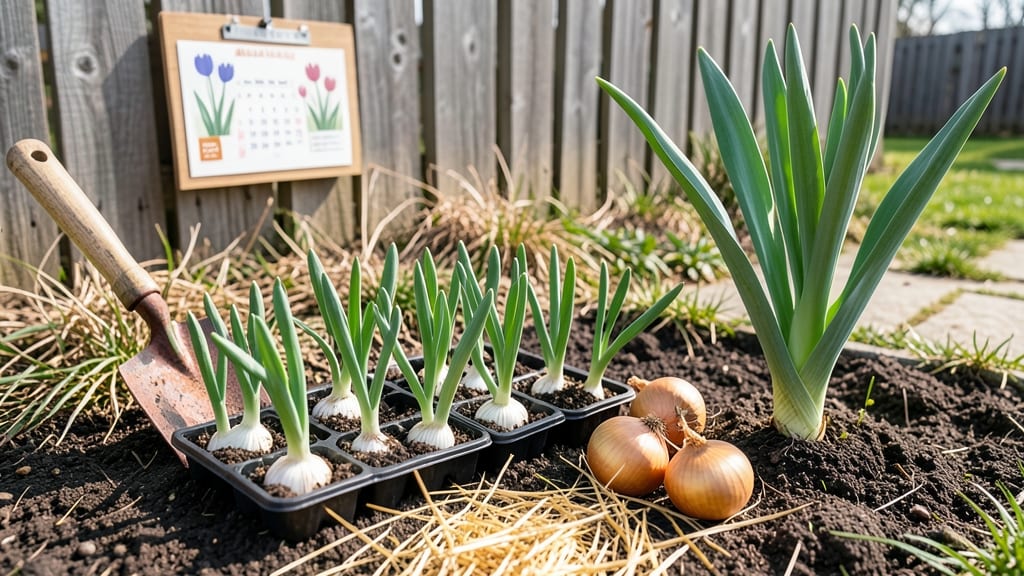
If you’ve ever planted 🧅 onions in Zone 4 only to watch them bolt before forming bulbs, you’re not alone. The key to success isn’t luck—it’s timing, and getting it right means the difference between a bumper crop and wasted effort.
Zone 4 gardeners face a tight window to plant onions without risking frost damage or premature flowering. Whether you’re starting with sets, transplants, or seeds, the 4–6 weeks before last frost rule is your best friend.
Miss it, and you’ll either lose your crop to cold or watch it shoot up into seed stalks.
But here’s the good news: with the right strategy, you can plant onions twice a year in Zone 4—once in spring and again in fall. I’ll break down the exact dates, soil prep tips, and variety choices to ensure your onions grow strong, sweet, and bolt-free.
Ready to master the perfect onion-planting schedule for your climate? Let’s dive into the frost-free timeline that’ll transform your harvest this year.

Zone 4 onion planting timeline: exact weeks before last frost for success
Timing is everything when growing onions in Zone 4. Plant too early, and your onions will bolt (flower prematurely) before forming bulbs. Plant too late, and you’ll miss the harvest window entirely.
The key is to plant 4–6 weeks before your last frost date, which for most of Zone 4 falls around May 15. This gives onions enough time to mature before summer heat sets in.
For spring planting, aim to get onion sets or transplants in the ground by late March to mid-April.
If you’re starting seeds indoors, begin them 8–10 weeks before transplanting (around early February). Fall planting is also possible in Zone 4, with seeds or sets going in late July to early August for a late-summer harvest.
Soil temperature is critical—onions thrive when soil is at least 40°F. Use a soil thermometer to confirm before planting. If your soil is still cold, wait a few more weeks or use row covers to warm it up faster.
| Planting Method | Zone 4 Planting Window | Key Considerations |
|---|---|---|
| Onion Sets | Late March–mid-April (spring) or late July–early August (fall) | Plant ½" deep, 4–6 weeks before last frost; avoid bolting with proper timing. |
| Transplants | Early April–mid-May (spring) or late July (fall) | Start seeds indoors 8–10 weeks before transplanting; harden off seedlings for 1 week. |
| Seeds | Early February (indoors) or late March (direct sow) | Slow germination; keep soil consistently moist until sprouts appear. |
| Fall Planting | Late July–early August | Harvest before first frost (Sept 15); ideal for short-day varieties. |
Your last frost date is your anchor. Check your local USDA Plant Hardiness Zone Map for precise dates, as they can vary by 1–2 weeks even within Zone 4. For example, Duluth, MN might have a later last frost than Chicago, IL, so adjust accordingly.
If you’re unsure about your frost dates, use a frost calendar or ask your local cooperative extension office. They can provide hyper-local advice tailored to your microclimate. For most of Zone 4, the safe planting window is roughly April 1–April 15 for spring onions.
For long-day onions (like Yellow Sweet Spanish), stick to spring planting. Short-day varieties (like Texas Early White) can handle fall planting better, as they don’t bolt as easily in shorter daylight hours. Choose your variety based on your planting season.
Pro tip: Mark your planting date on a calendar and count backward 90 days to estimate your harvest time. This helps you plan for succession planting or fall crops. For example, if you plant on April 1, expect harvests around June 30–July 15.
Don’t forget to rotate crops—onions are susceptible to onion maggots and other pests. Avoid planting them in the same spot year after year. If you’re short on space, consider interplanting onions with carrots or lettuce, which deter pests naturally.
With this timeline, you’ll avoid the two biggest mistakes: bolting from early planting and missed harvests from late planting. Stick to these dates, and you’ll enjoy plump, flavorful onions all season long. 🧅
How to adjust onion planting dates for Zone 4’s unpredictable spring
Zone 4’s spring can be a gardener’s worst nightmare—unpredictable frosts, soggy soil, and fluctuating temperatures. Onions are especially sensitive, so knowing how to adjust planting dates can mean the difference between a bountiful harvest and a bolted disappointment.
The key is flexibility: use row covers, cold frames, or shorter-day varieties to extend your window.
When late frosts delay your planting, don’t panic. Onion sets (small bulbs) can handle light frost once established, but soil must be at least 40°F before planting.
If your usual 4–6 weeks before last frost timeline slips, consider planting in stages—start with hardier varieties first, then add others as soil warms.
Cold frames or low tunnels are game-changers for Zone 4. They can warm soil by 5–10°F, letting you plant 2–3 weeks earlier without risk. Just remove covers during the day to avoid overheating.
For seeds, start them indoors 8–10 weeks before last frost—they’ll be ready to transplant when soil is workable.
Wet soil is another Zone 4 challenge. Onions hate soggy conditions, which can rot roots or trigger bolting. If your spring is damp, amend soil with compost to improve drainage or plant on raised beds.
Avoid planting until soil dries enough to crumble easily—stick your finger in: if it feels cold and clumpy, wait a few more days.
For gardeners with short growing seasons, fall planting is a lifesaver. Onions planted in late July to early August mature before winter sets in. Choose short-day varieties (like ‘Red Baron’) that won’t bolt from long daylight.
Harvest before hard frosts hit—aim for late September to early October—and store in a cool, dry place.
If all else fails, green onions are your backup. They grow fast (60 days) and tolerate cooler temps, so you can harvest even if bulbs don’t fully form. Plant them 2–3 weeks after your usual onion date for a quick, fresh addition to meals.
✅ Pro Tip: Keep a planting journal to track what works in your Zone 4 microclimate. Note frost dates, soil temps, and variety success—your future self will thank you! 🌱