
Trees
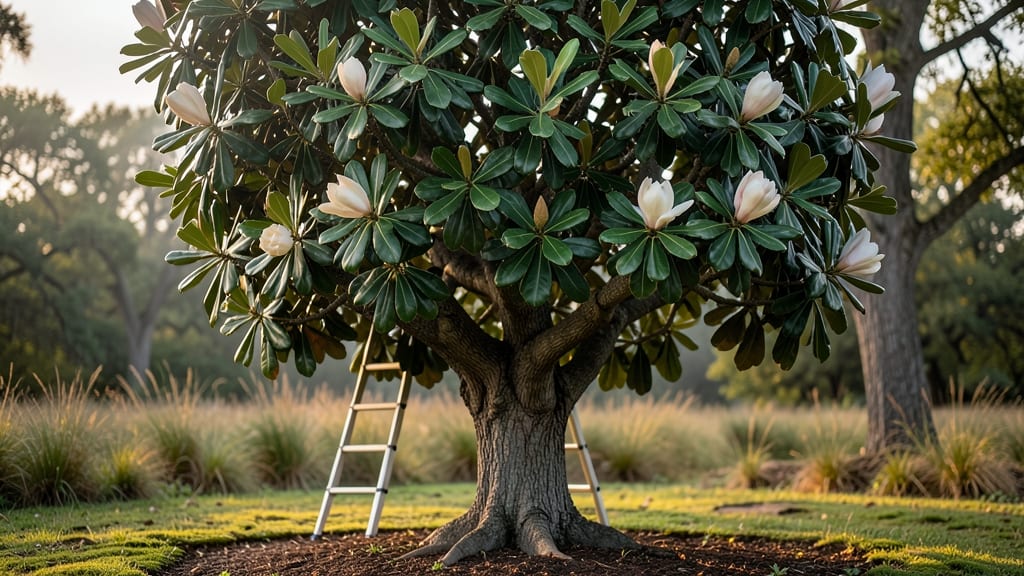
Wondering how tall do Southern Magnolia trees grow before they tower over your backyard? This iconic 🌳 tree can reach 60 to 80 feet at maturity—taller than a two-story house!—but its growth rate and final size depend on your climate, soil, and how much space you give it.
If you’re planning to plant one in your yard, knowing these details is key to avoiding surprises. Southern magnolias grow 12 to 24 inches per year in ideal conditions, but with proper pruning and spacing, you can manage their height—even in smaller landscapes.
Let’s break down what you need to know before committing to this majestic tree.
From dwarf varieties that stay under 25 feet to standard types that dominate the skyline, there’s a Southern magnolia for every space. I’ll share spacing tips, pruning tricks, and even whether you can grow one in a container if your yard is tight.
Ready to learn how to make this tree work for your outdoor vision?
The best part? With the right approach, you can enjoy its fragrant blooms and glossy leaves without sacrificing your yard’s usable space. Let’s dive into the specifics so you can plant with confidence—and maybe even keep a few extra square feet for your garden!

Southern magnolia tree height: exact growth stages & mature size
If you’re considering a Southern magnolia (Magnolia grandiflora) for your landscape, understanding its growth trajectory is crucial. These trees are known for their majestic size, but their height varies significantly based on age, location, and care.
On average, mature Southern magnolias reach 60 to 80 feet tall, with some specimens exceeding 90 feet in ideal conditions. That’s taller than a 3-story building!
In the first year, expect your sapling to grow just 2 to 4 feet. By year three, it’ll typically reach 12 to 18 feet, and by year five, it may already be 20 feet tall.
The growth rate slows as the tree matures, but it continues adding 1 to 2 feet per year for decades. In USDA Zones 8-10, where they thrive, Southern magnolias grow faster than in cooler zones like Zone 7.
Here’s the key: Pruning young trees can influence their final height. If you prune top-heavy branches in early spring, you can encourage a fuller, bushier shape rather than a towering single trunk. However, avoid heavy pruning once the tree is established—it can stress the wood and reduce flowering.
Southern magnolias also exhibit regional height variations. In humid Southern climates (e.g., Florida, Louisiana), they often grow taller and faster due to ideal moisture and heat. In cooler coastal areas (e.g., South Carolina, Georgia), they may max out at 50 to 60 feet but with denser foliage.
One common misconception is that Southern magnolias grow straight up like a pencil. In reality, their spreading branches can add 20 to 30 feet to their width, making them wide enough to provide shade for multiple cars.
This means you’ll need to account for both height and canopy spread when planning your landscape.
🌳
Southern Magnolia Height by Age
| Age | Height Range (ft) | Notes |
|---|---|---|
| Year 1 | 2–4 ft | Slow initial growth; focus on root establishment. |
| Year 3 | 12–18 ft | Rapid vertical growth; stake if needed. |
| Year 10 | 30–40 ft | Canopy begins to spread; prune for shape. |
| Mature (20+ years) | 60–80 ft | Growth slows; minimal pruning needed. |
| Centennial Trees | 80–100+ ft | Rare; requires perfect growing conditions. |
If you’re planting near power lines or structures, consider the 20-year height projection. A tree that’s 30 feet tall at 10 years could easily reach 50 feet by year 20, risking overgrowth issues.
Always check local utility clearance laws, which often require 15+ feet of clearance for mature trees.
Another factor affecting height is soil quality. Southern magnolias thrive in well-draining, slightly acidic soil (pH 5.0–6.0). Poor soil or compacted clay can stunt growth, while rich, organic soil encourages faster, healthier development.
Amend your soil with compost or peat moss before planting to give your tree the best start.
For those in smaller urban yards, it’s tempting to prune aggressively to control height. However, over-pruning can reduce flowering and weaken the tree’s structure. Instead, focus on selective pruning—removing only dead, diseased, or crossing branches—to maintain a manageable shape without sacrificing its natural beauty.
🪴
Pro tip: If you’re buying a young Southern magnolia, ask the nursery for its provenance. Trees grown from cuttings (not seeds) often have stronger, more predictable growth patterns and may reach maturity 10–15% faster than seed-grown specimens.
Best spacing & planting tips for Southern magnolias in small yards
Southern magnolia trees may reach 60-80 feet at maturity, but their root spread and canopy width (20-40 feet) make proper spacing essential—especially in small yards. Planting too close to structures or other trees risks root competition, structural damage, and even sewer line interference from aggressive roots.
For urban or suburban gardens, aim for 20-30 feet between multiple magnolias and 15-25 feet from buildings, fences, or sidewalks. This ensures enough space for airflow, which prevents fungal diseases like anthracnose that thrive in damp, crowded conditions.
🌳 Southern Magnolia Spacing Pros & Cons
✅ Full sun access for healthy growth
✅ Reduced disease risk with proper airflow
✅ Long-term landscape value as a focal point
❌ Limited yard flexibility for future plants
❌ Root intrusion risk near foundations
❌ Slow growth (1-2 ft/year) delays shade benefits
If your space is truly limited, consider planting near a south-facing wall to maximize sunlight while containing the tree’s spread. Just ensure the foundation is at least 10 feet away—magnolia roots can extend 2-3 times the canopy width, and they’re notorious for lifting concrete or cracking driveways.
For soil preparation, Southern magnolias thrive in well-draining, slightly acidic soil (pH 5.0-6.0). Amend heavy clay with compost or sand to prevent root rot, and avoid waterlogged areas.
A 4-6 inch mulch layer (wood chips or pine straw) helps retain moisture while suppressing weeds—just keep mulch 6 inches away from the trunk to avoid rot.
In container growing, Southern magnolias are possible but challenging due to their size. Only dwarf varieties (like ‘Little Gem’) can thrive in large pots (200+ gallons), requiring yearly root pruning and fertile potting mix.
Container trees also need winter protection in colder zones (7-8) with burlap wraps or frost blankets.
Remember: Patience is key—Southern magnolias grow slowly (12-24 inches/year), so their full height won’t be an issue for decades. But proper spacing now saves headaches (and potential lawsuits) later! 🌿