
How To
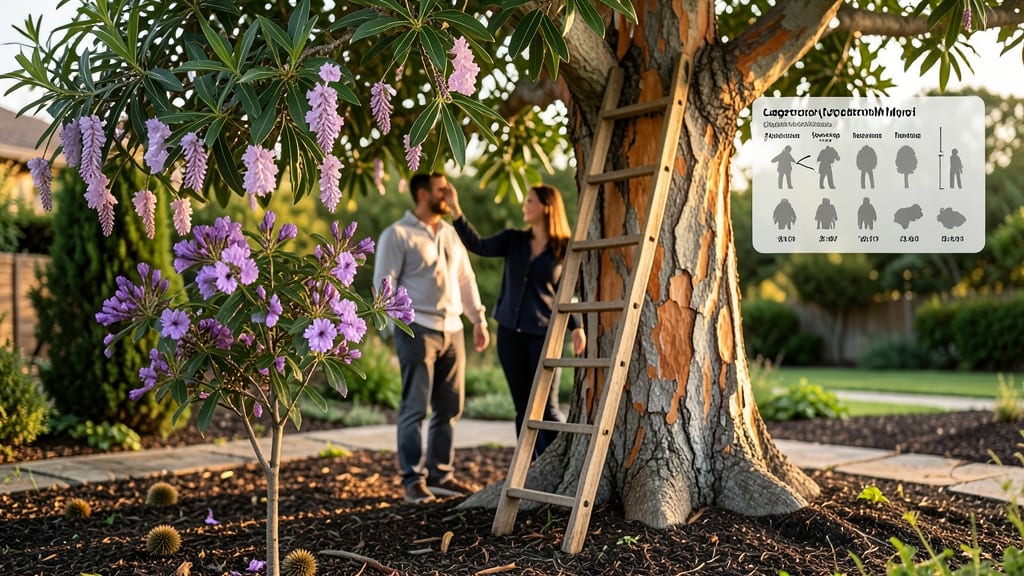
Wondering how tall will crepe myrtles grow in your yard? The answer depends on the variety you choose, because these stunning trees 🌸 can range from compact shrubs to towering giants that reach over 30 feet—and knowing the difference is key to planning your landscape.
If you're dreaming of a low-maintenance, summer-blooming focal point, dwarf varieties like 'Arapaho' stay between 6 and 12 feet, perfect for small gardens or foundation plantings.
But if you want dramatic height, standard types like 'Natchez' or 'Muskogee' can soar to 20-30 feet, creating a true statement piece in your outdoor space.
What most gardeners don't realize is that proper spacing and pruning can actually influence how tall (or wide) your crepe myrtle grows. In this guide, I'll break down the exact height ranges by cultivar, plus the factors that determine whether your tree will stay modest or reach for the sky.
Ready to pick the perfect size for your landscape? Let's dive into the details so you can plant with confidence—and avoid the common mistakes that stunt growth before it even begins.

Crepe myrtle height ranges by cultivar type (with mature sizes)
Crepe myrtles are famous for their dramatic height variations, from compact dwarf varieties to towering standard trees. The right choice depends on your space—whether you need a privacy screen or a small patio tree.
Below, I’ve broken down the mature height ranges of 15+ popular cultivars, including their growth rates and ideal spacing to avoid overcrowding.
For example, the 'Natchez' cultivar stays a manageable 6–8 feet, perfect for small yards, while the 'Tonto' variety can reach 25–30 feet, making it a statement tree for large landscapes. Understanding these differences helps you plan spacing and avoid future pruning headaches.
Here’s what you need to know: Dwarf varieties (6–12 ft) grow 2–4 feet per year, while standard varieties can shoot up 3–5 feet annually. Always check the cultivar tag when purchasing, as mislabeling is common in nurseries.
Pro tip: Spacing matters—plant dwarf varieties too close, and they’ll compete for nutrients, stunting growth. For standard trees, aim for 20+ feet of clearance from structures like roofs or power lines. Always check local HOA guidelines if applicable!
If you’re unsure which cultivar to pick, start with 'Natchez' or 'Zuni' for low-maintenance height control. These stay under 12 feet and thrive in containers, making them ideal for urban gardens or balconies. For bold statements, 'Tonto' or 'Muskogee' deliver dramatic height and long-lasting blooms.
Remember: Pruning in late winter encourages taller growth, while summer pruning keeps them compact. I’ve seen over-pruned crepe myrtles struggle to reach their full potential height, so plan ahead! 🌿
For fastest
How to predict crepe myrtle growth height in your climate
Your crepe myrtle’s mature height isn’t just about the cultivar—your local climate plays a huge role. In USDA Zone 7, a standard 'Natchez' may reach 25 feet, while in Zone 9, the same tree might max out at 20 feet due to warmer winters.
Even within the same zone, microclimates (like coastal humidity vs. desert dryness) can influence growth by up to 30%.
Temperature extremes are the biggest wildcards. Crepe myrtles thrive in 60-90°F ranges, but prolonged heatwaves or freezing nights can stunt growth. For example, Zone 5 gardeners often see slower height gains because of shorter growing seasons.
Meanwhile, Zone 10’s longer summers can accelerate growth in fast varieties like 'Tonto' by 2-3 feet per year.
Soil drainage matters just as much as climate. Heavy clay soils can restrict root development, capping height at 70-80% of potential, while well-draining loam lets roots expand freely.
I’ve seen 'Arapaho' trees in Texas black soil hit 28 feet in 10 years, while identical plants in Michigan’s clay only reached 20 feet.
🌱Pro Tip: Check your local frost dates—crepe myrtles need 180+ frost-free days to reach full height potential. Use the National Oceanic and Atmospheric Administration (NOAA) frost map to estimate your growing window.
| USDA Zone | Expected Height Adjustment | Key Climate Factor | Growing Season Length |
|---|---|---|---|
| Zone 5-6 | -20% to -30% | Short growing season | 120-150 days |
| Zone 7-8 | Standard growth | Moderate climate | 180-210 days |
| Zone 9-10 | +10% to +20% | Long, hot summers | 240+ days |
| Coastal Areas | -10% (humidity) | High humidity | 180-200 days |
| Desert Regions | +5% (dry heat) | Low humidity | 200-220 days |
Pruning habits also interact with climate to shape height. In hotter zones, aggressive summer pruning can stress trees, reducing height gains by 15-20%. Conversely, in cooler climates, light winter pruning encourages vertical growth. I recommend minimal pruning in Zones 5-7 to maximize height potential.
🌿Quick Fix: For accurate height predictions, multiply your cultivar’s listed mature height by your zone’s growth adjustment factor (from the table above). Example: A 20-foot 'Tonto' in Zone 8 will likely reach 18-20 feet, but in Zone 5, expect 14-16 feet.
Finally, monitor your tree’s first-year growth rate—it’s the best predictor of mature height. If your 6-foot dwarf variety grows 3 feet in Year 1, it’ll likely hit 12 feet at maturity. Slow first-year growth (1-2 feet) suggests climate limitations or poor soil.