
Plants
If you’ve ever stared at your North Carolina garden in late summer wondering "when to plant broccoli in NC fall", you’re not alone. The difference between a bountiful harvest and a bolted disappointment often comes down to timing—especially in zones 7a-8b where fall weather can be unpredictable.
Broccoli 🥦 thrives in cooler temperatures, but planting too early risks bolting from heat stress, while waiting too long means frost cuts your harvest short. The sweet spot? Late August to early September, when soil temps dip below 75°F and days grow shorter—just right for this cool-season crop.
Here’s the game-changer: adjusting your planting schedule based on your microclimate. Coastal areas can start earlier, while mountain regions may need to wait until late September. I’ll break down the exact weeks to plant, plus how to prep soil and choose varieties that won’t bolt before harvest.
Skip the guesswork—these strategies ensure your broccoli heads stay tight, flavorful, and ready to pick from October through December. Let’s get those seeds in the ground the right way.
Optimal fall planting dates for NC broccoli by microclimate zone
North Carolina’s diverse climate means your fall broccoli planting dates should vary by region. The Coastal Plain, Piedmont, and Mountain zones all have different frost risks and soil warming patterns.
For a zero-bolt harvest, aim to plant when daytime temps stay below 75°F but nights dip into the 50s°F—this balance prevents premature flowering while avoiding frost damage.
First, check your USDA Zone (7a-8b) and local frost dates. In NC, the first frost typically arrives between mid-November (Coastal Plain) and early November (Mountains). To time your planting perfectly, start seeds 4-6 weeks before your expected frost date, or transplant seedlings 6-8 weeks before the first frost.
This ensures mature heads form before winter sets in.
Here’s how to break it down by region for fall broccoli success:
| Region | Ideal Planting Window | Seed Starting Indoors | Transplant Outdoors | Harvest Window |
|---|---|---|---|---|
| Coastal Plain (Zones 8a-8b) | Late August - Early September | Mid-July - Early August | Late August - Mid-September | October - December |
| Piedmont (Zones 7a-7b) | Early August - Late August | Late June - Mid-July | Early August - Early September | September - November |
| Mountains (Zones 6a-7a) | Late July - Early August | Mid-June - Late June | Late July - Early August | September - October |
🌱 Pro Tip: Soil temperature should be at least 45°F for planting.
For Coastal Plain gardeners, the window is wider—you can even squeeze in a second planting in early September for a late-fall harvest.
But in the Piedmont and Mountains, act faster: broccoli grows slower in cooler temps, so rush to get seeds in the ground before September 15 to avoid bolting. Use a soil thermometer to confirm temps are right; broccoli roots struggle below 40°F.
If you’re starting seeds indoors, begin 4-6 weeks before your target transplant date. Use grow lights to extend daylight to 14-16 hours—broccoli needs long days to form heads.
Harden off seedlings for 7-10 days before moving them outside to toughen their stems. Transplant on a cloudy day or in the late afternoon to reduce transplant shock.
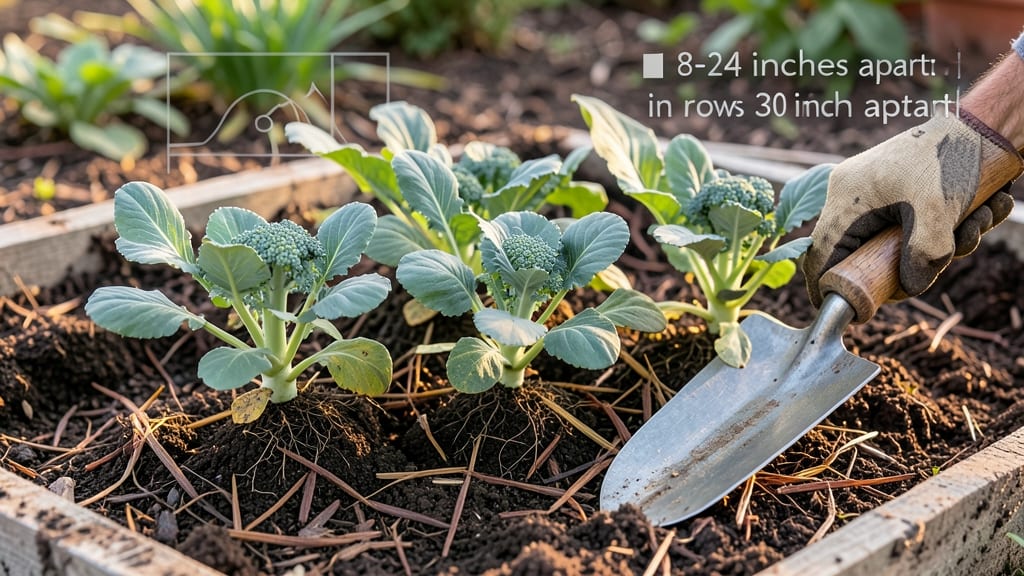
Spacing is critical for fall broccoli yields. Plant seedlings 18-24 inches apart in rows 30 inches apart to allow airflow and prevent disease. In small gardens, try a square-foot method with 4 plants per square foot.
Mulch with straw or shredded leaves to retain moisture and suppress weeds—NC’s fall humidity can lead to downy mildew if plants are crowded.
Don’t forget to rotate crops! Broccoli is a heavy feeder and depletes soil nutrients. If you grew it last year, wait 3 years before replanting in the same spot. Amend your soil with compost or aged manure before planting to give your broccoli a nutrient boost.
Aim for a pH of 6.0-7.0—NC soils often lean acidic, so test and adjust with lime if needed.
Finally, mark your planting dates on a calendar and set reminders for harvest time. Broccoli heads mature in 50-90 days, depending on the variety. In NC’s fall, you’ll likely harvest between October and December, so plan to enjoy fresh broccoli through the holidays!
Cut heads when they’re tight and compact—don’t wait until they flower, or you’ll lose your crop to bolting.
With these microclimate-specific dates, you’ll avoid the two biggest pitfalls of fall broccoli in NC: bolting from heat and frost damage. Next, we’ll cover how to handle NC’s fall weather quirks, like late heatwaves and humidity spikes, to keep your plants thriving until harvest. 🌿
Optimal fall planting dates for NC broccoli by microclimate zone
North Carolina’s three distinct microclimates—Coastal Plain, Piedmont, and Mountains—each demand different fall planting windows for broccoli. The key is planting 4-6 weeks before your first frost, but NC’s variable frost dates (mid-November to early December) mean your timing must be precise.
Let’s break it down by zone to avoid bolting or frost damage.
For the Coastal Plain (USDA Zones 8a-8b), aim to plant broccoli between late July and early August. This region’s milder winters and longer growing season allow for a 90-day harvest window before frost. Use fast-maturing varieties like 'De Cicco' to ensure heads form before temperatures dip below 25°F.
| Zone | Planting Window | First Frost Date | Harvest Window |
|---|---|---|---|
| Coastal Plain | Late July - Early August | Mid-November | October - December |
| Piedmont | Mid-August - Early September | Early December | September - November |
| Mountains | Early August - Mid-August | Late November | September - October |
The Piedmont region (Zones 7a-7b) has a shorter growing season, so plant broccoli between mid-August and early September. This ensures heads mature before the earlier frosts hit in early December. Choose cold-hardy varieties like 'Waltham 29' to withstand 28°F temperatures without bolting.
In the Mountains (Zones 6b-7a), plant broccoli between early and mid-August for a harvest before late November frosts. This region’s cooler nights and shorter days make broccoli bolting-prone, so opt for slow-bolting hybrids like 'Calabrese' and use row covers to extend the season by 2-3 weeks.
Pro tip: Check your local frost dates using the NC State Climate Office or plant a test row 2 weeks earlier to gauge success. Adjust based on soil temperatures—broccoli needs 40°F+ soil to germinate properly. If your soil is cooler, consider starter plants instead of seeds.
Remember, broccoli thrives in cool weather (50-75°F) but struggles with heat waves or freezing temps. By aligning your planting with these zone-specific windows, you’ll maximize your fall harvest potential while minimizing risks. 🥦